
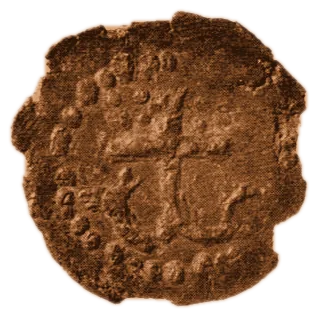
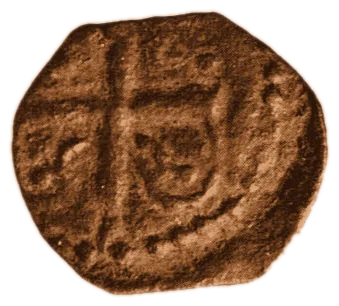
Flat copper coins, presumed Cherven mint, sixth type
Struck under Ivan Alexander · 1331-1371
- Metal
- Copper
Kingdom of the Asen Dynasty — from the uprising of Asen and Peter (1185) to the fall under Ottoman rule (1396). Two centuries of wars, trade, faith, and culture.
Example questions
From history
July 25Tsar Kaloyan perished under unclear circumstances during the siege of Thessaloniki. One of the greatest Bulgarian tsars — the victor over the Crusaders at Adrianople — died at the height of his military glory.
Featured ruler
Tsar · 1256–1257
Mitso Asen emerges abruptly from the obscurity of the mid-thirteenth-century Bulgarian aristocracy. His parentage, birth date, place of origin and any siblings are unknown. Byzantine authors render his name as Μύτζης, while George Pachymeres once uses the variant Μυλτζής. Linguistically, Mitso is a diminutive of Mito, itself a shortened form of Dimitar, but this etymology does not establish that Dimitar was his formal name; proposed readings such as Micho or Milcho lack foundation. Pachymeres identifies him as a Bulgarian, yet nothing in the surviving evidence permits a fuller reconstruction of his ancestry.
Mitso entered the Asen dynastic circle through marriage rather than demonstrable descent. His wife, Maria Asenina, was a daughter of Tsar Ivan II Asen, whose reign from 1218 to 1241 remained the principal source of dynastic legitimacy in Bulgaria. Pachymeres accordingly calls Mitso the son-in-law of Ivan II Asen and the co-brother-in-law of the Nicaean emperor Theodore II Laskaris. Another son-in-law of Ivan II, the sebastokrator Peter, stood in an analogous familial position, but the sources do not record Peter contesting Mitso’s claim. Mitso and Maria had at least two children known from the excerpts: their firstborn son Ivan, later Tsar Ivan III Asen, and their daughter Maria, later associated by marriage with George Terter.
Struck under Ivan Alexander · 1331-1371
The period from 1280 to 1300 in the Second Bulgarian Empire was marked by significant internal instability, political fragmentation, and external pressures from neighboring powers including the Tatars, Byzantines, Serbs, and emerging Turkish forces. This era saw the rise and fall of several rulers, the influence of powerful aristocratic families, and the gradual erosion of centralized authority, setting the stage for further decline in the 14th century.
The founding of the Second Bulgarian Empire began in 1185 with the uprising led by brothers Ivan Asen and Theodore-Peter against Byzantine rule. This period marked the restoration of Bulgarian statehood, characterized by military campaigns, political consolidation, and the establishment of a dual monarchy. The empire expanded territorially and politically through the reigns of key rulers, culminating in significant victories and diplomatic efforts to assert sovereignty.
The period from 1371 to 1396 marks the decline and fall of the Second Bulgarian Empire under the pressure of the rising Ottoman Empire. The empire was fragmented into three political entities ruled by Ivan Shishman, Ivan Sratsimir, and Ivanko, each facing the Ottoman advance with varying degrees of resistance and submission. The era culminated in the fall of Tarnovo and the death of Ivan Shishman, signaling the end of medieval Bulgarian sovereignty.
The First Mongol Invasion of Bulgaria (1241–1256) marked a critical period of territorial losses, political upheaval, and shifting alliances for the Second Bulgarian Empire. This era saw the rise of dynastic legitimacy, increased foreign pressure from the Mongols, Byzantines, Hungarians, and internal challenges that shaped Bulgaria's medieval trajectory.