
Shishman dynasty
Michael III Shishman Asen
Despot of Vidin, son of Shishman of Vidin and an Asen princess; elected tsar in 1323 after the Terter line died out, founding the Shishman dynasty. Killed at the Battle of Velbazhd against the Serbs in 1330.
Biography
Michael III Shishman Asen, tsar of Bulgaria from 1323 to 1330, was the ruler who raised the regional lordship of Vidin to the throne of Tarnovo and founded what modern historiography calls the Shishman dynasty. Contemporaries, however, could regard his accession as a restoration of the Asen line rather than the beginning of an entirely new house. He deliberately used the dynastic name Asen, and his brief reign was dominated by an ambitious attempt to restore Bulgarian power in Thrace, intervention in the politics of the Palaiologan Empire, and an ultimately disastrous confrontation with Serbia. Born in 1280 and killed as a consequence of the Battle of Velbazhd in 1330, he was succeeded by his son Ivan Stephen.
Michael was the son of Shishman of Vidin, a Bulgarian magnate of Cuman origin, and an unnamed Asen princess. The genealogy cited in the Bulgarian scholarship traces his maternal descent through an unnamed daughter of Theodora-Anna and the sebastokrator Peter, thereby connecting him to the old ruling family of the Asens. John Kantakouzenos incorrectly calls him a son of the despot Sratsimir and describes his ancestry as Moesian and Cuman; the Cuman element belongs to his paternal line, but the identification of his father as Sratsimir is rejected by the genealogical evidence. The established chronology used here places Michael’s birth in 1280, although the genealogical study stresses that the documentary evidence by itself proves only that he was born before his father’s second marriage in 1292. Vidin was probably both his birthplace and the setting in which he was raised. His known siblings were Petritsa and Belaur.
By the first decade of the fourteenth century Michael had become lord of Vidin, certainly before 1308, probably after his father’s death and with the authorization of his cousin Tsar Theodore Svetoslav. Vidin was the hereditary political base of the Shishman family and gave Michael an independent territorial following before he entered the politics of Tarnovo. A Venetian document of 1313 lists him among rulers friendly to the Republic of Saint Mark as “Michael dispoti Bulgariae, dominus de Vigdino, gener regis Urosii”—Michael, despot of Bulgaria, lord of Vidin, and son-in-law of King Uroš. The formula demonstrates both his recognized despotic dignity and his place among the highest Balkan aristocracy. Against suggestions that the title was hereditary or Serbian in origin, the cited Bulgarian scholarship considers it most likely that Theodore Svetoslav had conferred the rank upon him.
Michael’s position had already been strengthened by marriage to Anna, also called Neda, a daughter of the Serbian king Stefan Uroš II Milutin. The marriage was in existence by 1313, when the Venetian record called Michael the Serbian king’s son-in-law. The established list of Michael’s children comprises Ivan Stephen, Shishman, the despot Michael Shishman, and Ludovik, although the supplied material does not securely assign every child to a particular marriage. Ivan Stephen was unmistakably associated with Anna-Neda and her party in the succession crisis of 1330. Michael’s early marriage policy thus tied the Vidin branch of the Bulgarian elite to the Nemanjić court before the later reversal that made Serbia his principal enemy.
The immediate occasion for Michael’s elevation was the extinction of the reigning Terter line. George II Terter, who had succeeded Theodore Svetoslav in the summer of 1322, died without an heir in the opening months of 1323. An older reconstruction placed his death in November or December 1322 and Michael’s election in the spring of 1323, thereby creating an improbable interregnum of several months; the cited study therefore moves George’s death into early 1323. Nikephoros Gregoras omits George II’s short reign altogether and makes Michael follow Theodore Svetoslav directly, whereas Kantakouzenos explicitly states that the Bulgarian magnates summoned Michael, proclaimed him tsar, and delivered to him Tarnovo, its palaces, and the rest of the sovereign authority.
Michael’s accession in the spring of 1323 appears to have met no effective opposition in Tarnovo. His territorial power in Vidin, despotic title, Serbian royal connection, and standing among the Bulgarian aristocracy all mattered, but his Asen descent supplied the strongest language of legitimacy. In this sense his election simultaneously founded the Shishman dynasty in modern genealogical classification and restored the Asen dynasty in contemporary political ideology. The use of Asen was neither a later invention nor an illegitimate adornment: the disputed seal bearing the legend “Michael Asen,” the Vratsa inscription, and other attributed evidence are treated in the cited scholarship as compatible with his lawful use of the family name. His reception at Tarnovo accordingly represented continuity with the dynasty associated with the restoration and greatest successes of the Second Bulgarian Empire.
The new tsar inherited an immediate crisis in Thrace. George II Terter’s unexpected death allowed Byzantine forces to occupy, apparently without recorded resistance, the towns between Nessebar and Sliven. At the same time Voisil, brother of the former tsar Smilets, seized the region between Sliven and the fortress of Kopsis, organized it as an autonomous lordship, and styled himself “despot of Mysia.” Voisil’s action was coordinated with Andronikos III Palaiologos’s unsuccessful attempt to take Plovdiv. Michael therefore began his reign not with a securely settled frontier but with Byzantine expansion along the Black Sea and Thracian approaches, a separatist principality in central Thrace, and a rival claimant whose ambitions were connected to those of Andronikos III.
During 1323 Michael acted energetically to restore the Bulgarian position in Thrace, although the supplied excerpts do not preserve a complete itinerary of his operations or identify a separately named battle. They consequently do not justify inventing precise sieges, dates, or territorial settlements beyond the documented Byzantine occupation and Voisil’s seizure of the Sliven–Kopsis region. Nor do they provide securely dated, independent campaigns for each of the years 1324, 1325, and 1326. What can be followed is the broader development: Michael first had to counter the gains made during the succession crisis, then became increasingly involved in the diplomacy surrounding Andronikos III, and eventually redirected the major weight of Bulgarian policy toward Serbia.
A decisive dynastic reversal occurred when Michael sent away Anna-Neda and married Theodora Palaiologina. The extracts do not establish an exact date for this change and therefore do not permit it to be assigned confidently to a particular year. Politically, however, its meaning is clear: marriage to Theodora strengthened Michael’s alignment with the Palaiologan side in Byzantium, while the repudiation of Milutin’s daughter gravely worsened his relations with Serbia and with Anna-Neda’s royal relatives. The episode illustrates how Michael used marriage as an instrument of international policy, but it also created an embittered displaced branch of the royal family that would become crucial immediately after his death.
Michael’s Byzantine diplomacy culminated in a meeting with Andronikos III at Krimni, situated between Sozopolis and Anchialos. Michael invited the emperor there, and the two rulers concluded what Kantakouzenos calls a “firm and eternal alliance.” The precise date and full clauses of this agreement are not preserved in the supplied passage, so it cannot safely be forced into a detailed annual chronology or described as containing terms not actually reported. Nevertheless, the meeting demonstrates that Michael was operating at the center of Balkan great-power diplomacy and that his relationship with Andronikos III had moved from confrontation over Thrace to formal cooperation. For the years 1327–1329 the excerpts reveal this strategic trajectory but do not supply a reliable sequence of annual battles or additional named treaties.
After failing to impose his larger aims against Byzantium, Michael concentrated his efforts upon Serbia. Grigorii Tsamblak’s Life of Stefan Dečanski, Stefan Dušan’s work known as “On the Horseman,” and other Serbian texts portray the Bulgarian tsar as intending to conquer the Serbian state. These accounts are partisan and sometimes triumphalist, but they agree that the confrontation was not a minor border dispute. Michael’s anti-Serbian policy combined strategic competition with the consequences of his rejection of Anna-Neda, while the alliance with Andronikos III offered a diplomatic framework for pressure on Serbia. The Bulgarian narrative nevertheless emphasizes the disparity between Michael’s expansive program and the kingdom’s actual resources: the ideology of the “great idea” of the first Asens survived, but Bulgaria no longer possessed the power required to realize it fully.
The conflict reached its climax at the Battle of Velbazhd on 28 July 1330. The engagement took place somewhere between Velbazhd and Zemen and pitted Michael’s army against the forces of the Serbian king Stefan Dečanski. The Bulgarian troops were surprised and were probably numerically inferior at the decisive moment; they suffered a severe defeat. The supplied evidence does not support the addition of unrecorded preliminary battles, exact troop totals, or detailed tactical deployments. Velbazhd was therefore both the sole securely named and dated major battle of Michael’s reign in these excerpts and the event that destroyed his attempt to reverse Serbia’s growing predominance in the central Balkans.
Michael was mortally wounded, captured, and died as a direct consequence of the defeat, either on 28 July 1330 or very soon afterward. Serbian traditions strongly personalized his death. Annals declare that King Stefan Dečanski killed the Bulgarian tsar at Velbazhd, while Stefan Dušan’s Law Code boasts, “and to Michael, the Bulgarian tsar, I cut off his head with a sword.” Similar claims entered Serbian and Turkish legend, but the annalistic wording need not be read as a literal eyewitness statement, and the precise agent and manner of Michael’s death remain uncertain. What is secure is that he did not survive the immediate aftermath of the battle and that his death ended his reign in 1330.
Michael’s body was buried in the church of Saint George at Staro Nagoričino. Wall inscriptions there have been read as identifying the Bulgarian ruler’s grave, but their difficult condition has produced a serious chronological anomaly. One proposed reading says that Tsar Michael Asen died on 16 April, which could refer no earlier than 1331 and thus conflicts with the narrative sources, the rapid succession after Velbazhd, and the established date of his death. The cited historians consequently reject that reading as a basis for moving his death into the following year, while recognizing that the inscriptions require renewed and careful examination. The grave evidence is valuable for the place of burial, not for overturning the consistent chronology of 1330.
The succession exposed the fragility of Michael’s dynastic arrangements. Kantakouzenos says that power over the Bulgarians and possession of the palaces were handed to Anna-Neda and her children. Michael’s son Ivan Stephen became tsar and is explicitly commemorated in the Drinov manuscript of the Boril Synodikon: “To Ivan Stephen, tsar, son of the pious Tsar Michael, eternal memory.” He was already an adult, making a formal regency by Anna-Neda improbable, although she may have played the leading political role. Gregoras omits Ivan Stephen’s short reign and instead describes the subsequent struggle as one between Ivan Alexander and Michael’s first wife and her relatives. Ivan Stephen’s rule rapidly collapsed, while Michael’s sibling Belaur became associated with the rebellion of 1331; Kantakouzenos later claimed that Belaur still had supporters in Vidin in the summer of 1341.
Michael’s internal government and ecclesiastical policy are much less visible than his wars and diplomacy. The sources reveal an elective or acclamatory accession organized by the leading Bulgarian magnates, the transfer of Tarnovo’s palaces and sovereign authority, and a program of legitimacy grounded in Asen descent and divine sanction. They do not identify a church council, doctrinal initiative, patriarchal appointment, monastic charter, legal code, or administrative reform securely attributable to his reign. His burial at Saint George and the sacral language surrounding his tsardom show the normal religious framework of medieval kingship, but they cannot by themselves sustain claims about a distinctive church policy. Likewise, the evidence does not establish whether Vidin retained a separate institutional status while its former lord ruled from Tarnovo.
The economic and monetary evidence in the supplied excerpts is similarly limited. The Venetian document of 1313 proves that Michael was regarded as friendly to Venice while still despot of Vidin, but it contains no commercial privileges, customs rates, or treaty clauses and therefore cannot be treated as a trade agreement. The struggles over Nessebar, Sliven, Kopsis, Plovdiv, Sozopolis, and Anchialos concerned strategically important urban and coastal zones, yet no fiscal data survive here. Although a seal with the legend “Michael Asen” and several inscriptions or manuscript attributions support his titulature, the excerpts describe no securely defined coin denomination, mint, metal standard, or monetary reform belonging to Michael III. Coin issues discussed elsewhere in the supplied material for Mico or for the sons of Ivan Alexander must not be transferred to his reign.
Michael III Shishman Asen’s historical importance lies in the scale of his ambitions and in the dynastic synthesis he represented. A Cuman-descended Shishman through his father, an Asen descendant through his mother, a former despot of Vidin, a Serbian royal son-in-law, and later the husband of Theodora Palaiologina, he tried to make Bulgaria once more the arbiter between Byzantium and Serbia. His defeat at Velbazhd instead accelerated Serbian ascendancy and exposed the instability of Bulgarian–Byzantine cooperation, while his death opened a succession crisis that soon removed Ivan Stephen. The reconstruction depends principally on Kantakouzenos, checked against Gregoras, the 1313 Venetian record, Tsamblak’s hagiography, Serbian annals and ideological texts, the Boril Synodikon, seals, and the problematic Staro Nagoričino inscriptions. Several supplied passages concern other homonymous figures—notably the child Tsar Michael II Asen of 1246, Michael the son of Constantine Tikh, and Michael Asen the son of Ivan Alexander—and must not be confused with Michael III. The sources permit a clear account of his origins, accession, diplomatic alignments, Velbazhd, death, and succession, but not a complete year-by-year military, ecclesiastical, or economic record.
Sources
“Михаил Шишман бил син на видинския деспот Шишман и на сестра на царете от Асеновия род, поради което добавил към името си и „Асен“.”
— The Asen Family (1186–1460): Genealogy and Prosopography, p. 118“В сражението при Велбъжд на 28 юли 1330 г. българската войска била разбита, а царят Михаил Шишман смъртно ранен паднал в плен и скоро издъхнал.”
— The Asen Family (1186–1460): Genealogy and Prosopography, p. 126
Coins (33)
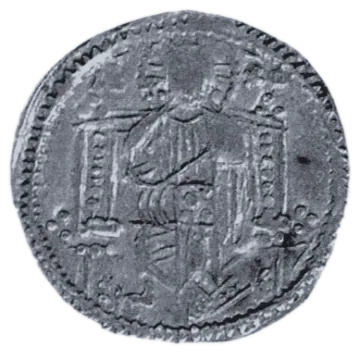
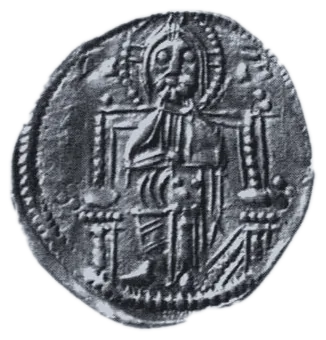
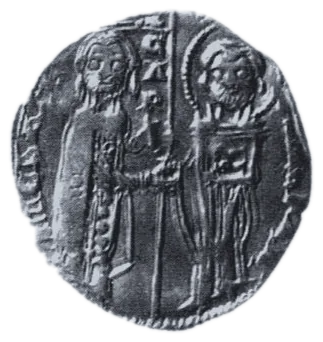
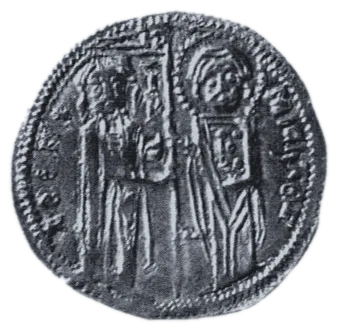
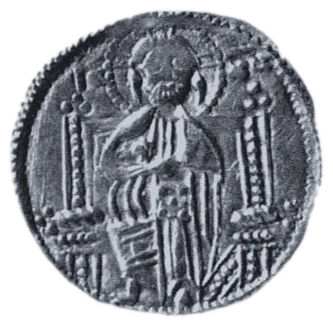
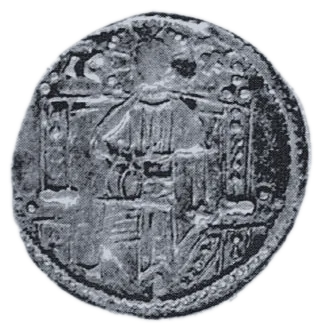
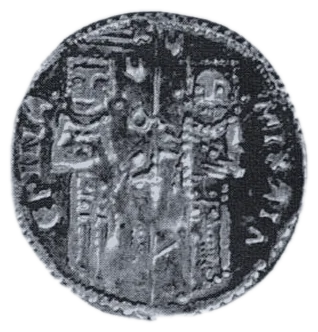
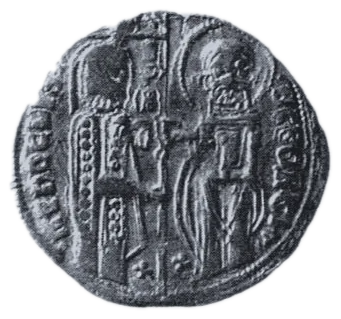
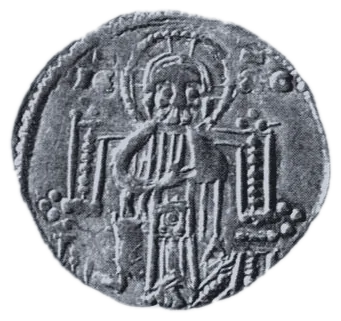
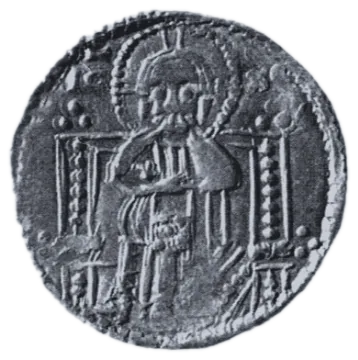
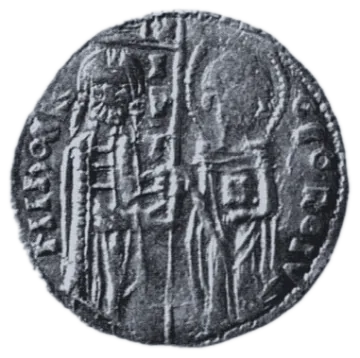
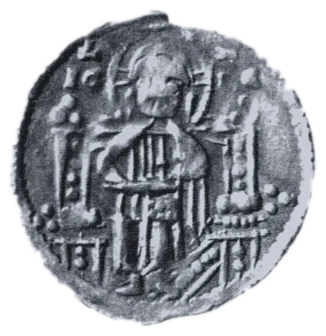
Coin photographs from A. Radushev & G. Zhekov, Catalogue of Bulgarian Medieval Coins IX–XV c. (Agató, 1999).
In the news
- The historic Bulgarian north-west, 12th–15th centuries4 July 2026 · Prof. Plamen Pavlov, Trud
- The noblewomen of the Bulgarian Morava valley in the 14th century28 March 2026 · Prof. Plamen Pavlov, Trud
- 'Sratsimir, Tsar of the Bulgarians': a riddle in the memoirs of Kiro Tuleshkov28 February 2026 · Prof. Plamen Pavlov, Trud
- The lords of Sredets/Sofia in the 14th century8 February 2025 · Prof. Plamen Pavlov, Trud
- Tsar Mihail III Shishman, the bold descendant of the Asenids11 February 2023 · Prof. Plamen Pavlov, Trud
- The 'blue blood' and youth of Theodore Svetoslav Terter30 July 2022 · Prof. Plamen Pavlov, Trud