
Shishman dynasty
Ivan Stefan
Son of Michael III Shishman and the Serbian princess Anna-Neda. Took the throne after Velbazhd but was deposed in 1331 by the boyar elite in favour of his cousin Ivan Alexander.
Biography
Ivan Stefan was tsar of Bulgaria from 1330 to 1331, a short-lived ruler of the Shishman dynasty whose reign formed the immediate bridge between the military catastrophe at Velbazhd and the long rule of Ivan Alexander. He succeeded his father, Michael III Shishman Asen, but held power for only seven or eight months before the leading boyars removed him. His biography is unusually difficult to reconstruct: contemporary Byzantine writers often subordinate him to his politically influential mother, some sources omit his reign altogether, and no secure date of either his birth or death is known.
He was a son of Michael III Shishman by the latter's first marriage to the Serbian princess Anna-Neda, daughter of King Stefan Uroš II Milutin and sister of Stefan Uroš III Dečanski. The genealogical study represented in the excerpts considers Ivan Stefan probably the firstborn, while cautiously placing his birth no later than the beginning of the fourteenth century; neither conclusion rests on an explicit birth record. His brothers from Michael's first marriage were Shishman, Despot Michael and Ludovik. This Serbian maternal ancestry eventually became both the foundation of his restoration to the succession and a major political liability within Bulgaria.
After Michael Shishman's elevation to the Bulgarian throne in 1322, Ivan Stefan became his co-ruler. The principal evidence is a coin issue bearing the images of father and son, an important material witness because no narrative source describes a formal ceremony of association. The issue indicates that Ivan Stefan was publicly presented as participating in the supreme authority and, by implication, as the intended dynastic successor. It is not, however, evidence for an independent reign at that date, and the surviving excerpts supply neither a charter nor an inscription defining the precise extent of his co-rulership.
Ivan Stefan's position changed decisively in 1324, when Michael Shishman contracted a second marriage with Theodora. The Bulgarian dynastic study states that this marriage deprived the son of Anna-Neda of his place in the succession. According to some Serbian sources, Ivan Stefan was removed from Tarnovo and exiled somewhere within Bulgaria together with his mother and perhaps his brothers, although the participation of all the brothers is uncertain. For approximately six years he consequently lived in political eclipse, despite the earlier coinage that had advertised him beside his father.
The Battle of Velbazhd on 28 July 1330 transformed his fortunes. Michael III Shishman was defeated and died after leading the Bulgarian army against Serbia, leaving the crown open amid military defeat and foreign pressure. The victorious Serbian king Stefan Uroš III Dečanski, Ivan Stefan's maternal uncle, pressed for his nephew's installation. The First Life of Stefan Dečanski, preserved in the collection associated with Archbishop Danilo, reports that Serbian nobles accompanied by a Serbian military detachment went to Tarnovo to facilitate the accession. Ivan Stefan was then proclaimed Bulgarian tsar, succeeding the father who had previously displaced him from the succession.
The exact constitutional character of the new government remains disputed because the sources emphasize Anna-Neda almost as much as her son. John Kantakouzenos says that authority over the Bulgarians and the royal palaces was delivered to Anna-Neda and her children; elsewhere he describes the later revolt as directed against Michael's wife, who was also the aunt of Stefan Dušan. His wording may exaggerate her personal sovereignty, but it strongly suggests that the restored dowager tsaritsa exercised substantial influence. Ivan Stefan was nevertheless recognized in Bulgarian dynastic reconstruction as the reigning tsar, not merely as an appendage to his mother, and his brief tenure is conventionally dated from 1330 to 1331.
During the remaining months of 1330 Bulgaria suffered an immediate Byzantine attack. Emperor Andronikos III Palaiologos exploited both the defeat at Velbazhd and Michael Shishman's death, violating the Bulgarian-Byzantine agreement described as a treaty of "firm and eternal peace and alliance," concluded in late 1328 or early 1329. Byzantine forces occupied Anchialos, Mesembria, Aytos, Rusokastro and Yambol without serious resistance. The sources record no battle in which Ivan Stefan personally commanded an army and no successful attempt by his government to recover these southeastern fortresses and towns; Velbazhd was therefore the decisive military event behind his accession, while the Byzantine advance was the central military failure of his actual reign.
Ivan Stefan's diplomacy was constrained by the manner in which he had obtained the crown. Serbia had secured his accession but did not establish a durable system capable of maintaining him in Tarnovo, and no treaty concluded personally by Ivan Stefan is preserved in the supplied evidence. Serbian support was itself becoming uncertain because of the struggle for royal power between Stefan Uroš III Dečanski and his son Stefan Dušan. At the same time, the Byzantine conquests demonstrated that the Serbian connection did not protect Bulgaria on its southeastern frontier. His government consequently appeared dependent on one neighbour while unable to restrain the other.
By 1331 the political struggle inside Tarnovo had become decisive. One grouping supported Ivan Stefan and Anna-Neda and accepted, or benefited from, the Serbian orientation; another regarded the post-Velbazhd Serbian influence and the territorial losses to Byzantium as intolerable. The movement against the ruling house was led openly by two high dignitaries, the protovestiarios Raksin and the logothete Philip. They turned to Ivan Stefan's cousin Ivan Alexander, already despot and ruler of an appanage centred on Lovech, a prominent member of the aristocratic elite and a claimant connected through his mother Keratsa Petritsa with the Asen lineage.
The anti-Serbian rising removed Ivan Stefan in 1331 and raised Ivan Alexander to the Bulgarian throne. The surviving accounts suggest that the transfer was accomplished with relative ease; they do not provide a precise date, name a battle, or report that Ivan Stefan was killed or imprisoned. Serbia had therefore managed to place him on the throne but had failed to help him retain it. His deposition was the fourth change of ruler endured by Bulgaria within roughly a decade and revealed how military defeat, foreign intervention, dynastic right and boyar consent could converge in determining possession of the crown.
The coup did not immediately eliminate every centre of opposition to Ivan Alexander. Anna-Neda and her sons were compelled to leave Bulgaria, while hostile elements subsequently gathered around Belaur, who fortified himself at Vidin. The evidence does not show that Ivan Stefan personally directed Belaur's resistance, and it would be unsafe to treat the Vidin movement simply as an attempt to restore the deposed tsar. It does show, however, that the easy seizure of Tarnovo did not instantly heal the internal divisions created by Velbazhd, the Serbian-backed restoration of Anna-Neda's family and the boyar revolution of 1331.
Almost nothing can be said securely about Ivan Stefan's ecclesiastical or administrative policy. No royal charter, monastic chrysobull, synodal act, law code, church foundation or appointment of a patriarch or bishop is attributed to his seven- or eight-month reign in the supplied material. Nor is there evidence that he changed the standing of the Tarnovo patriarchate or pursued a distinctive religious programme. The silence is partly a consequence of his brevity in power and partly of the survival of the sources; it should not be filled by transferring to him the far better documented ecclesiastical patronage of his successor Ivan Alexander.
The coinage with the paired images of Michael Shishman and Ivan Stefan is the most important evidence relating him to the material and economic exercise of rulership, but it belongs to his earlier position as co-ruler. The excerpts identify no securely independent coin issue from 1330–1331 and supply no information about taxation, trade, court expenditure or fiscal reform under him. The loss of Anchialos, Mesembria, Aytos, Rusokastro and Yambol plainly diminished Bulgaria's control of its southeastern urban and coastal zone, yet the precise economic or revenue consequences cannot be quantified. His reign therefore left no documented economic programme comparable to the extensive coinage and charter record of Ivan Alexander.
No spouse or child of Ivan Stefan is known. His political career was instead governed by the marriage policies of the preceding and succeeding generations: his mother's Serbian royal blood supported his accession, his father's second marriage caused his earlier exclusion, and a later Bulgarian-Serbian marriage helped make his continued presence in Serbia inconvenient. The phrase "sua familia" used in Ragusan documents for Anna-Neda's entourage cannot by itself establish that Ivan Stefan had a wife or descendants. Claims about a later family of his would accordingly exceed the surviving evidence.
After his deposition Ivan Stefan and Anna-Neda found refuge with Stefan Uroš III Dečanski. They remained in Serbian territory for less than a year. The subsequent death of Dečanski, the accession of Stefan Dušan and the improvement of Bulgarian-Serbian relations forced them to seek another refuge: in 1332 they went to Dubrovnik. The rapprochement was reinforced in the spring of that year by the marriage of Ivan Alexander's sister Elena to Stefan Dušan, a dynastic union that restored good relations between the two neighbouring states but reduced the political usefulness of the deposed Bulgarian ruler and his mother.
A series of Ragusan documents records Anna-Neda and her household in Dubrovnik between 1335 and 1347, with cited entries from 1335, 1338, 1340, 1343, 1345 and 1346. These records speak principally of Anna and sometimes of "sua familia"; they do not establish that Ivan Stefan remained beside her throughout the entire period. An attempt has been made in modern scholarship to pursue his traces into Albania, but the material supplied offers no secure identification. After the Dubrovnik evidence his trail disappears, and both the date and place of his death remain unknown; all that can safely be said is that he did not regain the Bulgarian throne and, as far as the record shows, remained an exile.
Ivan Stefan's historical significance lies less in positive achievement than in the dynastic and geopolitical crisis embodied by his reign. As the previously designated and coin-attested son of Michael III Shishman, he possessed a substantial hereditary claim; as the candidate imposed with Serbian assistance after Velbazhd, he appeared to many Bulgarian magnates as the instrument of unprecedented Serbian influence. His fall allowed Ivan Alexander to reunite much of the political elite, recover the recently lost southeastern territories in the following phase of Bulgarian policy, and begin a forty-year reign. Ivan Stefan thus stands as a transitional tsar whose failure exposed the limitations of hereditary legitimacy when it lacked military success and broad aristocratic support.
The sources require particular caution. The First Life of Stefan Dečanski preserves the clearest account of Serbian intervention in his accession, while John Kantakouzenos emphasizes Anna-Neda and her children and the leading role of Raksin and Philip in their overthrow. Nikephoros Gregoras does not explicitly mention Ivan Stefan's short reign, describing instead Ivan Alexander's struggle with Michael Shishman's first wife and her relatives. Gregory Tsamblak, writing his Life of Stefan Dečanski near the end of the fourteenth or beginning of the fifteenth century, omits Ivan Stefan and presents Ivan Alexander as Michael's successor; treating this merely as a confused name would be conjectural. Against these divergent narratives stand the earlier father-and-son coinage and the later Dubrovnik documents. Modern reconstructions, including Bulgarian dynastic studies such as Bozhilov's work on the Asens and broader histories by John V. A. Fine and Donald M. Nicol, can securely establish the political setting, but the personal life, policies and final fate of Ivan Stefan remain largely inaccessible.
Sources
“Иван Стефан, син на Михаил Шишман и на първата му съпруга Анна-Неда, бил свален от престола през 1331 г.”
— History of Medieval Bulgaria, 7th–14th Century, p. 846
Coins (5)
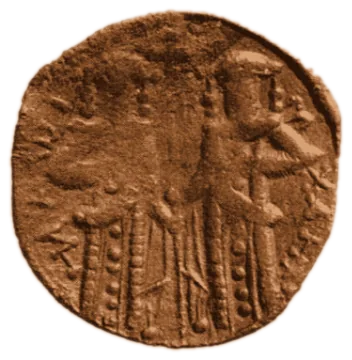
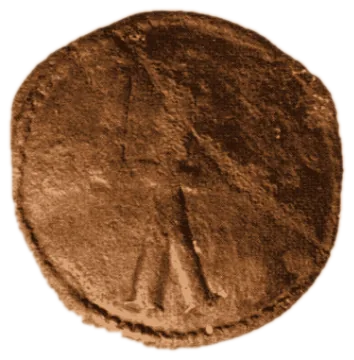
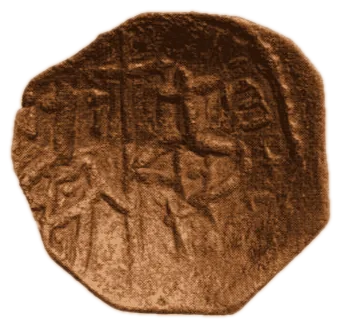
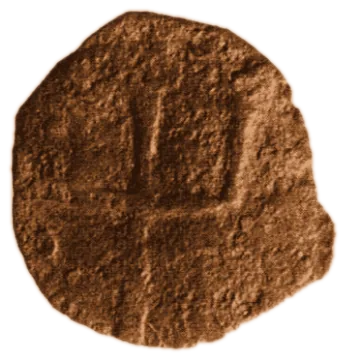
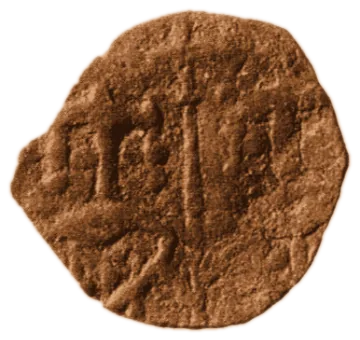
Coin photographs from A. Radushev & G. Zhekov, Catalogue of Bulgarian Medieval Coins IX–XV c. (Agató, 1999).
In the news
- Tsar Mihail III Shishman, the bold descendant of the Asenids11 February 2023 · Prof. Plamen Pavlov, Trud