
Shishman dynasty
Ivan Alexander
Nephew of Michael III Shishman, son of despot Sratsimir and Petritsa (Michael's sister). A long, culturally brilliant reign; but he ultimately divided the realm between his sons, weakening it before the Ottoman threat.
Biography
Ivan Alexander, tsar of Bulgaria from 1331 to 1371, belonged to the Shishman dynasty but deliberately emphasized his descent from the older Asen house, hence the form Ivan Alexander Asen found in the sources. He was the eldest son of Despot Sratsimir and Kera Petritsa, a sister of Tsar Michael III Shishman, and was therefore the reigning tsar’s maternal nephew. His known siblings were Elena of Bulgaria, Yoan Komnin Asen, Michael Asen Sratsimirov, Dragushin, and Theodora Sratsimirova. His birth date is not securely recorded. Michael III granted him the rank of despot and an appanage centred on Lovech, placing him among the foremost magnates of the realm by the late 1320s. He participated in the disastrous battle of Velbazhd on 28 July 1330, where Michael III was defeated and mortally wounded by the Serbs.
The defeat at Velbazhd created the political crisis from which Ivan Alexander rose. Serbian pressure secured the Bulgarian throne for Michael III’s son Ivan Stefan, but his reign lasted only seven or eight months and rested upon the unpopular ascendancy of Queen Mother Ana-Neda and a pro-Serbian faction. Meanwhile Andronikos III Palaiologos abandoned the supposedly firm and perpetual Bulgarian-Byzantine peace concluded in 1328 or 1329. Taking advantage of Michael III’s death, the emperor occupied Anchialos, Mesembria, Aytos, Ktenia, Rusokastro, and Yambol with little resistance. The court at Tarnovo consequently divided between the supporters of Ana-Neda and Belaur, Michael III’s brother, and an Asen-oriented group associated, though perhaps not openly, with Despot Ivan Alexander.
In the spring of 1331 the protovestiarios Raksin and the logothete Philip led the discontented Bulgarian aristocracy against Ivan Stefan. According to John Kantakouzenos, one of the principal narrative authorities for the reign, the two officials then readily persuaded the other powerful men to elect Ivan Alexander. Kantakouzenos presents the future tsar as largely passive, but the Bulgarian historical interpretation quoted in the excerpts cautiously suggests that Ivan Alexander may himself have organized his cousin’s deposition while allowing Philip and Raksin to remain publicly in the foreground. This remains an inference rather than an established fact. Ivan Stefan and Ana-Neda fled to Serbia and later, after relations between Serbia and Bulgaria improved, sought refuge in Dubrovnik; documents from 1335 to 1347 refer mainly to Ana and her household, and Ivan Stefan’s later fate is unknown.
Ivan Alexander inherited both an external war and a serious internal challenge. Belaur entrenched himself at Vidin and became the focus of opposition to the new ruler; Kantakouzenos later compared the upheaval to a civil war. The sequence is imperfectly documented. Ivan Alexander apparently neutralized Belaur sufficiently to campaign in the southeast before finally suppressing his movement, and he sought Tatar mercenaries who, rather than marching directly against Vidin, joined him near Rusokastro. The panegyric in the Psalter or Pesnivets of 1337 celebrates the tsar as recovering Bdin, the Danubian lands, and territory as far as the Morava, but this is court rhetoric and cannot be treated as a precise campaign record. What can safely be said is that Belaur’s resistance was overcome and that Ivan Alexander restored royal authority over Vidin during the early consolidation of his reign.
Ivan Alexander chose to strike first against Byzantium rather than Serbia. His southeastern campaign culminated in the Bulgarian victory over Andronikos III at Rusokastro in 1332, achieved with the assistance of the Tatar contingent. The battle is conventionally placed on 18 July 1332, although one supplied passage prints 18 July 1331; that reading conflicts with the established sequence and should be recognized as a chronological discrepancy in the excerpts. The ensuing peace restored at least part of the recently lost Black Sea and Thracian territory, including strategically important fortified towns, without carrying Bulgarian expansion substantially beyond the recovery of former possessions. The agreement greatly strengthened the new tsar’s domestic prestige and was sealed by plans for the marriage of his son Michael Asen to Maria, also called Irene, daughter of Andronikos III.
The Serbian problem was settled by dynastic diplomacy. After Stefan Dušan displaced his father, Stefan Uroš III Dečanski, and was crowned king on 8 or 9 September 1331, Ivan Alexander negotiated with the new ruler rather than attempting to reverse the outcome of Velbazhd. On Easter, 19 April 1332, his sister Elena married Dušan. The marriage ended immediate hostility and inaugurated a Bulgarian-Serbian peace that was never formally broken during Ivan Alexander’s reign. In the short term it secured the western frontier and completed the stabilization achieved at Rusokastro. In the longer term, however, the agreement gave Dušan freedom to expand through Macedonia and Albania while Bulgaria concentrated upon eastern Thrace. The contents of the treaty are unknown, and any formal division into spheres of influence remains conjectural.
Ivan Alexander’s own first marriage was likewise an instrument of international policy. His wife Theodora Basaraba was the daughter of the Wallachian voivode Ivanko Basarab, and the union connected Tarnovo with the rising power north of the Danube and helped assure Wallachian support. By 1332 the Bulgarian ruler was thus linked by marriage to Wallachia, Serbia, and Byzantium: Dušan was his brother-in-law, while the projected union of Michael Asen and Maria-Irene was to make Andronikos III his co-father-in-law. The Byzantine marriage was not immediately celebrated. Kantakouzenos reports that Ivan Alexander later reminded Andronikos of the promise and that the emperor, after some hesitation, accepted in the interests of state. The wedding finally took place with ceremony at the Komnenian Meadows near Adrianople, either in the autumn of 1338 or the spring of 1339; the supplied sources do not resolve the alternative dating.
The first decade of the reign was memorialized in the Pesnivets of 1337. Its panegyric, probably delivered by a monk named Simon, applies more than twenty laudatory epithets to Ivan Alexander and compares his military power to that of Alexander the Great. It praises him for overcoming the Greek emperor, recovering fortified cities, and ruling from Mesembria and the coast to Bdin and the Morava. Such claims reveal the ideological confidence of the restored court more securely than they map the tsar’s actual frontiers. Ivan Alexander also associated three sons—Michael Asen, Ivan Sratsimir, and Ivan Asen—with the supreme power by granting them the title of tsar. This early multiplication of crowned sons was intended to advertise dynastic security and continuity, although it later complicated rather than settled the succession.
The Byzantine civil war of 1341–1347 offered Ivan Alexander opportunities that he exploited only cautiously. Bulgarian forces attempted to obtain territory in Thrace, but the narrative assessment in the supplied works describes a repeated pattern of incursions, failure or limited success, renewed peace, and withdrawal. He recovered some Bulgarian towns under Byzantine control, yet made no comparable bid for Macedonia and did not establish cooperation with the independent ruler Momchil. In the summer of 1342 his sister Elena travelled to Tarnovo. Kantakouzenos gives no details of her discussions with Ivan Alexander, so it is unknown whether she proposed joint campaigns, a division of conquests, or merely a political understanding; nevertheless, the timing makes a diplomatic purpose more probable than a purely familial visit.
While Bulgaria remained focused upon Thrace, Stefan Dušan transformed the western Balkans. By 1343 he had taken much of Albania, including Berat, Kanina, and Kruja, though not Dyrrachion, and Serbian armies had reached Vodena, Kastoria, and Florina. Melnik and Zihna followed, and on 25 September 1345 Dušan entered Serres in triumph. Ivan Alexander offered no effective opposition to these conquests by his brother-in-law. The peace of 1332 protected Bulgaria from a western war, but it also left Serbian expansion unchallenged and encouraged the formation of autonomous lordships in lands once claimed by Tarnovo. Later Serbian assertions that Dušan ruled Zagore as far as Vidin, preserved for example in a Hilandar manuscript note, are best understood as expressions of imperial pretension rather than reliable evidence of direct Serbian administration throughout that area.
Dušan assumed an imperial title late in 1345 and was solemnly crowned at Skopje at Easter 1346. The supplied excerpts disagree over the exact date, giving both 14 and 16 April, and should not be artificially harmonized. Patriarch Simeon of Tarnovo and All Bulgaria participated in the coronation; some modern scholars have proposed that Ivan Alexander attended personally, but another assessment in the excerpts considers his presence unlikely and only the patriarch’s mission certain. The event starkly demonstrated Serbia’s new pre-eminence, for Dušan styled himself emperor of Serbs and Greeks and even advanced claims involving Bulgarian lands. During the Byzantine civil conflict Ivan Alexander also declined Kantakouzenos’s proposal for concerted action against the Turks, reportedly under Dušan’s influence. The missed alliance was especially consequential in retrospect, as Turkish and ultimately Ottoman pressure became the gravest threat to the Balkan states.
The political limitations of the middle and later reign contrasted with an exceptional cultural flowering at Tarnovo. The court sponsored the illustrated Manasses Chronicle, while the magnificent Gospels of Tsar Ivan Alexander, dated 1355–1356, preserved an imposing visual statement of sacred monarchy and dynastic order. The ruler appears there as a stern and majestic Christian sovereign, and the imagery associates royal power with divine sanction. He bore the traditional title tsar and autocrat of all Bulgarians and Greeks, an ideological formula far more expansive than his effective authority. The literature of the age hailed him as a second Alexander of Macedon and a new Constantine the Great. Tarnovo became a major centre of Slavonic letters, manuscript production, painting, and religious art, making the reign culturally brilliant even as the state’s political cohesion weakened.
Ivan Alexander’s second marriage transformed the balance within the royal family. He separated from Theodora Basaraba and married Sara, a Jewish woman who converted to Christianity and took the name Theodora. Sara-Theodora appears in the royal imagery with the title autocratrix, and the miniatures publicly proclaim both her elevated status and a revised order of succession. No secure date for the marriage is supplied. Ivan Sratsimir, the eldest surviving son of the first marriage, lost the prospect of succeeding at Tarnovo, while Ivan Shishman, Sara-Theodora’s son, was preferred there. The broader list of Ivan Alexander’s children comprises Michael Asen IV, Ivan Asen IV, Ivan Sratsimir, Ivan Shishman, Kera Tamara, Keratsa Maria, Ivan Asen Alexandrov, Desislava, and Vasilisa; the supplied evidence does not securely assign every child to one of the two mothers, and it would be unsafe to do so.
After Dušan’s death on 20 December 1355, Serbia fragmented rather than returning former western lands to Bulgarian control. Ivan Alexander’s sister Elena, now the nun Elisaveta, established herself at Serres and exercised extensive authority there, initially acknowledging her son Stefan Uroš but governing with her own court and officials. Within or beside the Bulgarian realm, the lordship of Dejan around Velbazhd and later that of his sons, Despot Jovan Dragaš and Konstantin Dragaš, developed without effective intervention from Tarnovo. Dobruja likewise separated gradually: the rulers first based at Karvuna and later at Kaliakra moved from an initial connection with Tarnovo toward an increasingly independent Black Sea policy. Vidin became the seat of Ivan Sratsimir and evolved into a virtually separate tsardom, even seeking closer ecclesiastical relations with Constantinople.
The late reign also faced the southeastward advance of Louis I of Hungary. Ivan Alexander used Vidin as a buffer protecting Tarnovo, but the burden fell upon an old Bulgarian region whose population endured Hungarian occupation and the coercive activity of Franciscan friars. The tsar eventually employed his diplomatic skills to organize the coalition that expelled the occupiers and restored Ivan Sratsimir, although the supplied excerpts do not furnish a sufficiently complete operational chronology to name particular engagements without speculation. Commercially, Bulgaria remained connected with Venetians and Genoese, whose western interest was primarily trade, while papal contacts were intermittent; a papal letter to the tsar’s mother, Kera Petritsa, belongs to the surviving diplomatic dossier. The excerpts provide no secure details about specific taxes, markets, mint locations, denominations, or issues of Ivan Alexander’s coinage. Although monetary evidence is essential to the period, it would be misleading to reconstruct his fiscal and coinage policy from the cited reference to the earlier joint coins of Michael III and Ivan Stefan.
Church and dynasty remained central to Ivan Alexander’s conception of government. Patriarch Simeon’s role at Skopje shows the international standing of the Tarnovo patriarchate, while the manuscripts sponsored by the court joined Orthodox devotion to imperial representation. At the same time, ecclesiastical unity weakened as Vidin sought to loosen its ties with Tarnovo. Succession practice was not governed by a narrow, uncontested rule: the later Rila chrysobull of Ivan Shishman speaks broadly of inheritance by a beloved son, a brother, or another relative. Ivan Alexander tried to restrict uncertainty by elevating his sons, but his final arrangement institutionalized division. Ivan Sratsimir held Vidin, whereas Ivan Shishman was designated for Tarnovo and became Ivan Alexander’s successor there. Together with autonomous Dobruja and the western lordships, this partition left the Bulgarian lands dangerously disunited before the advancing Ottoman power.
Ivan Alexander died on 17 February 1371 after a reign of approximately forty years. The Anonymous Bulgarian Chronicle states that the Tarnovo tsar died before the battle on the Maritsa of 26 September 1371, but its surviving year 6870 corresponds to 1362. The accepted correction, proposed by Petar Mutafchiev, reads 6879 and yields 1371, a date consistent with evidence that Ivan Alexander was still alive in 1369. His legacy is consequently double-edged: he restored royal authority after Velbazhd, defeated Byzantium at Rusokastro, maintained long peace with Serbia, and presided over one of medieval Bulgaria’s greatest cultural epochs, yet he failed to arrest territorial decentralization and left Vidin and Tarnovo to rival dynastic branches. The evidence itself demands caution. Kantakouzenos was both an informed contemporary and a participant with political interests; Nikephoros Gregoras supplies a partly independent Byzantine perspective; Archbishop Danilo, Gregory Tsamblak, Dubrovnik documents, the Hilandar note, the Matejče genealogy, the Pesnivets panegyric, the Gospels, the Manasses Chronicle, charters, papal letters, and inscriptions such as that associated with the Virgin Eleousa icon from Mesembria preserve valuable but uneven testimony. Their omissions, rhetorical exaggerations, and conflicting dates explain why Ivan Alexander can be portrayed at once as a majestic restorer, a cautious diplomat, and the ruler under whom political unity finally began to dissolve.
Sources
“Иван Александър бил син на Срацимир, сестрин син (племенник) на Михаил III Шишман.”
— The Asen Family (1186–1460): Genealogy and Prosopography, p. 129“Иван Александър издигнал в съцарско достойнство тримата си синове — Михаил Асен, Иван Срацимир и Иван Асен.”
— History of Medieval Bulgaria, 7th–14th Century, p. 862
Images
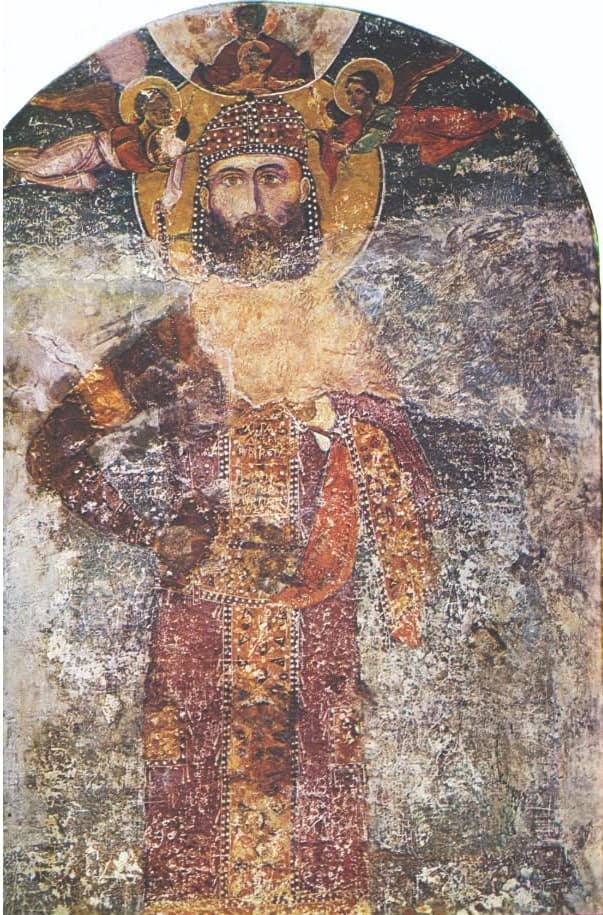
Fresco portrait of Tsar Ivan Alexander crowned by angelsPublic domain
Coins (120)
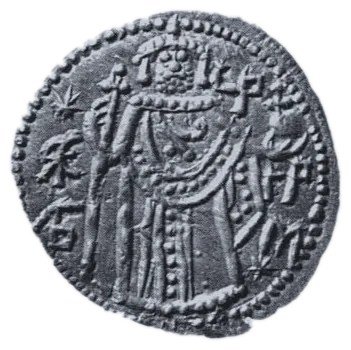
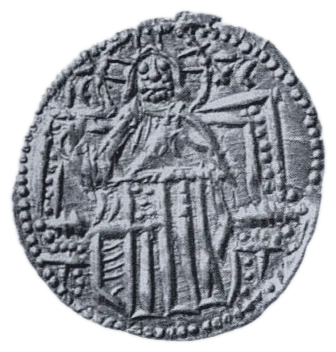
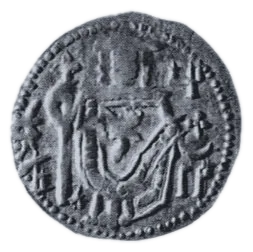
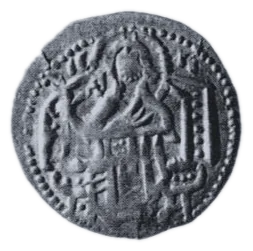
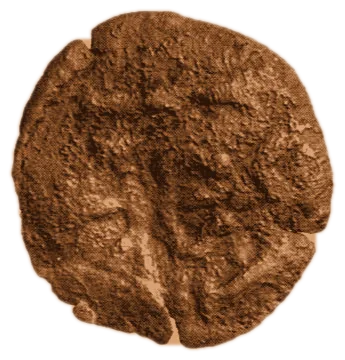
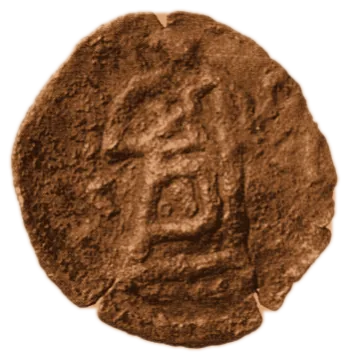
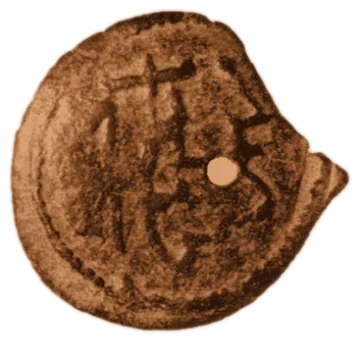
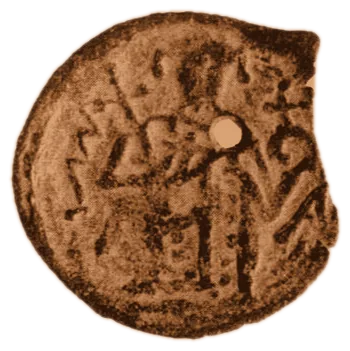
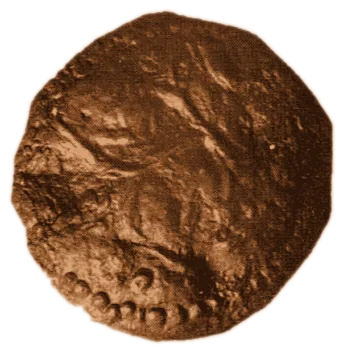

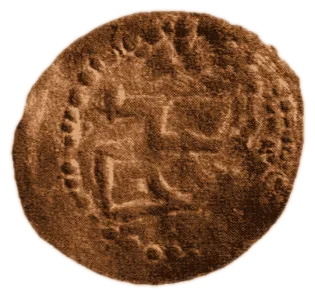
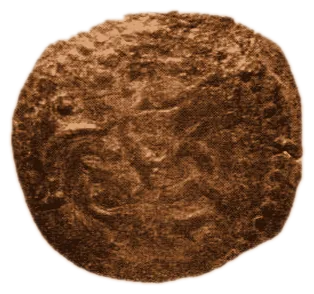
Coin photographs from A. Radushev & G. Zhekov, Catalogue of Bulgarian Medieval Coins IX–XV c. (Agató, 1999).
In the news
- The noblewomen of the Bulgarian Morava valley in the 14th century28 March 2026 · Prof. Plamen Pavlov, Trud
- Noble ladies of medieval Dobrudzha and the Black Sea coast in the 14th century22 March 2026 · Prof. Plamen Pavlov, Trud
- More on the women rulers of Macedonia and present-day Albania, 14th–15th centuries14 March 2026 · Prof. Plamen Pavlov, Trud
- The women who ruled the Bulgarians of Macedonia in the 14th century7 March 2026 · Prof. Plamen Pavlov, Trud
- St Patriarch Evtimiy: the 'good shepherd' in a time of trial17 January 2026 · Prof. Plamen Pavlov, Trud
- The Elisavetgrad Gospel and the cultural reach of medieval Bulgaria10 January 2026 · Prof. Plamen Pavlov, Trud
- The Bachkovo monastery: a hearth of faith and the Bulgarian spirit16 August 2025 · Prof. Plamen Pavlov, Trud
- Sredets/Sofia and the art of the Second Bulgarian Tsardom beyond the capital9 August 2025 · Prof. Plamen Pavlov, Trud
- The lords of Sredets/Sofia in the 14th century8 February 2025 · Prof. Plamen Pavlov, Trud