
1.Political Narrative
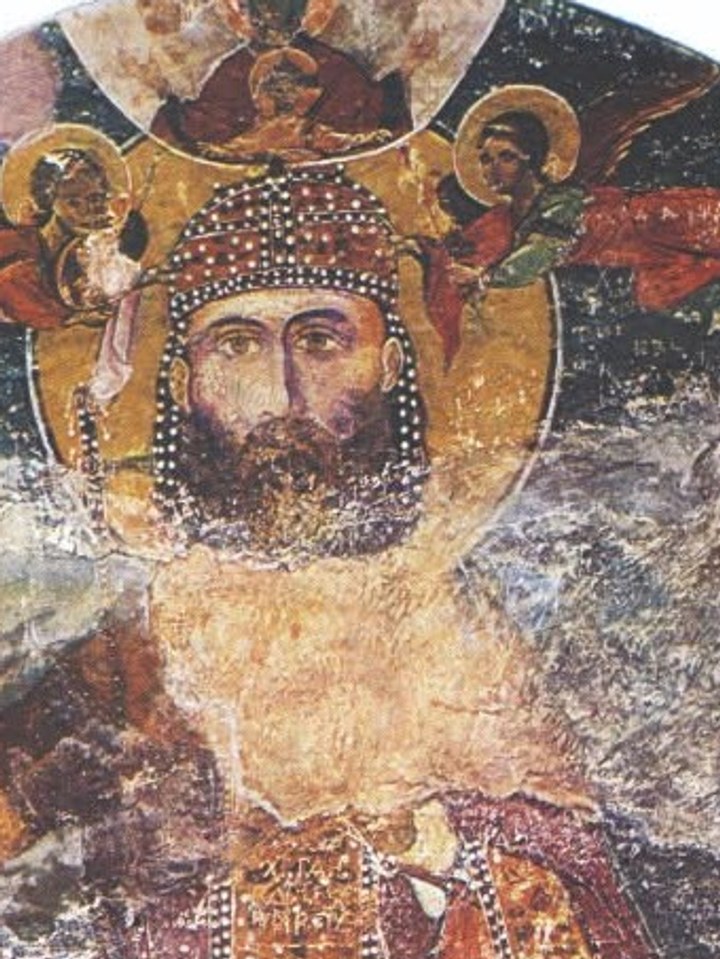
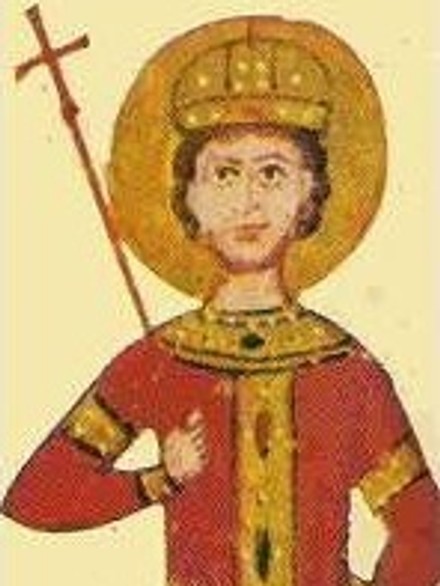
The fragmentation that had become visible before 1371 now hardened into a final political order, and the last quarter-century of the Tarnovo tsardom unfolded as a sequence of desperate adjustments to Ottoman pressure. On 17 February 1371 Ivan Alexander died after nearly four decades on the throne, and the succession in Tarnovo passed smoothly to his son Ivan Shishman. The smoothness of that transition, rare in the history of the late medieval Bulgarian state, concealed the deeper fact that the old unity of the kingdom was already gone. Ivan Shishman inherited not a whole realm but the principal remnant of a divided political landscape, while his half-brother Ivan Sratsimir ruled in Vidin with the resources and ambitions of a separate dynastic centre. From this point onward Bulgarian politics were no longer those of a single throne. They became the politics of several Bulgarian lands, each trying to survive in the shadow of larger powers and each exposed to Ottoman advance in a different way.
The first great test came only months later, at the battle of Maritsa on 26 September 1371. There the army of the brothers Mrljavchević was annihilated by the Ottomans near Černomen, and the event marked a decisive turning point in Balkan history. The victory opened the road deeper into the peninsula and transformed Ottoman pressure from raiding and piecemeal seizure into a systematic struggle for mastery. For the Bulgarian ruler in Tarnovo the battle had immediate and grim consequences. Ivan Shishman, whose kingdom lay directly on the path of expansion, was forced into a political posture unlike that of his father: one of negotiation, accommodation, and dependence. The marriage of his sister Kera Tamara to Sultan Murad I, presented by the sources as a pledge of peace, belonged to this early phase of survival politics. It was not a triumph but a concession, a dynastic sacrifice meant to buy time for a state that was already losing the initiative. Yet the peace it symbolized was fragile, for Ottoman troops continued to press forward, and the balance established after Maritsa made the Bulgarians subjects of a new strategic reality they could neither reverse nor escape.
At the same time the northern and northwestern lands moved farther away from Tarnovo. Ivan Sratsimir, who after 1371 had no reason to challenge the younger brother who had been entrenched as heir, consolidated his own position in Vidin and gradually detached it from the Tarnovo political orbit. His policy was shaped less by emotional rivalry than by calculation. Vidin was safer than Tarnovo, sheltered behind the Danubian frontier and farther from the immediate theatre of Ottoman operations, yet it too was drawn into the same tightening noose. One of the clearest signs of this growing separation came in 1381, when Sratsimir asked the Constantinopolitan patriarchate to appoint Kasinios as metropolitan of Vidin. In ecclesiastical terms, as in political terms, this was a rupture with the old centre. Vidin no longer stood as a mere provincial appendage of Tarnovo; it had become a state in its own right, still Bulgarian in language and dynastic legitimacy, but increasingly autonomous in action and orientation. The same decade saw the broader Balkan order grow harsher, as Ottoman power advanced through Thrace and Macedonia and the Bulgarian lands were forced to reckon with the loss of strategic towns and trade routes.
The year 1385 brought a further blow when the Ottomans took Sofia. This was not merely the loss of another fortress; it was the loss of a key hinge in the communications of western Bulgaria, a city whose possession mattered to both Tarnovo and Vidin. The seizure of Sofia was part of the larger Ottoman drive along the valleys that linked the Balkans to Central Europe, and it demonstrated that vassalage did not protect even those rulers who had already submitted. The attack of Ali Pasha in 1388 deepened the crisis. It struck at the Bulgarian lands with a force that reached Preslav, Shumen, and Silistra, while Ivan Shishman was besieged in Nicopolis and forced into an especially disadvantageous peace. The terms of submission were severe: the Bulgarians were again Ottoman vassals, but now under harsher conditions, with Turkish garrisons allowed inside the country and Ottoman troops granted freedom of movement through Bulgarian territory. The old kingdom, already fragmented, was thus reduced to a military corridor through which an empire could pass at will. When the wider Balkan world was shaken by the battle of Kosovo in 1389, the Bulgarian situation was already one of deep dependence, and the catastrophe of the Serbian lands only confirmed the new Ottoman order that had been taking shape for years.
The final collapse came with the siege and fall of Tarnovo in July 1393. Ivan Shishman’s attempt, in the winter of 1392–1393, to seek support from King Sigismund of Hungary showed that he still hoped to loosen Ottoman domination, but the effort instead provoked a major Ottoman invasion. Tarnovo resisted heroically for three months before falling on 17 July 1393. With its capture the last great political and symbolic centre of medieval Bulgaria ceased to exist as an independent capital, and the Ottoman administration was introduced directly into the heart of the country. Bulgaria was no longer merely a vassal land; it became a province of the Ottoman Empire in Europe, while Ivan Shishman was taken prisoner and later executed. Only Vidin remained outside direct Ottoman rule, where Ivan Sratsimir continued to reign for a little longer as the final native prince of the old state.
That last remnant ended in 1396. The crusading campaign led by King Sigismund, intended to relieve the Balkans and break Ottoman power, culminated in the disaster at Nicopolis on 25 September. The defeat sealed the fate of the remaining Bulgarian stronghold. Vidin was conquered, and Ivan Sratsimir was captured. With his fall the line of independent Bulgarian rulers in the medieval sense came to an end. From 1371 to 1396 the political history of Bulgaria had moved from division to vassalage, from vassalage to direct conquest, and from a fractured realm still capable of negotiating with its enemies to a land absorbed into Ottoman power. The old royal succession survived only as memory, while the map itself—Tarnovo, Vidin, and the other Bulgarian centres that had once competed with one another—had been remade by force.
2.Wars and Warfare
The wars that broke the Tarnovo kingdom were not fought in a single, clean sequence of pitched battles, but in a widening process of pressure, raid, occupation, and forced submission. The Ottoman advance after 1371 had a dual character. On one level it still relied on the old free-ranging war bands, ghazis under their own begs, men drawn by plunder, pasture, and the rewards of movement rather than by any rigidly centralized command. On another, it increasingly served the policy of a growing state. Once Adrianople had become the chief Ottoman stronghold in Europe, the raids could be coordinated from a strategic base and directed with purpose along the river valleys of Thrace and Macedonia. The result was not merely devastation but a military geography of conquest: strongpoints, garrisons, and lines of advance laid down so that each new campaign could begin from ground already secured. In this way the Ottoman way of war became methodical, patient, and cumulative, and the Bulgarian lands lay directly in its path.
The battle at the Maritsa in September 1371 marked the turning point from frontier raiding to the crushing of organized Christian resistance in the central Balkans. John Ugljesa and Vukasin had tried, belatedly, to meet the enemy before he could consolidate his hold on the south-east. Their combined host moved along the road to Adrianople, but the Turks chose their ground well and struck near Crnomen on the Maritsa river. The encounter was a catastrophe for the Serbians and for the whole Christian cause in the region. Contemporary and later accounts disagree over numbers and details, yet all agree on the scale of the defeat and on the fact that the Turkish force was mixed in composition: not a single, uniform army, but a body of warriors drawn from the Ottoman military world already established in Europe. Murad himself was not on the field; the action was led by Hadji-Ilbeg and Lala Shahin. What mattered was less the exact tally than the military effect. The Serbian princes were killed, their men were slaughtered in heaps, and the Maritsa valley became the open road into Macedonia, Serbia, and Greece. From this moment the Ottoman war machine no longer appeared as a series of predatory incursions alone. It stood revealed as a power capable of destroying a major coalition army and turning victory into political dominion.
That dominion took the form of vassalage, tribute, and military dependence. The surviving Christian rulers were not simply left to reign as before; they were folded into the Ottoman order. They were expected to pay tribute and to furnish troops when called upon, fighting alongside the very enemy whom they had failed to expel. This pattern, first fixed in the aftermath of Maritsa, was to become the normal Ottoman method of dealing with Balkan princes. It offered them a precarious survival while stripping them of initiative. For Bulgaria the pressure was especially severe. The Tarnovo realm had already lost the old strategic balance that once tied it to Constantinople; now the Ottoman presence occupied that place in the political and military horizon. Even where a ruler still sat on his throne, the relationship between ruler and invader had shifted. The Balkans were no longer being tested by raids alone, but by a system that used local obedience, frontier bases, and the threat of renewed invasion to turn princes into auxiliaries and then into subjects.
The campaigns of the 1380s show this mechanism at work with brutal clarity. Ottoman forces did not cease raiding simply because some rulers had submitted. Vassalage did not halt predation, nor did it spare the towns of vassals from seizure. Sofia fell in 1385, and Nis in 1386, as the Ottoman tide pressed deeper up the Maritsa and Vardar corridors and the overland routes from western Europe toward Byzantium narrowed further. In the later 1380s the military pressure turned again against Bulgaria itself. The Ottoman army moved with deliberate method: where a fortress or town was taken, it became a base for the next advance, and the establishment of garrisons inside Bulgarian territory gave the conquerors the freedom to move their troops through the country at will. In 1388, after Bulgarian attempts to shake off vassalage, a major invasion struck Preslav, Shumen, and Silistra. The campaign ended with Tsar Ivan Shishman besieged at Nikopolis and forced into a peace so disadvantageous that it left Bulgaria again under Ottoman overlordship, now with a formal right for Ottoman troops to occupy bases inside the country and pass across it freely. The war had become not merely a contest for cities, but for access, movement, and control of the terrain itself.
The siege and fall of Tarnovo in 1393 brought this long pressure to its terrible culmination. The attack followed the logic already established in earlier campaigns: once the surrounding strongholds had been reduced and the road to the capital secured, the Ottoman army could strike at the heart of the kingdom with confidence in its rear. Tarnovo resisted heroically for three months, but the city could not long withstand an enemy who had learned how to isolate, encircle, and wear down his opponents. When it fell in July 1393, the defeat was not only military but administrative: the Ottoman state moved at once to annex the country, and Bulgaria became subject to direct rule rather than indirect vassalage. The distinction mattered. A vassal prince might still hope to bargain, evade, or delay; an annexed land was to be organized, garrisoned, and incorporated. The campaign that ended Tarnovo’s independence was therefore not a mere sack of a city, but a decisive act in the reordering of Balkan war. After 1393 the struggle was less about whether Bulgarian rulers could preserve a remnant of autonomy than about whether any Christian force could gather in time to reverse the Ottoman advance.
That question was answered at Nicopolis in 1396, where the final great crusading effort of the century collided with Ottoman power. King Sigismund of Hungary assembled a major Christian expedition, drawing its bulk from Hungary and France, and the armies crossed the Danube to meet Bayezid’s advancing force. Yet the crusade was fatally divided from within. The French knights refused to follow Sigismund’s plan, though he understood Turkish battle practice better than they did; command was splintered, and discipline could not compensate for the confidence and experience of the Ottoman troops. The Turks met the crusaders in September and won a massive victory. Thousands of Christians were captured for ransom, and some remained in captivity for years. Sigismund escaped only narrowly. The defeat had immediate consequences for the Bulgarian lands as well, for after Nicopolis the Ottoman sweep through the Vidin province finished off the last independent Bulgarian power. By the end of the campaign the military landscape of the lower Danube had been transformed: from a patchwork of principalities, contested fortresses, and reluctant vassals, it had become a field dominated by an army that combined raiding bands, mounted shock troops, garrison warfare, and strategic coordination into a single instrument of conquest.
3.State and Institutions
The death of Ivan Alexander in 1371 did not simply end a long reign; it exposed the changing anatomy of power in the Bulgarian lands. The succession of Ivan Shishman in Tarnovo preserved the language of universal kingship, but the reality behind that language had already altered. Contemporary and near-contemporary observers increasingly spoke of the Bulgarian lands as three separate Bulgarias, and by the middle of the 1370s the old image of a single imperial center had been replaced by a politically fractured landscape, with Tarnovo, Vidin, and Kaliakra standing as the principal poles of authority. The court at Tarnovo still inherited the great ideological capital of the Asenids, and its chancery continued to speak in the grand formula of the ruler as king and autocrat of all Bulgarians and Greeks, yet by the reign of Ivan Shishman that formula had become less a statement of effective sovereignty than a solemn reminder of what had been lost.
This tension between inherited ideology and shrinking power shaped the whole machinery of the state. The Bulgarian kingdom had long organized itself through an administrative vocabulary and territorial practice that followed Byzantine models with remarkable fidelity, and this remained true in the last decades before the Ottoman conquest. Provinces were still understood as chory, lands, areas, and regions; authority was exercised through local centers rather than by direct and uniform rule from Tarnovo; and the old imperial style of governance survived in the form of a layered bureaucracy that extended from the palace to the towns and fortresses. Yet the fragmentation of the late fourteenth century gave these structures a new and sharper importance. When central power weakened, the role of regional centers grew. Vidin had long functioned as a semi-independent capital in its own right, and even in the core lands the administrative life of the kingdom increasingly depended on cities and strongholds such as Sofia and the fortified sites of the western and northern frontier. The state remained recognizably imperial in form, but the empire it resembled was now broken into competing territorial jurisdictions.
The court and provincial offices of this period reveal both continuity and decline. The chancery still operated through titles and functions deeply marked by Byzantine influence, and its language was richly Greek in origin. Offices such as kefealia, praktor, kastrophylax, and desetnik appear as part of a provincial order that was at once judicial, fiscal, and military. The kefealia in particular stands out as the urban head of authority, especially in Sofia, where he appears at the front of lists of officials associated with the city and its surrounding district. That same urban and provincial apparatus is visible in royal protective charters, where the ruler explicitly forbids such officers from entering monastic lands, lodging within them, or exacting burdens from the dependent population. The very need to name these officials in immunity formulas shows how far the state’s reach extended, and how much of daily administration passed through their hands. Even as Ottoman pressure tightened, the old bureaucratic habit of issuing commands, exemptions, and protections remained one of the last visible expressions of state power.
The boyar class was central to this structure, but in the late fourteenth century it increasingly embodied the contradictions of the age. Boyars were not merely courtiers at Tarnovo; they were local power-holders, commanders of fortresses, and masters of districts whose authority depended on a mixture of rank, office, and personal following. Titles such as sevast continued to circulate among them, though the dignity itself had long since declined from its earlier prestige and by the fourteenth century occupied a much lower place in the hierarchy than it once had. That very decline is significant. It shows how status had become detached from a stable court order and had instead become one element in a competitive system of regional power. A sevast in the late fourteenth century could be a nobleman of weight, but he was also part of the administrative and military landscape of a state under strain, where title alone no longer guaranteed central influence. The inscriptional and documentary evidence for these years suggests a nobility that remained indispensable but increasingly localized: embedded in fortresses, tied to towns, and often standing at the junction of lordship and office.
Law and taxation in such a state were less a matter of a unified legal code than of negotiated privilege and extraction. Royal charters were the principal instruments through which the crown still asserted its authority, and their immunity clauses illuminate the practical workings of government. Monasteries were protected from the entry of officials, from the disturbance of their villages, and from various forms of interference by local agents of power. At the same time, the very breadth of the official categories listed in these documents implies a fiscal and judicial apparatus that could press deeply into the countryside. The royal grant did not abolish taxation or administrative supervision; it defined exceptions to them. Such charters therefore reveal a kingdom in which law functioned through privilege, where the ruler’s authority appeared most clearly in the power to exempt, to command, and to delimit the reach of his servants. In the age of Ottoman advance, that chartered world became increasingly important, because it preserved at least fragments of order even as the monarchy itself was being reduced to a set of threatened enclaves.
By 1396 the old machinery of the Bulgarian state had not vanished, but it had been transformed almost beyond recognition. Tarnovo still claimed the dignity of a patriarchal and royal center, and the diplomatic language of the 1380s could still address it as the seat of a patriarch of all Bulgaria, yet the effective political field had already moved elsewhere. The defeat at Nicopolis marked the end of any serious hope that the remaining Bulgarian polities could recover the unity of the past. What survived was a combination of courtly memory, local lordship, and administrative routine, all under increasing Ottoman pressure. The state of the last years of the fourteenth century was therefore not a collapsed shell, but a narrowed and overburdened structure: a monarchy that retained titles, offices, and charters, while the territorial basis that had once made them meaningful steadily disappeared.
4.Church and Letters
The church remained the most durable framework of Bulgarian continuity in these years, even as the political map broke apart. Its strength had been prepared long before the catastrophe of the 1390s, above all in the Athonite monasteries, where Bulgarian clerics and bookmen had worked as translators, copyists, and transmitters of learning. Around them stood figures such as Gavriil and his helper Serapion, but also men who were to become the great names of the age: Theodosius II, Euthymius, Cyprian, later metropolitan of Kiev and all Rus, and Ephrem, later patriarch of the Serbian Church. What emerged from that monastic world was not a scattered activity but a disciplined literary culture, one that joined patient manuscript labour with a broader Orthodox humanism. The fruits of that labour did not appear at once. They ripened slowly, and only in time did they become visible to the larger Orthodox world. Yet it was from this Athonite apprenticeship that the later authority of Euthymius grew, and with it the prestige of the Tarnovo literary circle and the school that carried Tarnovo’s name far beyond Bulgaria.
At the same time, the Tarnovo patriarchate remained an institution of real symbolic weight, even when the realm itself was being pulled apart. Its claim to universal dignity was not merely ceremonial. In the late 1360s the Constantinopolitan patriarchate had already entered into polemic with its Tarnovo counterpart over canonical order, baptismal practice, and the commemoration of the patriarchs. These disagreements reveal not weakness alone, but a church conscious of its own standing and jealous of its ritual independence. That same standing is visible in a remarkable document of 1386, a manual for composing letters, where the patriarch of Tarnovo is addressed with full honour as patriarch of Tarnovo and of all Bulgaria. The form of address matters. Even at a time when political fragmentation had become unmistakable, ecclesiastical language still acknowledged Tarnovo as a centre of the Bulgarian Orthodox world, and the etiquette of correspondence preserved, in formal terms, the memory of a larger and more coherent order.
Euthymius’ significance belongs precisely to this world of letters, canon, and spiritual discipline. He was not only a church leader but also a writer and organiser of literary life in the capital, and in him the legacy of the Athonite circles found its fullest expression. The Tarnovo school, shaped by such men, became the finest manifestation of the centuries-long Slavo-Byzantine unity in spiritual life. Its work was daily, demanding, and often outwardly unremarkable: translating, revising, copying, standardising liturgical texts, and refining the language in which orthodoxy was taught and celebrated. Yet this apparently quiet labour gave Bulgarian Christianity one of its highest achievements. In Tarnovo the written word became an instrument of ecclesiastical order and cultural authority, and through Euthymius it acquired the prestige of a deliberate programme. The school was not an isolated circle of scholars; it was the intellectual expression of a capital that still believed itself capable of cultural leadership.
That belief survived the mounting military pressure of the last quarter of the century and, paradoxically, may have been sharpened by it. The age was marked by devastation and by a brilliant spiritual life that coexisted with war, insecurity, and territorial loss. The capital of Tarnovo reached the summit of its cultural development precisely when the broader political structure was collapsing, and the result was a burst of values that earlier generations had not known. The interest of broad social groups in the inherited values of the state remained strong, and the church was central to that continuity. Monasteries, especially those tied to the capital and to the old royal patronage, stood as repositories of memory, prestige, and sacred legitimacy. In them, the literary culture of the epoch was sustained, and through them the idea of Bulgaria continued to be articulated in prayer, book, and ritual even when the state could no longer safeguard its own unity.
After Tarnovo fell, that sacred and literary inheritance did not vanish, but it began to move. The fragmentation of the Bulgarian lands did not destroy the prestige of the old centre at once; rather, it transformed that prestige into a field of contest and migration. In 1395, in the second year after the fall of Tarnovo, Ivan Sratsimir sent his son, the young Constantin, together with Metropolitan Joasaph, on important royal business to the lost capital. Whatever the hidden purposes of that mission, its visible result was deeply symbolic: they obtained the relics of Saint Philothea, long kept in Tarnovo since the time of Kaloyan, and transferred them to Vidin. Sacred remains, like manuscripts, became bearers of continuity when political sovereignty had fractured. By the time of Nicopolis in 1396, a foreign witness could already speak of three Bulgarias, each with its own capital. Yet behind that stark division stood a common ecclesiastical memory: the patriarchate of Tarnovo, the bookmen formed on Athos, the literary school of the capital, and the monasteries that preserved, through the language of faith, the last great coherence of medieval Bulgarian culture.
5.Economy and Charters
The quarter-century from 1371 to 1396 was one of military contraction, yet not of immediate economic collapse. The shrinking of political space did not abolish the routines of production and exchange; rather, it forced them into a tighter, more exposed framework. The great cities of the age still functioned as hubs of food supply, craftsmanship, and authority. Sofia, when taken by the Ottomans in 1382, was described as containing abundant provisions — grain, flour, and livestock — together with numerous workshops, especially for ironworking and other crafts, and for the manufacture of fine and coarse woollen and cotton cloth. Such a picture is revealing: even in a frontier city under siege pressure, the economy was not merely agricultural in the narrow sense, but already urban, artisanal, and market-oriented, dependent on supplies from the surrounding countryside and on a dense web of productive skills within the walls.
The countryside remained the indispensable base of this life. The cities could feed armies and garrisons only because the surrounding districts still produced grain and supported stockbreeding on a significant scale. The evidence for Sofia suggests that provisioning inside the fortress was not accidental but was sustained by a broader regional economy, in which fields, flocks, mills, and workshops were mutually connected. This helps explain why towns held such strategic value beyond their walls: they were not simply fortresses but local centres of collection, storage, redistribution, and craft production. Even as warfare intensified after Maritsa and the political landscape fragmented into separate Bulgarian zones, the countryside and townscape continued to operate together, with the town drawing in rural surplus and returning manufactured goods and military protection. The economic vitality of such centres also explains their stubborn persistence: conquest altered sovereignty, but not overnight the material logic of settlement, transport, and supply.
Trade, meanwhile, remained a vital but increasingly precarious sphere. Royal and diplomatic charters of the late fourteenth century show how much importance rulers attached to the protection of merchants and to the regulation of movement through a landscape crowded with toll points. The granting of free passage and exemption from dues at cities, fairs, merchant villages, bridges, rivers, and roads reveals a commercial world in which every segment of travel could be fiscalized. That is precisely why a privilege mattered: it temporarily lifted the merchant out of the many layers of local exaction and made it possible to buy, sell, move, and return under royal protection, with person and property safeguarded. Such provisions also show that commerce was not confined to a single urban marketplace. It moved across roads, river crossings, and periodic gatherings, linking the inland towns with the Danubian routes, the Black Sea hinterland, and the long-distance circuits that still touched the Bulgarian lands even as Ottoman power advanced.
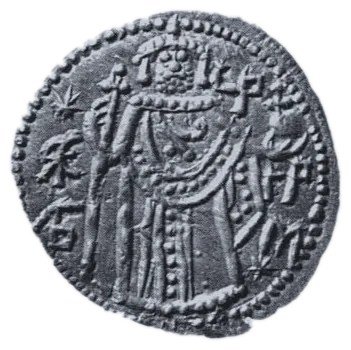
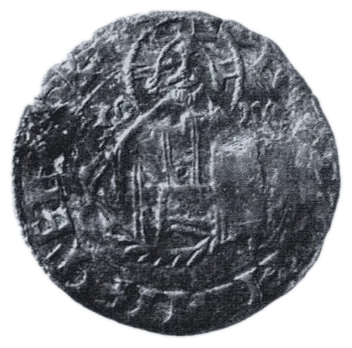
Coinage too points to an economy that still retained a degree of monetary circulation and state formality. Under Ivan Shishman and Ivan Sratsimir, silver, copper, and billon issues continued to circulate, and their very variety suggests a stratified monetary life. Silver coinage served more clearly in larger transactions and external trade, while copper and billon responded to everyday domestic needs. The presence of royal monograms, titulature, and religious images on these coins was not decorative only: it affirmed the ruler’s continuing claim to sovereign authority even when that authority was politically reduced and geographically threatened. The spread of such coinage in daily life indicates that monetary exchange had become more important than before, and that the kingdom’s later years were not a purely barter economy. The appearance of more modest base-metal issues particularly suggests routine purchase, wage payment, and the handling of smaller sums in local markets.
What the royal charters reveal most clearly is the persistence of a landholding order built on grants, exemptions, and delegated power. Monasteries remained major landholders, receiving villages, fields, and rights over people and revenues; the ruler’s charter could place a settlement within ecclesiastical possession and thereby remove it from the ordinary cycle of taxation. At the same time, the documents show how deeply fiscal and administrative power penetrated the countryside. The collection of agricultural tithes, the activity of tax officials, and the overlap of civil, military, and judicial authority in provincial hands all point to a state that had inherited a highly articulated Byzantine administrative model. Even in the late fourteenth century, the royal act was still capable of defining liberty, possession, and jurisdiction in legal form. This matters because the charter was not only a gift-document but a statement that land, peasants, dues, and exemptions were all objects of sovereign order. In that sense the charters preserve the last full expression of the medieval Bulgarian state’s economic language: a world in which landholding was political, taxation was a sign of authority, and protection from exaction could be turned into a royal favour.
Yet the charters also expose the tension of the age. Their solemn formulas, broad claims, and carefully listed rights belong to a political culture that continued to speak as though a unified kingdom still existed, even while that unity had been broken into separate Bulgarian centres and exposed to Ottoman pressure. The language of perpetual possession, lawful freedom, and royal safeguarding is therefore doubly important: it confirms the vitality of legal and administrative habits, but it also betrays anxiety about their fragility. As the century drew to its close, towns were pressured by war, rural revenues were strained, and the fiscal basis of sovereignty narrowed. Still, the documentary record shows that rulers continued to distribute land, confirm privileges, and regulate trade right up to the end of independence. Economic life was therefore not extinguished before 1396; it was compressed, defended, and increasingly written into charters that tried to preserve, by legal form, what military power could no longer securely hold.
6.Foreign Relations
The death of Ivan Alexander on 17 February 1371 did more than end a long reign; it closed the older diplomatic world in which Tarnovo had still moved in conversation, rivalry, and alliance with Byzantium. After that moment, the political map of the Bulgarian lands fractured into the “three Bulgarias” — Tarnovo, Vidin, and the Black Sea principality of Karvuna — and with fragmentation came a foreign policy of survival rather than initiative. The old Byzantine axis, which had long shaped Bulgarian international life, could no longer serve as the main frame of action. In its place stood the Ottoman Empire, already entrenched in Thrace and increasingly able to dictate the terms of every Balkan ruler’s existence. For Ivan Shishman, who inherited Tarnovo as a kingdom exposed directly to the Ottoman advance, the problem was not simply military danger but the need to negotiate with a power of a different political and civilizational type, one whose aim was not limited raiding but the subordination of the Christian states that lay in its path.
The battle on the Maritsa on 26 September 1371 made this transformation unmistakable. In the months around it, Ivan Shishman still appeared to behave in the old style of Balkan politics, avoiding open commitment while the great clash between the Serbian lords and the Ottomans unfolded. But the defeat at Crnomen changed everything. The Bulgarian ruler was effectively shut north of the Balkan range and compelled to seek accommodation with Murad I. The agreement that followed was a vassal arrangement, and the most charged symbol of it was the surrender of Kera Tamara, daughter of Ivan Alexander and sister of the new tsar. Her marriage to Murad was not an ordinary dynastic union but a political hostage settlement, a guarantee of peace, and a sign of the constrained options available to Tarnovo. Contemporary memory preserved the episode as an act of sacrifice for the Bulgarian people; in practical terms, however, it marked the beginning of a long period in which Bulgaria’s diplomacy revolved around the management of Ottoman demands, tribute, and humiliating dependence. The calm that resulted was only relative, but it bought time, and that time chiefly benefited the more distant Bulgarian centers of Vidin and Karvuna.
The wider Christian world proved unable to construct a meaningful coalition. On the Serbian side, the catastrophe at Maritsa destroyed the power of the brothers Ugljesa and Vukasin and opened the way for the subjection of the surviving Serbian princes to Ottoman overlordship. Before the battle, Ugljesa had tried to mobilize support against the common enemy, sending envoys to Constantinople and, it seems, to other Balkan magnates as well; yet these efforts produced nothing lasting. The failure mattered to Tarnovo because the Serb lands had been the most important military buffer to the west and southwest. With their collapse, the Ottoman advance could press along the valleys toward Macedonia and Bulgaria in a far more systematic way. Byzantine politics were no better able to offer help. In Constantinople, the summer of 1371 was marked by uncertainty, faction, and the absence of Emperor John V, while his son Andronikos IV inclined to appeasement. A broader anti-Ottoman action, discussed in papal circles and among some Byzantine figures, never materialized. By 1373 John V himself was already at Murad’s camp in Asia Minor, paying tribute as a vassal. The empire that had once mediated Balkan diplomacy had itself become dependent, and by the middle of the 1370s even the papacy and the Venetians understood that the Byzantine emperor was entangled in what Gregory XI called an impious alliance with the infidel. For Tarnovo, this meant that no effective Byzantine counterweight remained.
Yet relations with Byzantium did not disappear altogether; they became thinner, more ceremonial, and more revealing of political reality than of real influence. A patriarchal manual drawn up in Constantinople in 1386 shows how the Byzantine chancery now addressed the Bulgarian ecclesiastical world: “patriarch of Tarnovo and of all Bulgaria.” The form of address recognized a separate Bulgarian ecclesiastical authority, but it also silently accepted the division of the old kingdom. Even more striking is the fact that the manual’s diplomatic language registers Tarnovo and Vidin as distinct interlocutors, implying an equality of standing between the two centers that reflects the political facts of the 1380s. By then the Bulgarian realm was no longer a single actor in foreign affairs but a cluster of rulers, each trying to preserve room for maneuver under Ottoman pressure. The old competition with Byzantium had given way to a far more desperate negotiation with the Ottomans, while Byzantine diplomacy itself could only observe, label, and accommodate the new Balkan order.
Hungary and the Danubian frontier remained the other great axis of contact, though even here Ottoman pressure steadily distorted the field. Ivan Shishman’s relative security was at first partly a matter of geography: Tarnovo lay behind the Balkan mountains, and the Ottomans, while able to raid widely, had not yet broken through everywhere at once. But the fall of Sofia in 1385 and Niš in 1386 closed the overland routes tighter still, and the Sultan’s armies moved not only through enemy territory but through the lands of his vassals. Vassalage did not prevent conquest; indeed, in 1385 the Ottomans took Sofia from Ivan Shishman, and after the Bulgarian attempt to shed its dependence in 1388 they answered with a major offensive that seized Preslav, Shumen, and Silistra and forced a highly disadvantageous peace. Murad’s successors would later complete the systematic use of Bulgaria as a corridor of Ottoman movement, but the decisive principle was already in place: local rulers could be left in office so long as they accepted tribute, garrisons, and military passage. In the far north and west, Ivan Sratsimir’s Vidin followed a separate course. After the turbulence of Hungarian intervention in the 1360s, Vidin became increasingly detached from Tarnovo, and by 1381 Sratsimir had taken the important step of recognizing Constantinople by securing a metropolitan of his own. In the later 1380s he too fell into Ottoman vassalage, but his position remained distinct enough for him to support King Sigismund’s great crusade of 1396. That venture ended in disaster at Nicopolis. The defeat brought the final collapse of the last independent Bulgarian holdout: after the battle the Ottomans swept through Vidin and annexed the province, while Bulgaria’s Danubian frontier ceased to exist as a sovereign line.
The broader Balkan setting also changed under pressure from the steppe and the Danube world. In 1395 the Ottomans annexed Dobrudja, while Mircea of Wallachia survived the Ottoman assault and took advantage of Timur’s war against the Golden Horde to seize Kilia at the Danube mouth. These events did not restore the Bulgarian balance; they only underline how completely the region had become exposed to forces moving across its frontiers. By the eve of Nicopolis, Ottoman power extended over most of Bulgaria, eastern Macedonia, Thrace, and, after the destruction of the crusading army, the Vidin lands as well. The last years of independent Bulgarian foreign policy were therefore not years of renewed alliance-building but of piecemeal resistance, forced submission, and attempts to exploit rivalries among stronger neighbors. The age of equal diplomacy had ended; what remained was the struggle to delay, preserve, and sometimes merely survive.
1.Political Story
Before 1371, the Bulgarian kingdom was already breaking apart, and by the last 25 years of the Tarnovo tsardom, this division became permanent. Ivan Alexander died on 17 February 1371 after ruling for nearly 40 years. His son, Ivan Shishman, took over without trouble, which was unusual for that time. But this smooth change hid a bigger truth: the kingdom was no longer united. Ivan Shishman inherited only the main part of a divided land. His half-brother, Ivan Sratsimir, ruled separately in Vidin with his own resources and ambitions. From then on, Bulgarian politics were no longer about one ruler or one kingdom. Instead, different Bulgarian regions each tried to survive under the growing threat of the Ottoman Empire, facing its advance in different ways.
Just months after Ivan Alexander’s death, the Bulgarians faced a major challenge at the battle of Maritsa on 26 September 1371. The army led by the brothers Mrljavchević was destroyed by the Ottomans near Černomen. This battle was a turning point in Balkan history. It opened the way for the Ottomans to move deeper into the peninsula and changed their attacks from small raids into a full effort to control the region. For Ivan Shishman, whose kingdom lay directly in the path of the Ottoman advance, this meant he had to change his approach. Unlike his father, he had to negotiate, make compromises, and accept dependence. One example was the marriage of his sister, Kera Tamara, to Sultan Murad I. This marriage was meant to secure peace but was really a political sacrifice to gain time. However, this peace was fragile because Ottoman forces kept pushing forward. After Maritsa, the Bulgarians became part of a new reality they could neither stop nor escape.
Meanwhile, the northern and northwestern parts of Bulgaria drifted further away from Tarnovo’s control. Ivan Sratsimir, who had no reason to fight his younger brother after 1371, strengthened his hold on Vidin and slowly separated it from Tarnovo’s influence. His decisions were based on careful calculation rather than family rivalry. Vidin was safer, protected by the Danube River and farther from Ottoman attacks, but it too was caught in the tightening Ottoman grip. A clear sign of this growing independence came in 1381 when Sratsimir asked the Constantinople patriarchate to appoint Kasinios as the church leader (metropolitan) of Vidin. This showed a break with Tarnovo’s religious authority. Vidin was no longer just a province but a state on its own, still Bulgarian in language and royal legitimacy but acting more independently. During this decade, the Ottoman Empire advanced through Thrace and Macedonia, forcing Bulgarian lands to face the loss of important towns and trade routes.
In 1385, the Ottomans captured Sofia. This was more than just losing a fortress; Sofia was a key point for communication in western Bulgaria and important to both Tarnovo and Vidin. Its fall was part of the Ottoman push along valleys connecting the Balkans to Central Europe. This showed that even rulers who had accepted Ottoman rule were not safe. In 1388, Ali Pasha led a strong Ottoman attack that reached Preslav, Shumen, and Silistra. Ivan Shishman was trapped in Nicopolis and forced into a harsh peace. The terms were severe: Bulgaria became an Ottoman vassal again, but now with Turkish troops allowed inside the country and free movement for Ottoman forces. The old kingdom, already divided, became a military corridor for the empire. By the time of the battle of Kosovo in 1389, Bulgaria was deeply dependent on the Ottomans, and the defeat of the Serbian lands confirmed the new Ottoman dominance that had been growing for years.
The final collapse happened with the siege and fall of Tarnovo in July 1393. Ivan Shishman tried to get help from King Sigismund of Hungary in the winter of 1392–1393, hoping to break free from Ottoman control. But this only led to a major Ottoman invasion. Tarnovo held out bravely for three months but fell on 17 July 1393. With this, the last major political and symbolic center of medieval Bulgaria lost its independence. The Ottomans took direct control of the country, and Ivan Shishman was captured and later executed. Only Vidin remained free from direct Ottoman rule, where Ivan Sratsimir continued to rule as the last native prince of the old Bulgarian state.
Vidin’s independence ended in 1396. King Sigismund’s crusade, aimed at freeing the Balkans and stopping the Ottomans, ended in disaster at the battle of Nicopolis on 25 September. This defeat sealed the fate of Vidin. The Ottomans conquered it, and Ivan Sratsimir was captured. With his fall, the line of independent Bulgarian rulers ended. Between 1371 and 1396, Bulgaria’s political history moved from division to vassalage, then from vassalage to direct conquest. The once fractured kingdom, still able to negotiate with enemies, became a land fully absorbed by Ottoman power. The old royal succession survived only in memory, while the map of Tarnovo, Vidin, and other Bulgarian centers was redrawn by force.
2.Wars and Fighting
The wars that destroyed the Tarnovo kingdom were not a series of clear, decisive battles. Instead, they were a slow process of pressure, raids, occupation, and forced submission. After 1371, the Ottoman advance had two sides. On one hand, it still used free-roaming war bands called ghazis, led by local commanders (begs). These fighters were motivated by plunder, grazing land, and rewards rather than strict central orders. On the other hand, the Ottomans were becoming a growing state with a clear strategy. After Adrianople became their main base in Europe, raids could be planned and directed along river valleys in Thrace and Macedonia. This created a military system of conquest: strongholds, garrisons, and lines of advance were set up so that each new campaign started from secure ground. The Ottoman way of war became methodical, patient, and cumulative, and Bulgaria lay directly in its path.
The battle of Maritsa in September 1371 marked the shift from border raids to crushing organized Christian resistance in the central Balkans. John Ugljesa and Vukasin tried to stop the Ottomans before they could strengthen their hold on the southeast. Their combined army moved toward Adrianople, but the Turks chose the battlefield near the Maritsa River carefully and won a devastating victory. Although details vary, all accounts agree on the scale of the defeat and that the Ottoman force was a mix of warriors from their European territories. Sultan Murad was not present; the attack was led by commanders Hadji-Ilbeg and Lala Shahin. The important point was the military impact: the Serbian leaders were killed, their army destroyed, and the Maritsa valley opened as a route into Macedonia, Serbia, and Greece. From then on, the Ottoman army was not just raiders but a power able to defeat major Christian armies and take political control.
This control took the form of vassalage, tribute, and military dependence. Surviving Christian rulers were not left to rule freely; they had to pay tribute and provide troops to fight alongside the Ottomans. This system, set after Maritsa, became the usual Ottoman way of dealing with Balkan princes. It allowed them to survive but took away their freedom to act. For Bulgaria, the pressure was especially strong. Tarnovo had lost its old strategic connection to Constantinople, and the Ottomans now filled that role. Even rulers who remained on their thrones had to accept a new relationship with the invaders. The Balkans were no longer just facing raids but a system that used local obedience, frontier bases, and the threat of invasion to turn princes into helpers and then subjects.
The 1380s campaigns show this clearly. Ottoman forces did not stop raiding just because some rulers had submitted. Being a vassal did not stop attacks or protect towns. Sofia fell in 1385, and Nis in 1386, as the Ottomans pushed deeper along key routes. Later in the decade, the pressure turned directly on Bulgaria. The Ottoman army advanced carefully: when they took a fortress or town, they used it as a base for the next attack. They set up garrisons inside Bulgaria, allowing free movement of troops. In 1388, after Bulgaria tried to break free, a major invasion hit Preslav, Shumen, and Silistra. Ivan Shishman was besieged at Nikopolis and forced into a harsh peace that made Bulgaria an Ottoman vassal again, now with Ottoman troops allowed to occupy bases and move freely inside the country. The war was no longer just about cities but about controlling territory and movement.
The siege and fall of Tarnovo in 1393 was the final result of this long pressure. The Ottomans followed a clear plan: after taking nearby strongholds and securing the road to the capital, they attacked Tarnovo with confidence. The city resisted for three months but could not hold out against an enemy skilled at isolating and wearing down opponents. When Tarnovo fell in July 1393, the defeat was not just military but administrative. The Ottoman state immediately annexed the country, turning Bulgaria from a vassal into a directly ruled province. This was a big change. A vassal prince might still bargain or delay, but an annexed land was organized, garrisoned, and fully incorporated. The fall of Tarnovo was not just the sack of a city but a decisive moment in Balkan history. After 1393, the question was no longer whether Bulgarian rulers could keep some independence but whether any Christian force could stop the Ottoman advance.
That question was answered at Nicopolis in 1396, where a major crusade clashed with Ottoman power. King Sigismund of Hungary gathered a large Christian army, mostly from Hungary and France, and crossed the Danube to face Bayezid’s forces. But the crusade was divided. French knights refused to follow Sigismund’s plan, though he understood Ottoman tactics better. Command was split, and discipline could not match the experienced Ottoman troops. The Turks won a huge victory in September. Thousands of Christians were captured for ransom, some held for years. Sigismund barely escaped. This defeat had immediate effects on Bulgaria. After Nicopolis, the Ottomans finished conquering Vidin, the last independent Bulgarian stronghold. By the end of the campaign, the lower Danube region had changed from a patchwork of principalities and fortresses into a territory dominated by the Ottoman army, which combined raiding bands, shock troops, garrisons, and strategic planning into one powerful force.
3.Government and Institutions
Ivan Alexander’s death in 1371 did more than end a long reign; it revealed how power was changing in Bulgaria. Ivan Shishman’s succession in Tarnovo kept the idea of a king ruling all Bulgarians, but the reality was different. People at the time and soon after spoke of three separate Bulgarias. By the mid-1370s, the old idea of one imperial center was replaced by a divided political landscape, with Tarnovo, Vidin, and Kaliakra as the main centers of power. Tarnovo’s court still claimed the grand legacy of the Asen dynasty and used official language calling the ruler king and autocrat of all Bulgarians and Greeks. But under Ivan Shishman, this was more a reminder of what had been lost than a statement of real control.
This gap between old ideas and shrinking power shaped the government. The Bulgarian kingdom had long used administrative systems and territorial divisions modeled on the Byzantine Empire, and this continued until the Ottoman conquest. Provinces were still called chory (lands or regions), and authority was exercised through local centers rather than directly from Tarnovo. The old imperial style of layered bureaucracy extended from the palace to towns and fortresses. But the late 14th-century fragmentation made these structures more important. As central power weakened, regional centers grew stronger. Vidin had long been a semi-independent capital, and even in core lands, cities and fortresses like Sofia and frontier strongholds became key. The state still looked imperial in form but was now split into competing territories.
The court and provincial offices show both continuity and decline. The chancery still used titles and roles influenced by Byzantine tradition, with Greek-based language. Offices like kefealia (local head), praktor (tax collector), kastrophylax (castle guard), and desetnik (military leader) were part of a system that combined judicial, financial, and military functions. The kefealia was especially important in cities like Sofia, where he led officials connected to the city and district. Royal charters show the ruler forbidding these officials from entering monasteries, staying there, or taxing their people. The need to name these officials in such protections shows how far the state’s reach extended and how much daily administration passed through them. Even as Ottoman pressure grew, the government continued to issue orders, exemptions, and protections, which were among the last signs of state power.
The boyars, or nobles, were central to this system but also showed its contradictions. Boyars were not just courtiers in Tarnovo; they were local leaders, fortress commanders, and district rulers whose power came from rank, office, and personal followers. Titles like sevast were still used, but by the 14th century, this rank had lost much of its earlier prestige and was lower in the hierarchy. This decline shows how status was no longer tied to a stable court order but became part of regional power struggles. A sevast in the late 1300s could be an important noble but was also part of a state under stress, where titles alone did not guarantee influence. Evidence from inscriptions and documents suggests a nobility that remained necessary but more local: based in fortresses, linked to towns, and often combining lordship with official roles.
Law and taxation in this state were less about a unified legal code and more about negotiated privileges and tax collection. Royal charters were the main way the crown showed its authority, and their clauses protecting monasteries reveal how government worked in practice. Monasteries were shielded from officials entering, from disturbances, and from interference by local powers. At the same time, the wide range of officials mentioned shows a fiscal and judicial system that reached deeply into the countryside. Royal grants did not end taxes or supervision; they defined exceptions. These charters reveal a kingdom where law worked through privilege, and the ruler’s power was most clear in granting exemptions and limiting officials’ reach. In the face of Ottoman advance, these charters became increasingly important because they preserved some order even as the monarchy shrank to a few threatened areas.
By 1396, the old Bulgarian state machinery had not disappeared but was almost unrecognizable. Tarnovo still claimed to be a patriarchal and royal center, and official documents from the 1380s still addressed it as the seat of the patriarch of all Bulgaria. But real political power had moved elsewhere. The defeat at Nicopolis ended any hope that the Bulgarian lands could reunite. What remained was a mix of court memory, local lordship, and administrative routine, all under growing Ottoman pressure. The state in the late 14th century was not a broken shell but a narrow, overburdened structure: a monarchy that kept titles, offices, and charters while the land that gave them meaning steadily disappeared.
4.Church and Literature
The church was the most lasting source of Bulgarian continuity during these years, even as the political map broke apart. Its strength had been built long before the disasters of the 1390s, especially in the monasteries on Mount Athos, where Bulgarian clerics worked as translators, copyists, and preservers of knowledge. Figures like Gavriil and his assistant Serapion, as well as important men like Theodosius II, Euthymius, Cyprian (later leader of the church in Kiev and all Rus), and Ephrem (later patriarch of the Serbian Church), came from this monastic world. This was not random activity but a disciplined literary culture combining careful manuscript work with a broader Orthodox spiritual tradition. The results took time to appear but eventually gave Euthymius and the Tarnovo literary circle great prestige, spreading the Tarnovo school’s influence far beyond Bulgaria.
At the same time, the Tarnovo patriarchate remained a symbolically important institution, even as the realm fell apart. Its claim to universal dignity was more than ceremonial. In the late 1360s, the Constantinople patriarchate argued with Tarnovo’s church over church rules, baptism, and the recognition of patriarchs. These disputes showed not weakness but a church aware of its status and protective of its independence. This status is clear in a 1386 document, a guide for writing letters, where the patriarch of Tarnovo is honored as patriarch of all Bulgaria. This formal address matters. Even when political fragmentation was clear, church language still recognized Tarnovo as the center of Bulgarian Orthodoxy, and formal correspondence kept alive the memory of a larger, more united order.
Euthymius was important in this world of letters, church law, and spiritual discipline. He was not only a church leader but also a writer and organizer of literary life in the capital. He represented the full expression of the Athonite tradition. The Tarnovo school, shaped by men like him, was the finest example of the long-standing Slavo-Byzantine unity in spiritual life. Their work was daily, demanding, and often seemed ordinary: translating, revising, copying, standardizing church texts, and refining the language of Orthodoxy. But this quiet work gave Bulgarian Christianity one of its greatest achievements. In Tarnovo, writing became a tool for church order and cultural authority, and through Euthymius, it gained the prestige of a clear program. The school was not isolated but the intellectual voice of a capital that still saw itself as a cultural leader.
This belief survived the growing military threat in the last 25 years and may have even been strengthened by it. The era was marked by destruction but also by a brilliant spiritual life that coexisted with war, insecurity, and loss of land. Tarnovo reached its cultural peak just as the political system was falling apart, producing values earlier generations had not known. Many social groups remained interested in the state’s inherited values, with the church at the center of this continuity. Monasteries, especially those linked to the capital and royal patronage, stood as places of memory, prestige, and sacred legitimacy. They preserved the literary culture of the time and kept the idea of Bulgaria alive in prayer, books, and rituals even when the state could no longer protect its unity.
After Tarnovo fell, this sacred and literary heritage did not disappear but began to move. The division of Bulgarian lands did not immediately destroy Tarnovo’s prestige; instead, it became a source of competition and migration. In 1395, two years after Tarnovo’s fall, Ivan Sratsimir sent his son Constantin and Metropolitan Joasaph on important royal business to the lost capital. Their mission’s visible result was symbolic: they brought back the relics of Saint Philothea, kept in Tarnovo since the time of Kaloyan, and moved them to Vidin. Sacred relics, like manuscripts, became symbols of continuity when political power was broken. By the time of Nicopolis in 1396, outsiders could already speak of three Bulgarias, each with its own capital. But behind this division stood a shared church memory: the Tarnovo patriarchate, the Athonite-trained scholars, the Tarnovo literary school, and the monasteries that kept alive, through faith, the last great unity of medieval Bulgarian culture.
5.Economy and Charters
The years from 1371 to 1396 saw military losses but not immediate economic collapse. The shrinking political space did not stop production and trade but forced them into a smaller, more vulnerable framework. The major cities still served as centers for food, crafts, and authority. Sofia, taken by the Ottomans in 1382, was described as having plenty of grain, flour, and livestock, along with many workshops, especially for ironworking and making wool and cotton cloth. This shows that even a frontier city under siege had an economy that was not just farming but also urban, artisanal, and market-based, relying on supplies from nearby countryside and skilled workers inside the city.
The countryside was the foundation of this life. Cities could feed armies and garrisons only because surrounding areas produced grain and raised livestock on a large scale. Sofia’s example suggests that food inside the fortress was supported by a wider regional economy, where fields, flocks, mills, and workshops were connected. This explains why towns were so strategically important: they were not just fortresses but centers for collecting, storing, redistributing goods, and craft production. Even as warfare increased after Maritsa and the political map split into separate Bulgarian zones, countryside and towns worked together, with towns gathering rural surplus and providing manufactured goods and protection. This economic strength also explains why towns resisted conquest stubbornly: while sovereignty changed, the practical needs of settlement, transport, and supply remained.
Trade stayed important but became more fragile. Royal and diplomatic charters from the late 14th century show how much rulers cared about protecting merchants and regulating travel through a landscape full of tolls. Grants of free passage and exemption from fees at cities, fairs, merchant villages, bridges, rivers, and roads reveal a commercial world where every part of travel could be taxed. That’s why privileges mattered: they temporarily freed merchants from many local charges and allowed them to buy, sell, travel, and return under royal protection, with safety for themselves and their goods. These rules also show that trade was not limited to one city market but moved along roads, river crossings, and fairs, linking inland towns with Danube routes, the Black Sea region, and long-distance trade networks, even as Ottoman power grew.
Coinage also shows an economy that still used money and state authority. Under Ivan Shishman and Ivan Sratsimir, silver, copper, and billon coins were still in use. The variety suggests a layered monetary system. Silver coins were used for bigger transactions and foreign trade, while copper and billon served everyday local needs. The royal monograms, titles, and religious images on coins were not just decoration; they showed the ruler’s claim to authority even when political power was weak and threatened. The spread of these coins in daily life means money was more important than before, and the presence of small-value coins suggests routine buying, paying wages, and handling small sums in local markets.
Royal charters reveal the persistence of a landholding system based on grants, exemptions, and delegated power. Monasteries remained major landowners, receiving villages, fields, and rights over people and income. The ruler’s charter could place a settlement under church ownership, removing it from normal taxation. At the same time, documents show how deeply tax and administration reached into the countryside. Collecting agricultural tithes, tax officials’ work, and overlapping civil, military, and judicial powers in provincial hands all point to a state that followed a detailed Byzantine administrative model. Even in the late 14th century, royal acts could define legal rights over land, peasants, taxes, and exemptions. This matters because charters were not just gifts but statements that land, people, taxes, and privileges were all part of the ruler’s order. In this way, charters preserve the last full expression of medieval Bulgaria’s economic system: a world where landholding was political, taxation showed authority, and protection from taxes was a royal favor.
Yet the charters also reveal the age’s tension. Their formal language, broad claims, and detailed rights come from a political culture that still spoke as if a united kingdom existed, even though it had split into separate Bulgarian centers under Ottoman pressure. The language of permanent possession, lawful freedom, and royal protection is important because it shows both the strength of legal and administrative habits and anxiety about their fragility. By the century’s end, towns were under war pressure, rural income was strained, and the financial base of sovereignty shrank. Still, rulers kept granting land, confirming privileges, and regulating trade until independence ended. Economic life was not destroyed before 1396; it was compressed, defended, and increasingly recorded in charters that tried to preserve, through law, what military power could no longer hold.
6.Foreign Relations
Ivan Alexander’s death on 17 February 1371 did more than end a long reign; it closed the older diplomatic world where Tarnovo had dealt with Byzantium through talks, rivalry, and alliances. After that, Bulgaria split into “three Bulgarias” — Tarnovo, Vidin, and the Black Sea principality of Karvuna. With this division came a foreign policy focused on survival rather than bold moves. The old connection to Byzantium, which had shaped Bulgarian diplomacy for a long time, no longer worked. Instead, the Ottoman Empire, already established in Thrace, became the dominant power controlling the fate of Balkan rulers. For Ivan Shishman, who ruled Tarnovo directly threatened by the Ottomans, the problem was not just military danger but having to negotiate with a very different kind of power. The Ottomans aimed not just for raids but to dominate the Christian states in their path.
The battle of Maritsa on 26 September 1371 made this change clear. Around that time, Ivan Shishman still acted like in the old Balkan politics, avoiding open commitment while the Serbs fought the Ottomans. But the defeat at Crnomen changed everything. Ivan Shishman was trapped north of the Balkan mountains and forced to make peace with Sultan Murad I. This peace was a vassal agreement, symbolized by the surrender of Kera Tamara, Ivan Alexander’s daughter and Ivan Shishman’s sister. Her marriage to Murad was not just a royal union but a political hostage deal, guaranteeing peace and showing Tarnovo’s limited options. People remembered this as a sacrifice for Bulgaria, but in reality, it started a long period where Bulgaria’s diplomacy focused on managing Ottoman demands, paying tribute, and accepting humiliating dependence. The relative calm that followed bought time, mainly helping the more distant Bulgarian centers of Vidin and Karvuna.
The wider Christian world failed to build a strong alliance. In Serbia, the disaster at Maritsa destroyed the power of brothers Ugljesa and Vukasin and allowed surviving Serbian princes to become Ottoman vassals. Before the battle, Ugljesa tried to gather support against the Ottomans, sending envoys to Constantinople and other Balkan leaders, but these efforts failed. This failure mattered to Tarnovo because Serbia had been the main military buffer to the west and southwest. With Serbia’s collapse, the Ottomans could advance more easily along valleys toward Macedonia and Bulgaria. Byzantine politics were no better. In Constantinople, the summer of 1371 was full of uncertainty and factional struggles. Emperor John V was absent, and his son Andronikos IV leaned toward appeasement. Plans for a wider anti-Ottoman action, discussed by the pope and some Byzantines, never happened. By 1373, John V was already paying tribute to Murad as a vassal. The empire that once led Balkan diplomacy was now dependent, and by the mid-1370s even the pope and Venetians saw the Byzantine emperor as tied to an unholy alliance with the Ottomans. For Tarnovo, this meant no effective Byzantine support remained.
Still, relations with Byzantium did not vanish but became weaker, more ceremonial, and more about appearances than real influence. A 1386 patriarchal manual from Constantinople shows how the Byzantine chancery addressed the Bulgarian church: “patriarch of Tarnovo and of all Bulgaria.” This recognized a separate Bulgarian church leader but also accepted the kingdom’s division. Even more telling, the manual’s diplomatic language treats Tarnovo and Vidin as separate partners, implying they were equals, reflecting the political reality of the 1380s. By then, Bulgaria was no longer one actor in foreign affairs but a group of rulers each trying to survive under Ottoman pressure. The old rivalry with Byzantium gave way to desperate negotiations with the Ottomans, while Byzantine diplomacy could only watch, label, and accept the new Balkan order.
Hungary and the Danube frontier remained another major axis of contact, but Ottoman pressure also distorted this area. Ivan Shishman’s relative safety at first came from geography: Tarnovo was behind the Balkan mountains, and the Ottomans had not yet broken through everywhere. But the fall of Sofia in 1385 and Niš in 1386 tightened the overland routes, and Ottoman armies moved not only through enemy lands but also through their vassals’ territories. Being a vassal did not stop conquest. In 1385, the Ottomans took Sofia from Ivan Shishman, and after Bulgaria tried to break free in 1388, the Ottomans launched a major offensive, taking Preslav, Shumen, and Silistra and forcing a harsh peace. Murad’s successors later made Bulgaria a corridor for Ottoman movement, but the key rule was clear: local rulers could stay in power only if they accepted tribute, garrisons, and free military passage. In the far north and west, Ivan Sratsimir’s Vidin followed a different path. After Hungarian interference in the 1360s, Vidin grew apart from Tarnovo. By 1381, Sratsimir took the important step of recognizing Constantinople by getting his own metropolitan. In the late 1380s, he too became an Ottoman vassal but stayed independent enough to support King Sigismund’s 1396 crusade. That crusade ended in disaster at Nicopolis, leading to the final fall of Vidin and the end of Bulgaria’s Danube frontier as a sovereign border.
The wider Balkan region also changed under pressure from the steppe and Danube powers. In 1395, the Ottomans took Dobrudja, while Mircea of Wallachia survived Ottoman attacks and, taking advantage of Timur’s war against the Golden Horde, captured Kilia at the Danube’s mouth. These events did not restore Bulgaria’s balance but showed how exposed the region had become to forces moving across its borders. By the eve of Nicopolis, Ottoman power covered most of Bulgaria, eastern Macedonia, Thrace, and after the crusade’s defeat, Vidin as well. The last years of independent Bulgarian foreign policy were not about building new alliances but about resisting piece by piece, submitting when forced, and trying to use rivalries among stronger neighbors. The era of equal diplomacy was over; what remained was the struggle to delay, survive, and hold on as long as possible.
After Ivan Alexander died in 1371, Bulgaria split into parts ruled by his sons Ivan Shishman in Tarnovo and Ivan Sratsimir in Vidin. The country was no longer united and faced growing pressure from the Ottoman Empire.
In 1371, the Ottomans won a big battle at Maritsa, opening the way to conquer more Balkan lands. Ivan Shishman had to accept Ottoman demands, including marrying his sister to the Ottoman sultan to keep peace. Vidin became more independent but also fell under Ottoman control by 1396 after a failed crusade.
The Ottomans used raids and steady military advances to take control. They forced Bulgarian rulers to pay tribute and allow Ottoman troops in their lands. Tarnovo fell in 1393 after a long siege, ending Bulgaria’s independence. Vidin held out until 1396 but was then conquered.
Despite political collapse, Bulgarian culture and the Orthodox Church stayed strong. Monasteries and scholars kept Bulgarian traditions alive, especially in Tarnovo’s literary school. The church remained a symbol of unity even as the state broke apart.
Economically, cities like Sofia still worked as centers of trade and craft, supported by surrounding farms. Trade continued but became harder due to war and tolls. The rulers kept issuing charters to protect merchants and monasteries, showing that some government functions lasted until the end.
Diplomatically, Bulgaria lost its old alliances with Byzantium and Serbia. The Ottomans became the main power, forcing Bulgaria into vassalage. Attempts to resist or form new alliances failed, and the country was absorbed into the Ottoman Empire by 1396.
Key Events
- 11371 — Ivan Alexander dies on 17 February and Ivan Shishman succeeds him in Tarnovo as the kingdom is already politically divided.
- 21371 — The battle of Maritsa near Černomen destroys the army of John Ugljesa and Vukasin and opens the Balkans to deeper Ottoman advance.
- 31371 — Kera Tamara, Ivan Alexander's daughter, is married to Murad I as a pledge of peace and accommodation.
- 41381 — Ivan Sratsimir secures Kasinios as metropolitan of Vidin, signaling Vidin's ecclesiastical and political detachment from Tarnovo.
- 51385 — The Ottomans capture Sofia, a key strategic and economic hinge in western Bulgaria.
- 61386 — Niš falls to the Ottomans, tightening control over the Balkan routes.
- 71388 — Ali Pasha's campaign strikes Preslav, Shumen, and Silistra; Ivan Shishman is besieged in Nicopolis and forced into a harsh peace allowing Ottoman garrisons and free troop movement.
- 81389 — The battle of Kosovo confirms the new Ottoman order already taking shape in the Balkans.
- 91392-1393 — Ivan Shishman's attempt to seek support from Sigismund of Hungary provokes a major Ottoman invasion.
- 101393 — Tarnovo is besieged for three months and falls on 17 July; Ivan Shishman is captured and later executed.
- 111395 — Ivan Sratsimir sends his son Constantin and Metropolitan Joasaph to Tarnovo, where they obtain the relics of Saint Philothea and transfer them to Vidin.
- 121396 — Sigismund's crusade ends in defeat at Nicopolis on 25 September; Vidin is conquered and Ivan Sratsimir is captured, ending independent Bulgarian rule.
Key People
Sources
Ivan Bozhilov, Vasil Gyuzelev, History of Medieval Bulgaria, 7th–14th Century. Sofia: Anubis, 1999.
Show the 9 quoted passages
„Много по-добри са знанията ни за провинциалния чиновнически апарат.“
Read p. 922 in the book„Търновската школа, оказала голямо въздействие“
Read p. 932 in the book„новия, окончателен политически ред в българските земи: „трите Българии“
Read p. 960 in the book„новия, окончателен политически ред в българските земи: „трите Българии“
Read p. 960 in the book„преди всичко дарствен хрисовул“
Read p. 960 in the book„заето от раждащата се Османска империя“
Read p. 963 in the book„сблъсък между две държави“
Read p. 969 in the book„веднага след 26 септември 1371 г. Иван Шишман бил „затворен“ на север от Балкана“
Read p. 973 in the book„1396 г., 25 септември — Поражение на кръстоносната войска на крал Сигизмунд при Никопол. 1396 г. — Завладяване на Видин и пленяване на цар Иван Срацимир.“
Read p. 1033 in the book