
Asen dynasty
Mitso Asen
Son-in-law of Ivan Asen II through his marriage to the latter's daughter Maria. Pushed out by Constantine Tih, he withdrew to Byzantine domains; his son Ivan Asen III later briefly seized the throne.
Biography
Mitso Asen emerges abruptly from the obscurity of the mid-thirteenth-century Bulgarian aristocracy. His parentage, birth date, place of origin and any siblings are unknown. Byzantine authors render his name as Μύτζης, while George Pachymeres once uses the variant Μυλτζής. Linguistically, Mitso is a diminutive of Mito, itself a shortened form of Dimitar, but this etymology does not establish that Dimitar was his formal name; proposed readings such as Micho or Milcho lack foundation. Pachymeres identifies him as a Bulgarian, yet nothing in the surviving evidence permits a fuller reconstruction of his ancestry.
Mitso entered the Asen dynastic circle through marriage rather than demonstrable descent. His wife, Maria Asenina, was a daughter of Tsar Ivan II Asen, whose reign from 1218 to 1241 remained the principal source of dynastic legitimacy in Bulgaria. Pachymeres accordingly calls Mitso the son-in-law of Ivan II Asen and the co-brother-in-law of the Nicaean emperor Theodore II Laskaris. Another son-in-law of Ivan II, the sebastokrator Peter, stood in an analogous familial position, but the sources do not record Peter contesting Mitso’s claim. Mitso and Maria had at least two children known from the excerpts: their firstborn son Ivan, later Tsar Ivan III Asen, and their daughter Maria, later associated by marriage with George Terter.
Before 1256 Mitso appears to have remained outside active government. His opportunity arose during the violent succession crisis following the assassination of Michael II Asen. Michael’s killer and successor, Kaliman II Asen, had seized power with the knowledge of some inhabitants of Tŭrnovo, but his position collapsed while Rostislav Mikhailovich approached the capital; Kaliman was himself killed in obscure circumstances. The sources cannot establish whether Mitso or his adherents participated in either killing. It is therefore safest to conclude only that he benefited from the political vacuum left by the removal of Kaliman II, his immediate predecessor.
In the last months of 1256 Mitso proclaimed himself, or was accepted without immediate resistance, as tsar of the Bulgarians. His title rested on Maria’s hereditary connection to Ivan II Asen and thus on the powerful contemporary belief that legitimate Bulgarian sovereignty belonged to the Asen family. Pachymeres says that after Michael Asen’s death Mitso took power as a ‘Bulgarian over the Bulgarians.’ His accession was not merely literary or retrospective: he promptly issued coins in his own name or authority. These coins are the principal material evidence for his kingship and demonstrate an attempt to express sovereign status, although the supplied evidence does not identify their mint, denominations or scale of circulation and cannot sustain claims about a wider monetary reform.
The chronology is complicated by disagreement among the Byzantine historians. George Akropolites, closely connected with the Nicaean court, does not place Mitso in the succession and instead presents Constantine Tih as the ruler who followed Kaliman II; whether Akropolites genuinely did not know of Mitso or deliberately passed over him cannot be determined. Mitso’s reign is preserved chiefly through the later accounts of George Pachymeres and Nikephoros Gregoras. Pachymeres treats his dynastic standing as sufficiently familiar to require little explanation, while Gregoras, writing roughly half a century later, offers a more explicit interpretation of his failure. Their testimony, reinforced by Mitso’s coinage, leaves no serious doubt that he actually held the imperial title and briefly ruled at Tŭrnovo.
During 1257 Mitso’s authority was challenged by Constantine Tih, a prominent Bulgarian aristocrat with connections to the Skopje region. Byzantine writers call Constantine ‘the son of Tih,’ describe him as half Serbian by origin, and report his own claim to descend from Saint Simeon Nemanja, although his genealogy cannot be reconstructed securely. Akropolites says that, in the absence of a legitimate heir, the Bulgarian leading men chose Constantine to govern them. Pachymeres and Gregoras, by contrast, stress that Constantine was not then related to Ivan II Asen and was therefore initially an illegitimate ruler in dynastic terms. His candidacy evidently drew support from a substantial part of the Bulgarian aristocracy dissatisfied with the recent Asen claimants.
Constantine overcame this weakness through marriage diplomacy. He set aside his first wife and married Irene Laskarina, daughter of Theodore II Laskaris and Elena Asenina and therefore a granddaughter of Ivan II Asen. By acquiring through Irene a claim comparable to Mitso’s through Maria, Constantine could appear to rule ‘by hereditary right.’ He also adopted the dynastic name Asen. This legitimizing process was not instantaneous: negotiations with Nicaea and the marriage itself required time, and Constantine’s first coin issue apparently omitted the name Asen. Nevertheless, the union transformed him from an outsider supported by the magnates into Constantine Tih Asen, a rival capable of matching Mitso’s most important political asset.
The precise cause of the reaction against Mitso remains uncertain. Gregoras attributes it to the ruler’s alleged laziness and softness, but the Bulgarian narrative represented in the excerpts rightly treats this hostile characterization with caution. Pachymeres may be nearer the political issue when he says that Mitso angered the Bulgarian magnates, though he does not explain how. One modern interpretation sees the struggle changing from a dispute among Asen descendants and in-laws into a broader aristocratic reaction against the dynasty’s recent representatives. No surviving charter, dedicatory inscription, patriarchal act, ecclesiastical appointment or monastic foundation in the supplied record can be securely connected with Mitso. Consequently, nothing definite can be said about his church policy, patronage or civil administration beyond the assertion of sovereignty represented by his title and coins.
Mitso lost control of Tŭrnovo in 1257 and was succeeded there by Constantine Tih. He did not immediately abandon the contest, but withdrew to his possessions around the Black Sea fortress of Mesembria, modern Nesebar. From this base he continued to trouble Constantine. At Stanimaka, Constantine was placed under such pressure that he escaped only through the assistance of Byzantine troops. The sources provide neither a precise date nor a detailed description of this operation and do not preserve the name of a formal battle; it should therefore not be embellished into a documented siege or pitched engagement. What is clear is that Mitso retained enough territorial and military strength to prolong the civil war after losing the capital.
The year 1257 thus marked the end of Mitso’s recognized reign, not the immediate extinction of his claim. Constantine became the effective ruler at Tŭrnovo, while Mitso remained established at Mesembria and continued resistance from the southeast. Bulgaria consequently experienced a divided political landscape in which possession of the capital, aristocratic election, marriage into the Asen line and control of regional fortresses all competed as sources of authority. No independent fiscal or commercial program can be recovered for Mitso’s government. His coinage and his ability to hold Mesembria attest resources and administrative capacity, but the evidence is too limited to infer taxation, trade regulations or an economic policy.
Unable to recover Tŭrnovo, Mitso negotiated with Emperor Michael VIII Palaeologus. According to Pachymeres, he offered to surrender Mesembria and the strongholds under his control in exchange for estates in Asia Minor around the River Scamander and a promise that his firstborn son would marry one of the emperor’s daughters. The agreement removed Mitso as an active rival to Constantine and transferred an important Black Sea position to Byzantine control. It was also a calculated dynastic settlement: Mitso exchanged his remaining Bulgarian territorial base for security within the empire while preserving his family’s future claims through a projected imperial marriage.
The date of this settlement has been disputed, with 1263 proposed in some reconstructions, but the Asen-dynasty narrative dates the agreement to 1261. Gregoras states that Mitso went to Nicaea and concluded his arrangement with Michael VIII; if that detail is correct, the journey and agreement must have preceded 25 July 1261, when Alexios Strategopoulos recovered Constantinople and the imperial court ceased to be based at Nicaea. The 1261 dating is also presupposed by the later account of Michael VIII recalling the agreement when promoting Mitso’s son in 1277–1278. After surrendering his appanage, Mitso withdrew into Byzantine territory and received possessions in the Scamander region. The sources supplied record no subsequent independent political action by him.
Nothing reliable is known about Mitso’s death. Neither its date nor its place and circumstances are preserved, and it cannot be stated whether he lived to witness the later attempt of his son to recover the Bulgarian crown. His wife Maria’s death is likewise not dated in the excerpts. The silence is significant: once Mitso had ceded Mesembria, the Byzantine historians became interested chiefly in the usefulness of his dynastic descendants rather than in the former tsar himself. Any precise account of his final years or burial would therefore be conjectural.
The marriage provisions of Mitso’s agreement with Michael VIII ultimately gave his branch of the Asen family renewed political importance. During the crisis created by the uprising of Ivaylo and the death of Constantine Tih Asen, Michael VIII decided to set Mitso’s son Ivan against Ivaylo. Ivan was brought from the Troad to Adrianople, probably early in 1278. The emperor called him his son-in-law and tsar of the Bulgarians, gave prominence to the dynastic name Asen in memory of his grandfather Ivan II Asen, and celebrated his marriage to Irene Palaeologina at Constantinople. Ivan III promised that, if Byzantine forces installed him at Tŭrnovo, he would remain an ally of the empire; if he failed, he was to retain the dignity of despot.
After Byzantine military and diplomatic pressure and a report that Ivaylo had been defeated by the Tatars, Ivan III Asen and Irene entered Tŭrnovo and were acclaimed as rulers, probably in the spring of 1279. His position soon collapsed. Ivaylo besieged the capital and defeated a Byzantine relief force under the protovestiarios Murin near Diavena on 17 July 1279, then destroyed another army of 5,000 men commanded by the protovestiarios Aprin on 15 August. Within Tŭrnovo, George Terter became the focus of opposition. Ivan III attempted to neutralize him by almost forcibly marrying him to his own sister Maria, Mitso’s daughter, and granting him the title of despot. This marriage made Maria the dynastic link between the Asen branch of Mitso and the future Terter dynasty, but it was arranged during Ivan’s reign and cannot be attributed to Mitso personally.
Ivan III eventually fled through Mesembria to Constantinople, either late in 1279 or early in 1280, while George Terter was proclaimed tsar. Ivan then sought assistance from Nogai, in whose camp Ivaylo was also present; Ivaylo was killed on Nogai’s orders, whereas Ivan survived through the intervention of Euphrosyne, Michael VIII’s illegitimate daughter and Nogai’s wife. Under Andronikos II, an agreement with George Terter eventually ended Ivan’s active claim: he received the title of despot in accordance with the earlier arrangements made with his father. Mitso’s historical significance therefore lies less in the achievements of his brief government than in the crisis of legitimacy it exposed. His career shows the enduring authority of Ivan II Asen’s female descendants, the decisive political role of the Bulgarian magnates, and Byzantium’s ability to turn displaced claimants into diplomatic instruments. The evidence remains fragmentary and uneven: Akropolites omits him, Pachymeres supplies the essential dynastic and political narrative, Gregoras adds later and sometimes moralizing judgments, and the coins provide indispensable independent confirmation. Modern reconstructions, including the Bulgarian narrative and Asen genealogy represented here and the broader syntheses of John V. A. Fine and Donald M. Nicol, must consequently distinguish carefully between secure facts, hostile characterization and chronological inference.
Sources
“Иван Асен III бил син на Мицо и на Мария, дъщеря на Иван II Асен от брака му с Ирина Комнина.”
— The Asen Family (1186–1460): Genealogy and Prosopography, p. 20
Coins (8)
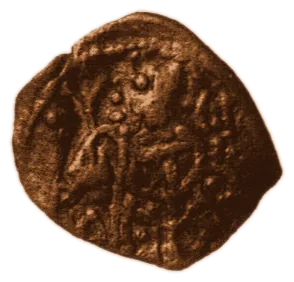
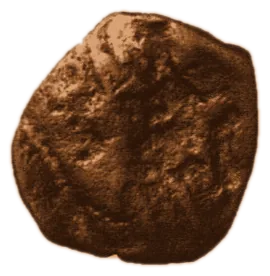
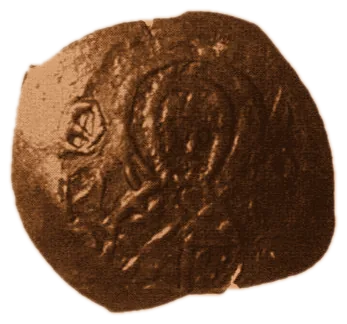
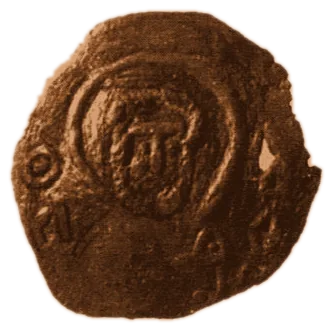
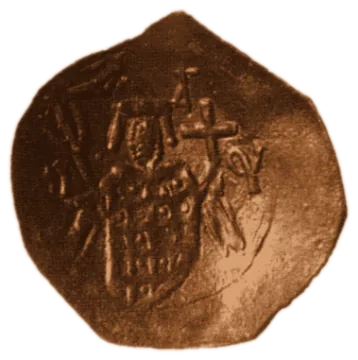
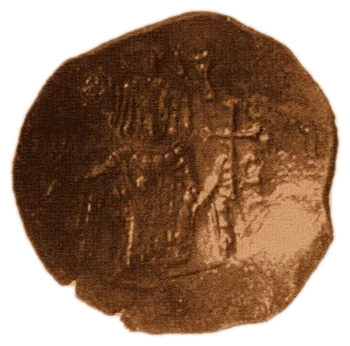
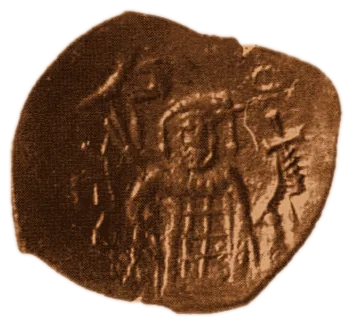
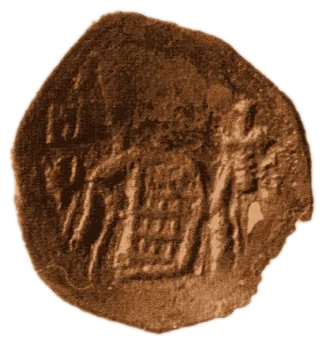
Coin photographs from A. Radushev & G. Zhekov, Catalogue of Bulgarian Medieval Coins IX–XV c. (Agató, 1999).
In the news
- Tsar Konstantin Tih, Irene the Asenid, Maria 'the lioness' and Ivaylo the rebel27 April 2025 · Prof. Plamen Pavlov, Trud
- Plots and coups for the crown of the Asenids31 May 2019 · Prof. Plamen Pavlov, Trud