
Asen dynasty
Ivan Asen II„the Great”
The most powerful ruler of the Second Bulgarian Kingdom. After the victory at Klokotnitsa (1230) he destroyed Theodore Komnenos and extended his power from Adrianople to Durrës. First married the Hungarian princess Anna-Maria, then Irene Komnene.
Biography
Ivan Asen II, remembered as Ivan Asen the Great, was born in 1190 into the founding house of the Second Bulgarian Empire. He was the son of Tsar Ivan Asen I, one of the leaders who restored an independent Bulgarian state after Byzantine rule, and the brother of the future sebastokrator Alexander. Later Bulgarian tradition and official language presented him as “Ivan, the New Asen, son of the former Asen the Elder,” emphasizing both his descent and the legitimacy of his claim. Nothing certain is known of his earliest life before the political upheavals that followed the death of Kaloyan in 1207. Displaced when Boril took the throne, the young prince sought refuge in Russia and grew to adulthood in exile while Bulgaria lost the initiative in the Balkans and suffered territorial fragmentation.
By 1218 Boril had become increasingly vulnerable. Emperor Henry of the Latin Empire had died in June 1216, while Boril’s Hungarian ally had departed on crusade the following year. Ivan Asen’s supporters summoned him from Russia, and he returned with an armed following to reclaim what George Akropolites called his “paternal inheritance.” Advancing upon Tarnovo, he besieged the capital; its inhabitants ultimately opened the gates to him. Boril was deposed and blinded, and Ivan Asen II became tsar, reigning from 1218 until 1241. His accession restored the direct line of Ivan Asen I and inaugurated the most brilliant reign of the Second Bulgarian Empire.
The new ruler initially followed a prudent policy of consolidation rather than immediate large-scale conquest. An important early problem was Hungary. When King Andrew II returned from crusade late in 1218 and reached the Bulgarian frontier, Ivan Asen detained him until an agreement was reached for the tsar to marry Andrew’s daughter, the Hungarian princess Anna-Maria. The marriage took place early in 1221 and helped establish a new political relationship between the two states. Belgrade and Braničevo appear to have passed to Bulgaria as part of the settlement or dowry: both were listed as Bulgarian cities in Ivan Asen’s commercial charter for Dubrovnik in 1230. The marriage strengthened his international standing and connected the Asen dynasty to one of the principal Catholic monarchies of central Europe.
Ivan Asen’s cautious diplomacy was transformed by the ambitions of Theodore Angelos Komnenos Doukas, ruler of Epirus and Thessalonica. Instead of directing his decisive effort against the Latin Empire at Constantinople, Theodore unexpectedly invaded Bulgaria, perhaps intending to neutralize the only power capable of obstructing his plans. The armies met at Klokotnitsa on 9 March 1230. Ivan Asen won an overwhelming victory: Theodore, his family, and many of his leading men were captured, while his political and military power was shattered. According to Akropolites, the Bulgarian tsar released the ordinary soldiers and allowed them to return home, an act praised as philanthrōpia, or humane generosity. Theodore himself remained a prisoner and was subsequently blinded.
Klokotnitsa abruptly changed the political map of the Balkans. Ivan Asen marched through Macedonia and Albania and acquired fortresses and cities that had belonged to Theodore’s heterogeneous dominion, including Serres, Prilep, and Ohrid. His authority also expanded through Thrace, encompassing Philippopolis and the Maritsa valley, Demotika, and Adrianople, as well as territories identified with Pelagonia, Great Vlachia, and Albania. In the inscription placed in the Tarnovo church of the Holy Forty Martyrs, the victorious tsar proclaimed: “I waged war in Romania, defeated the Greek army, and captured the lord emperor Theodore Komnenos himself and all his boyars.” He further declared that he had occupied the lands “from Adrianople to Durrës,” Greek, Serbian, and Albanian alike. This wording expressed the extraordinary reach of his supremacy, although it does not prove that he possessed the city of Durrës itself.
The victory made Ivan Asen the strongest ruler in the peninsula and encouraged ambitions concerning Constantinople. He adopted the style “tsar of the Bulgarians and Greeks” and claimed that the Franks survived around Constantinople only through his authority. Before Klokotnitsa he had negotiated with the Latin barons over a possible regency for the young Baldwin II, but the Latins broke off the discussions after Theodore’s defeat removed their most immediate danger. In a paradox characteristic of Balkan politics, Ivan Asen’s destruction of Theodore’s power saved the Latin Empire from premature extinction. Thereafter Bulgaria, the Latin Empire, and the Empire of Nicaea competed for the political inheritance of Byzantium and for eventual possession of Constantinople.
Ivan Asen subsequently entered a brief alliance with the Nicaean emperor John III Vatatzes. Bulgarian and Nicaean forces twice joined in attacks upon Constantinople, and their cooperation was accompanied in 1235 by the restoration of an independent Bulgarian patriarchate at Tarnovo, one of the reign’s greatest ecclesiastical achievements. Yet during the continuing operations of 1236, Ivan Asen recognized that the fall of Constantinople would chiefly benefit Nicaea. A restored Greek empire under the Nicaean dynasty would be a more formidable obstacle to Bulgarian ambitions than the weakened Latin regime. He therefore broke with Nicaea, recalled his support, recruited Cumans, and changed the direction of his diplomacy. His active assistance to the Nicaean cause was consequently limited mainly to 1234/35–1236.
The tsar combined conquest with measures intended to integrate and enrich his enlarged realm. He retained parts of the existing Byzantine administrative order in conquered territories while installing Bulgarian bishops and metropolitans in place of Greek incumbents. After taking the Chalcidic peninsula in 1230, he visited Mount Athos and extended his protection to its monasteries, confirming privileges and granting gifts; he was especially generous to Zographou, by then recognized as a Bulgarian monastic house. His Dubrovnik charter guaranteed Ragusan merchants freedom of trade in Bulgarian cities and illustrates his encouragement of commerce across a realm extending from the Danubian and western borderlands into Thrace and Macedonia. Tarnovo flourished as an imperial and patriarchal capital, and the church of the Holy Forty Martyrs became a monumental expression of his victory, piety, and dynastic ideology.
Ivan Asen’s personal rule was remembered as comparatively restrained. Akropolites wrote that he was loved “not only by the Bulgarians, but also by the Romans and the other peoples,” because he did not turn the sword against his own subjects or stain himself with killings. His authority nevertheless depended heavily upon his personal prestige as a successful ruler and commander. Provincial boyars retained substantial local power, collected revenues, and raised their own levies; Bulgaria possessed no sufficiently durable state-wide bureaucracy or centrally financed army capable of preserving cohesion independently of the monarch. Ivan Asen could bind the provinces to Tarnovo through victory, patronage, fear, and access to booty, but these personal bonds proved difficult to maintain under child rulers and regencies.
After the death of Anna-Maria, Ivan Asen married Irene Komnene, the daughter of his former captive Theodore, late in 1237. His children included Kaliman Asen I, Michael II Asen, Maria Asenina, Elena Asenina, Maria Asenina-Manuel, Tamara Asenina, and Anna-Theodora Asenina. Kaliman, the son of Anna-Maria, was the eldest son and designated heir; Michael was the son of Irene. Ivan Asen’s daughters also formed part of the dynasty’s wider network of political relationships: one had been married to Manuel, Theodore’s brother, since 1225, while another line later connected the Asens to the Nicaean imperial house. Near the end of the reign, relations with Hungary and the Latin Empire improved. A Bulgarian envoy was well received by King Béla between January and May 1240, at a time when the destruction of the Cuman polity and the Mongol advance toward Hungary and Bulgaria created a shared danger.
Ivan Asen II died in June 1241, leaving his seven-year-old son Kaliman Asen I to rule under a regency. For the first time in the history of the restored Bulgarian Empire, the crown passed without dispute directly from father to son rather than between brothers or rival collateral kinsmen; the sebastokrator Alexander was passed over in favor of the firstborn heir. This succession strengthened the concept that the tsardom was a hereditary paternal possession of the Asen dynasty, but the heir’s minority exposed the institutional weakness hidden by Ivan Asen’s commanding personality. Bulgaria soon declined, while Nicaea advanced in Europe and later took Bulgarian lands in Thrace, the Rhodopes, and Macedonia. Even so, Ivan Asen II’s reign remained the political, military, ecclesiastical, and diplomatic zenith of the Second Bulgarian Empire. After Klokotnitsa his power extended from Adrianople toward Durrës, his protection reached Mount Athos, and Tarnovo again possessed a patriarchate; no later Bulgarian ruler restored the kingdom to the same position of Balkan predominance.
Sources
“Иван II Асен успял да унищожи разноетническата и лишена от вътрешна стабилност държава на Теодор Ангел. Три извора, независими един от друг, свидетелствуват за завоеванията на Иван II Асен: голяма част от Тракия (с Адрианопол, Димотика и Волерон), Македония (Серес, Пелагония и Прилеп), Велика Влахия и Албания, или както е казано в Търновския надпис: „От Одрин и до Драч””
— The Asen Family (1186–1460): Genealogy and Prosopography, p. 80“От брака си с унгарската принцеса Анна-Мария Иван II Асен имал син Калиман, а от втория си брак с Ирина Комнина — син Михаил и дъщери.”
— History of Medieval Bulgaria, 7th–14th Century, p. 735“В надписа, който Иван II Асен наредил да поставят в търновската църква „Св. Четиридесет мъченици“, се казва: „Излязох на война в Романия и разбих гръцката войска“.”
— History of Medieval Bulgaria, 7th–14th Century, p. 710
Coins (4)
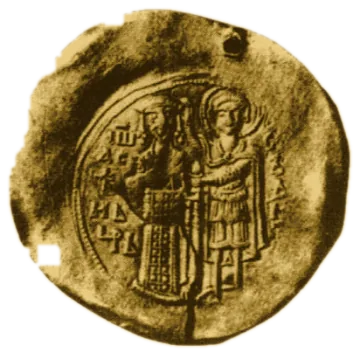
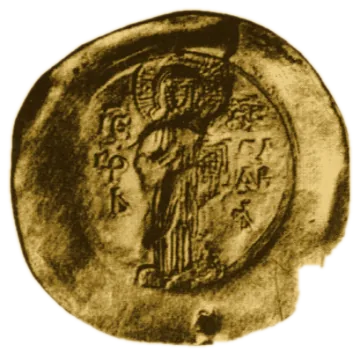
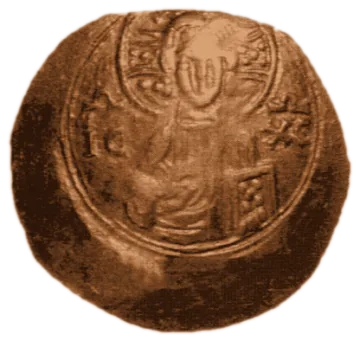
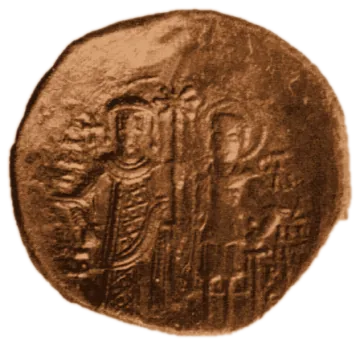
Coin photographs from A. Radushev & G. Zhekov, Catalogue of Bulgarian Medieval Coins IX–XV c. (Agató, 1999).
In the news
- The historic Bulgarian north-west, 12th–15th centuries4 July 2026 · Prof. Plamen Pavlov, Trud
- St Patriarch Joachim I: from Ivanovo to the Patriarchate of Tarnovo25 January 2026 · Prof. Plamen Pavlov, Trud
- A French princess who became a Bulgarian tsaritsa in the 13th century29 November 2025 · Prof. Plamen Pavlov, Trud
- The Bachkovo monastery: a hearth of faith and the Bulgarian spirit16 August 2025 · Prof. Plamen Pavlov, Trud
- Bulgarian contacts with Karakorum in the mid-13th century12 July 2025 · Prof. Plamen Pavlov, Trud
- The Mongol Empire and the Bulgarians in the mid-13th century6 July 2025 · Prof. Plamen Pavlov, Trud
- Coins as a key to understanding the Bulgarian Middle Ages29 March 2025 · Prof. Plamen Pavlov, Trud
- 'Tarnovgrad itself will trumpet the victories…'22 March 2025 · Prof. Plamen Pavlov, Trud
- The lords of medieval Sredets in the 13th century1 February 2025 · Prof. Plamen Pavlov, Trud
- A few puzzles about Tsar Ivan Asen II10 December 2021 · Prof. Plamen Pavlov, Trud
- Plots and coups for the crown of the Asenids31 May 2019 · Prof. Plamen Pavlov, Trud
- The Cumans, faithful allies of the Asenids22 February 2019 · Prof. Plamen Pavlov, Trud