
Terter dynasty
Theodore Svetoslav
Son of George Terter I. Restored the throne to the Terter dynasty, freed Bulgaria from Tatar dependence and stabilised the state. Married Theodora Palaiologina, daughter of the Byzantine co-emperor Michael IX.
Biography
Theodore Svetoslav, tsar of Bulgaria from 1300 to 1321, was the son of George I Terter and the ruler who restored the Terter dynasty after the reign of Smilets and the ensuing succession crisis. His early life was shaped by the extreme weakness of the late thirteenth-century Bulgarian state: Byzantine territorial advances, recurrent Tatar incursions, and the autonomy of regional lords in Vidin, Braničevo, Sredna Gora, and Krăn had reduced the authority of Tărnovo. Theodore’s date of birth is not supplied. The established genealogy records no siblings, although some narrative sources call the wife of Caka a daughter of George Terter and therefore Theodore’s sister; that relationship must remain contested here. What is certain is that Theodore grew up amid dynastic bargaining and spent formative periods as a political hostage both in Byzantium and among the Tatars.
As a youth Theodore accompanied his mother in Constantinople after his father, then a powerful boyar, entered a Byzantine-backed political arrangement and married a sister of the former tsar John III Asen. The Bulgarian-Byzantine treaty of 1284 recognized George Terter as tsar, conferred on him the Byzantine title of despot, restored his first wife, and eventually returned Theodore to Bulgaria. Patriarch Joachim III conducted a successful mission to Andronikos II Palaiologos concerning Theodore’s release and a projected connection with a daughter of the grand stratopedarch Synadenos; the Bulgarian narrative considers a marriage probable, but it is not securely established in the supplied genealogy. Between 1284 and 1285 Theodore, now of age, was proclaimed co-ruler with his father. Two copper coin types bearing the facing images of father and son provide unusually direct evidence for this early status and constitute the clearest numismatic testimony concerning him in the excerpts.
The co-rule was brief. In the first half of 1285 a reported force of 10,000 Tatar horsemen devastated parts of Bulgaria, the Black Sea region, eastern Thrace, and Macedonia before a Byzantine army commanded by Humbertopoulos, governor of Mesembria, defeated it near the Maritsa. Unable to resist Nogai, George I accepted his effective suzerainty and sent Theodore to the Tatar court as a hostage. Thus, within roughly a year of returning from Byzantium, the heir again became a guarantee of his father’s submission. A Bulgarian narrative further reports that Theodore married Encona-Euphrosyne, daughter of the wealthy Venetian merchant Pantaleone and goddaughter of Nogai’s wife Euphrosyne, and that her wealth enhanced his standing; because the established spouse list identifies only Theodora Palaiologina, this alleged earlier union should be reported as a source tradition rather than treated as an uncontested genealogical fact.
The struggle between Nogai and Tokta transformed Theodore’s fortunes. From 1297 to 1299 the two Tatar leaders fought for supremacy, and in the autumn of 1299 Nogai’s army was defeated near the River Terek and Nogai was killed. His son Caka, unable to retain his father’s ulus, fled across the Danube with a small following and with Theodore Svetoslav. At Tărnovo, Smilets’s widow and her minor son—styled by some modern genealogical reconstruction as John IV Smilec—were unable to hold power. Theodore used the resources and connections acquired during his exile to win over influential boyars and gain entry to the capital. The widow and child first withdrew toward Despot Eltimir’s domain at Krăn and then to Constantinople, while Smilets’s brothers Radoslav and Vojsil entered Byzantine service. Although the established succession names Smilets as Theodore’s predecessor, Caka briefly occupied or claimed the Bulgarian tsardom during this confused interval.
Theodore’s accession in 1300 followed a carefully organized coup. Having secretly established ties with powerful groups in Tărnovo, his supporters seized Caka and imprisoned him. Under pressure from boyars who feared Tokta’s retaliation, and apparently after communication with Tokta himself, Theodore ordered Caka strangled; one account says that the executioner was a Jew, while another speaks of Jewish executioners. Caka’s salted head was sent to Tokta. Theodore then became tsar in his own right. In the same year Patriarch Joachim III of Tărnovo was condemned for treason and thrown from the execution cliff of Tsarevets into the abyss above the Yantra. The evidence does not reveal whom Joachim supported: Fine suggests that the accusation may have concerned events surrounding Smilets’s overthrow of George Terter, whereas the Bulgarian narrative associates the patriarch with the disasters culminating in the Tatar invasion of 1285. The execution was both an act of personal vengeance and a brutal declaration that neither magnates nor senior clergy would be permitted to challenge restored royal authority.
The settlement with Tokta ended the destructive form of dependence imposed by Nogai and freed Bulgaria from recurrent Tatar intervention, one of Theodore Svetoslav’s central achievements. The precise juridical relationship remains disputed. Eastern reports state that Caka was executed “by command of Tokta” and that his head was sent to the khan; John V. A. Fine therefore infers that Theodore may have acknowledged Tokta’s loose suzerainty and perhaps paid tribute. In practical terms, however, the Golden Horde ceased attacking or dictating succession in Bulgaria and instead became a source of military support. Tokta also appears to have granted Theodore the former Nogai lands between the Danube mouths and the lower Dniester, centred on Akkerman—Cetatea Albă, Maurocastron, or Belgorod-Dnestrovskii. The grant is not documented by a surviving charter in the excerpts, and its date is uncertain, but Bulgarian authority reached Akkerman by 1314. Tatars could thereafter be recruited into Bulgarian armies, while Abu’l-Fida’s geographical work attests Bulgarian political and ethnic presence north of the Danube.
During 1300 and 1301 Theodore also rebuilt authority inside the kingdom. He reconciled with his uncle Despot Eltimir, ruler of the Krăn region, and temporarily brought that important southern appanage under Tărnovo’s supremacy. He recovered or subordinated Sredna Gora after its rulers fled to Byzantium and asserted control over the independent-minded boyars of the capital; significantly, the sources cease reporting factional plots in Tărnovo for the duration of his reign. Byzantium attempted to exploit lingering hostility toward a ruler whom some opponents regarded as a Tatar intruder. In early 1301 Andronikos II sent the “purple-born” Michael, son of Constantine Tih and Maria Palaiologina, toward Tărnovo with troops, but Michael attracted little support and, according to the quoted account, merely wandered outside the capital in a condition unworthy of imperial power. Other claimants resident in Constantinople included John III Asen’s line and the exiled child of Smilets.
A second Byzantine-backed intervention followed in early 1302. Radoslav, brother of Smilets and newly honoured by Andronikos II with the title of sebastokrator, marched from Thessalonica against Eltimir’s principality. Eltimir defeated the expedition, captured Radoslav, had him blinded, and sent him back to his wife in Thessalonica. Thirteen captured Byzantine archons were delivered to Tărnovo. Theodore exchanged them for his father, George I Terter, who had been living in Byzantine exile. The former tsar was not restored to sovereign power but received only a town and its surrounding district, where he lived in retirement; inscriptions in the rock churches near Ivanovo have led to the hypothesis that this town was Cherven and that George later became a monk, but both points remain interpretative. No distinct campaign is supplied for 1303, which appears instead as a year of consolidation before Theodore’s major offensive against Byzantium.
In 1304 Theodore opened the decisive war for the lands south of the eastern Balkan Mountains and along the Black Sea. Bulgarian forces attacked the “fortresses neighbouring Haemus,” a phrase understood to include strongholds extending toward the southern coast as far as Agathopolis. During the summer, Theodore and Eltimir took Ktenia, near modern Lozarevo, and Rusokastro, both reportedly surrendered by agreement; Yambol and Lardea, modern Karnobat, were assigned to Eltimir. Mesembria, Anchialos, Sozopolis, and Agathopolis were threatened. Byzantine command was entrusted to Michael IX Palaiologos, co-emperor and eldest son of Andronikos II, assisted by the aged protostrator Michael Glabas Tarchaneiotes, whose army assembled at Bizye, modern Babaeski. The Bulgarian victory over the imperial forces at the River Skafida in 1304 was the campaign’s pivotal named battle. Fine cautiously concludes that Mesembria and Anchialos were probably recovered then, though he allows that their acquisition may have followed in 1305.
The wider Byzantine crisis assisted Theodore. In August 1304 Roger de Flor’s Catalans, accompanied by Alans and tourkopouloi, crossed into the Balkans and were ordered to support Michael IX against Bulgaria. A dispute over payment instead led them to seize Gallipoli and fight the empire, forcing Michael IX to suspend operations against Theodore and accept a temporary armistice. War resumed in 1305. Vojsil, the remaining brother of Smilets, commanded one element of a new Byzantine offensive. The Byzantines won one smaller engagement near Sozopolis, but a subsequent Bulgarian victory broke their lines and enabled Theodore’s troops to plunder the region of Adrianople. Michael IX laboriously assembled another army and invaded Eltimir’s territory, although the despot initially remained loyal and withdrew behind one of his fortresses. The murder of Roger de Flor at Adrianople on 30 April 1305 and the Byzantine defeat by the Catalans at Apros on 10 July further weakened the empire’s capacity to sustain the Bulgarian war.
Eltimir subsequently changed sides, perhaps because the Byzantine attack had made his position untenable. Probably late in 1305 Theodore moved against both Byzantium and his former ally: he recovered the district around Yambol that had been granted to Eltimir and plundered the despot’s original appanage. By the end of these operations the Black Sea towns south of the Balkan range as far as Midia had been brought under Bulgarian control. Theodore immediately sought diplomatic recognition through a dynastic agreement with Andronikos II, but his first proposal was rejected. His new stature is also suggested by the conspiracy of the Arsenite priest John Drimis in 1305: the conspirators against Andronikos II reportedly sought aid from the Catalans, Seljuk Turks, and those living “by the Ister,” possibly Theodore’s Bulgaria. After discovery, they were anathematized by Patriarch Athanasios I in the winter of 1305–1306. The excerpts record no separate Bulgarian campaign in 1306; Byzantine exhaustion and the Catalan emergency were instead preparing the way for peace.
The lasting Bulgarian-Byzantine treaty was concluded in 1307. Andronikos II recognized Theodore’s Black Sea conquests, including not merely the ports but the hinterland westward to the Tundzha. Bulgaria thus recovered the region between that river and the sea rather than retaining the Tundzha itself as the frontier. The agreement ended the principal war of Theodore’s reign and inaugurated a long period of stability. It was sealed by marriage, probably in 1308, between Theodore and Theodora Palaiologina, daughter of the co-emperor Michael IX and granddaughter of Andronikos II. This is Theodore’s securely established dynastic marriage. His known child and successor was George II Terter, but the supplied evidence does not securely identify George’s mother, and it would be unsafe to infer maternity solely from Theodore’s marriage to Theodora. The union nevertheless converted a hard-won territorial settlement into a family connection with the reigning Palaiologoi.
The settlement with Byzantium also shaped Theodore’s policy toward Serbia. In 1308 King Stefan Uroš II Milutin joined the anti-Byzantine coalition led by Charles of Valois, which sought to restore the Latin Empire; Serbia was promised lands between Prosek and Prilep and other Macedonian territories. Since those ambitions threatened Bulgarian as well as Byzantine interests, efforts to bring Theodore into the coalition failed. A Bulgarian narrative says that Theodore was aggrieved when Milutin expelled Anna, described there as Theodore’s sister, to marry the young Byzantine princess Simonis. The established genealogy, however, records no siblings for Theodore, so that kinship cannot be accepted without reservation. He did not use the marital dispute as a cause for war. When the coalition collapsed, Milutin repaired relations with his neighbours: in 1310–1311 he met Andronikos II at Thessalonica and shortly afterward visited Theodore at Tărnovo. No securely dated Bulgarian military action is supplied for 1309–1311, underscoring the contrast with the intense warfare of 1304–1305.
By 1313 Theodore’s influence extended beyond the directly administered core of the kingdom. A Venetian list compiled around that year styles Michael Shishman “despot of Bulgaria, lord of Vidin, son-in-law of King Uroš.” Since the title despot could be granted by a tsar and the Venetian wording explicitly called it Bulgarian, Fine interprets it as evidence that Vidin had re-established close relations with Tărnovo, though not necessarily that Theodore exercised direct administration there. By 1314 Bulgarian rule also extended through southern Bessarabia to Akkerman on the Dniester. Fine follows Nikov in regarding this territory as a grant from Tokta rather than a Bulgarian conquest, since an unauthorized seizure would probably have provoked the Horde. This northern expansion was strategically and economically valuable, but not permanent: after Tokta’s death in 1321, his successor Uzbek took a greater interest in the western steppe and appears soon afterward to have recovered the lands around the Dniester and Danube mouths.
For the years from approximately 1315 to 1320 the excerpts preserve no named battle, siege, or new treaty involving Theodore. This silence is historically significant. After decades in which Tărnovo had been repeatedly convulsed by boyar factions, rival tsars, Tatar raids, and Byzantine interventions, the kingdom experienced sustained internal order. Theodore’s method was not merely coercive: it combined the exemplary violence of 1300 with selective reconciliation, recovery of secessionist territories, negotiated relations with Eltimir and Vidin, accommodation with Tokta, and peace with Byzantium. The sources do not record a comprehensive administrative or ecclesiastical reform, nor do they quote a charter issued by Theodore. Likewise, beyond the execution of Joachim III, they provide little direct information about his relations with the Bulgarian Church. Contemporary Western interest in the region is reflected in the anonymous Dominican Description of Eastern Europe of 1308, Marino Sanudo Torsello’s Book of the Secrets of the Faithful of the Cross of 1321, and Guillaume Adam’s guide for a projected crusade of 1332, but these works illuminate international schemes more than Theodore’s domestic institutions.
Economic recovery rested especially on the restoration of the Black Sea coast. Through Mesembria, Anchialos, Sozopolis, Agathopolis, and the associated hinterland, Bulgaria expanded overseas trade carried principally in Venetian and Genoese ships. Its chief exports were agricultural products, while imported goods included luxury wares. Control of the fertile lands between the Tundzha and the sea, together with access to Akkerman and the lower Danube-Dniester zone, strengthened royal revenues and connected Bulgaria more securely to the Black Sea economy. No commercial treaty of Theodore is quoted, so the legal privileges of individual merchants cannot be reconstructed from the supplied material. His coinage is similarly imperfectly represented: the excerpts provide direct evidence for the two copper issues showing him beside George I during the co-rule of 1284–1285, but do not describe a complete sequence of coins from his independent reign. Even so, the contrast with George’s post-1285 coins bearing Tatar symbols illustrates the broader transformation from visible submission under Nogai to restored royal authority under Theodore.
Theodore Svetoslav died in 1321 and was succeeded by his son George II Terter. The exact circumstances and season of his death are not established here. Some modern narratives reproduced in the excerpts date his death to August or the autumn of 1322 and consequently extend his reign to 1322, while one chronological table gives 1300–1322; these statements conflict with the established dates governing this biography, 1300–1321, and cannot be adopted. The succession nevertheless passed directly to George II, demonstrating that Theodore had restored sufficient dynastic authority for his son to inherit without the immediate factional coup that had followed Smilets’s death. George’s reign was short, and the subsequent extinction of the direct Terter line exposed Bulgaria once again to Byzantine pressure and aristocratic uncertainty, but that later crisis should not obscure the comparatively orderly transfer Theodore achieved.
Theodore Svetoslav’s significance lies in reversing the political trajectory inherited from his father’s age. He eliminated Caka, neutralized the old Tatar threat, suppressed internal opposition, defeated Byzantine-backed pretenders, recovered the southern Black Sea coast, and converted victory into the durable peace of 1307 and the Palaiologan marriage of about 1308. His “liberation” of Bulgaria from Tatar dependence should be understood primarily as effective freedom from raids and interference; Fine’s inference of nominal submission or tribute to Tokta remains a legitimate qualification. The evidentiary base is uneven: Byzantine narrative traditions, represented in the cited apparatus by George Pachymeres and Nikephoros Gregoras, are supplemented by anonymous Eastern reports about Caka, a Venetian ruler-list of about 1313, Abu’l-Fida’s geography, Western crusading treatises, Ivanovo inscriptions relevant chiefly to George I, and the co-ruler copper coins. No quoted personal charter, court chronicle, or secure funerary inscription supplies Theodore’s own voice. Despite these limitations and several chronological and genealogical disputes, the sources consistently portray him as a severe, pragmatic, and successful restorer whose twenty-one-year reign gave the Second Bulgarian Empire an exceptional interval of territorial recovery, commercial revival, and political stability.
Sources
“Тодор Светослав, син на Георги Тертер, успял да възстанови независимостта на България от татарите и да укрепи царската власт.”
— History of Medieval Bulgaria, 7th–14th Century, p. 781
Coins (14)
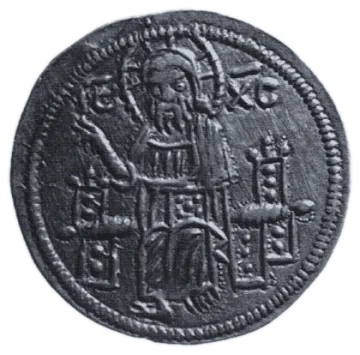
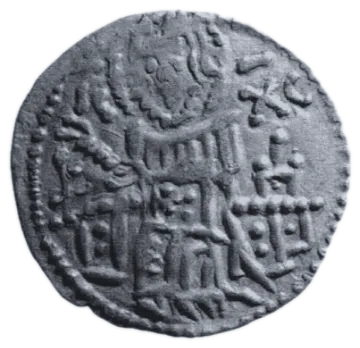
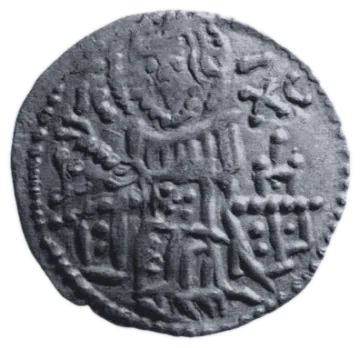
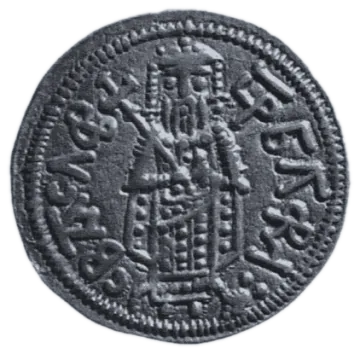
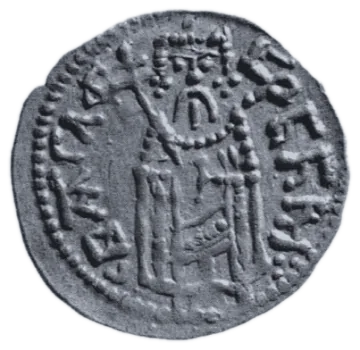
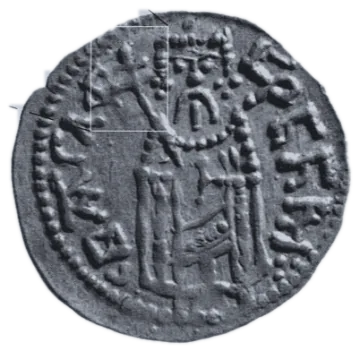
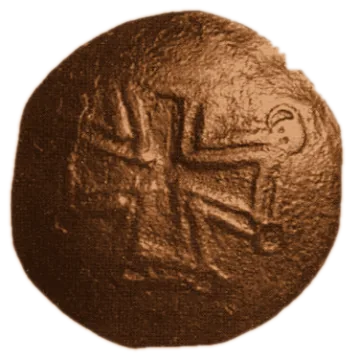
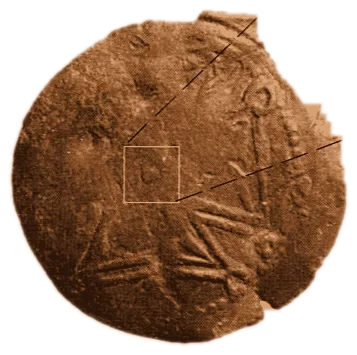
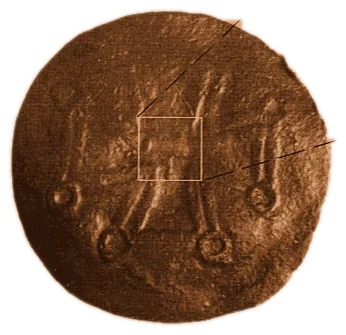
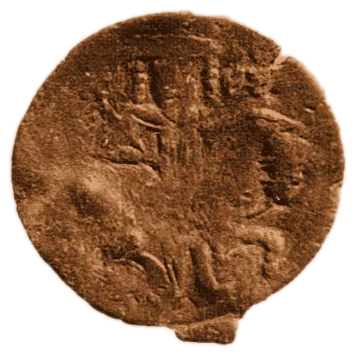
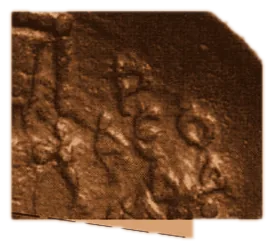
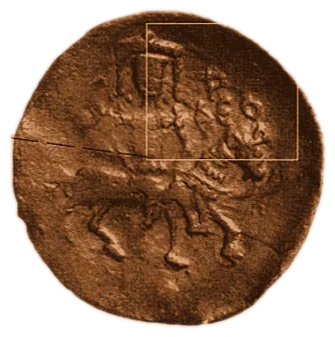
Coin photographs from A. Radushev & G. Zhekov, Catalogue of Bulgarian Medieval Coins IX–XV c. (Agató, 1999).
In the news
- Noble ladies of medieval Dobrudzha and the Black Sea coast in the 14th century22 March 2026 · Prof. Plamen Pavlov, Trud
- Tsar Konstantin Tih, Irene the Asenid, Maria 'the lioness' and Ivaylo the rebel27 April 2025 · Prof. Plamen Pavlov, Trud
- The lords of Sredets/Sofia in the 14th century8 February 2025 · Prof. Plamen Pavlov, Trud
- Tsar Mihail III Shishman, the bold descendant of the Asenids11 February 2023 · Prof. Plamen Pavlov, Trud
- The 'blue blood' and youth of Theodore Svetoslav Terter30 July 2022 · Prof. Plamen Pavlov, Trud