
1.Political Narrative
The overthrow of Ivan III Asen and the elevation of George I Terter opened not a new beginning but a decade of precarious rule in which the throne survived only by balancing between the Horde, Byzantium, and the ambitions of local magnates. George came to power in Trnovo at the beginning of 1280, when the last phase of the struggle that had drawn in Ivan Asen III and Ivailo ended with both men seeking safety and assistance in the camp of Nogai. Ivailo was killed there by order of the Tatar ruler, while Ivan Asen escaped death only through the intervention of Nogai’s wife Euphrosyne. Thus, before George had even had time to consolidate himself, the dynasty that had been planted by foreign support was already spent, and the new king inherited a kingdom weakened by civil war, depopulated by raids, and split by rival power centers.
George’s first instinct was to seek security through diplomacy and alliances rather than through force. In 1281 he entered the anti-Byzantine and anti-imperial coalition organized by Charles of Anjou, alongside Hungary, Serbia, and Venice, and his envoys appeared in Italy to negotiate the terms of cooperation. At the same time, by Charles’s prompting, George drew the Thessalian ruler John I Angel into the alignment through a dynastic engagement that linked John’s daughter to George’s son Theodore Svetoslav. Yet these moves could not disguise Bulgaria’s dependence on forces beyond its own control. Byzantium answered by calling on Nogai, who sent a large cavalry force; as it moved toward Thrace it ravaged the northeastern Bulgarian lands and effectively immobilized the Bulgarian side, exposing how little room the Tărnovo court had for independent action.
The wider balance of power changed in George’s favor only when Charles of Anjou’s grand design collapsed. The Sicilian Vespers of 1282 shattered the coalition that had been assembled for a new attack on Constantinople, and with Charles absorbed by the struggle in the western Mediterranean, George no longer had a powerful western patron behind him. In 1284 Andronicus II concluded peace with Bulgaria, recognized George I Terter as ruler, and granted him the Byzantine title of despot. The settlement, however, was less a triumph than a recognition of realities: Bulgaria was too weakened to press its claims in the Black Sea region and Thrace, while Byzantium was willing to accept a Bulgarian ruler whose main value lay in keeping the frontier quiet. George had thus gained a formal settlement with Constantinople, but at the cost of acknowledging the limits of his strength.
Those limits were brutally exposed in 1285, when a devastating Tatar raid swept through Bulgaria. George was forced to appear before Nogai as a suppliant and to accept outright vassalage, a submission that went far beyond the older forms of tribute or dependence. As a guarantee of loyalty he sent his heir Theodore Svetoslav to the Horde as a hostage and gave his daughter in marriage to Nogai’s son Chaka. Even the symbolism of sovereignty changed: on his later coinage appeared signs associated with the Tatar overlord, a reminder that the Bulgarian crown now stood under the shadow of the steppe. From this point the Tărnovo court could neither protect the countryside from raids nor prevent the spread of local autonomy, and the kingdom increasingly ceased to function as a unified state.
In the same years the erosion of central power became visible in the provinces. Byzantium retained the Black Sea coast south of Mesembria and the upper Marica region, while in the west Serbia moved into lands previously linked to Bulgaria. The important border districts of Vidin and Braničevo drifted into the hands of local lords, and the kingdom’s own rulers had little ability or will to recover them. In the region between the Sredna Gora and the Balkan Mountains the boyar Smilec established his own power base, apparently with Byzantine support and through marriage into the imperial family; farther west, George Terter’s brother Eltimir held a separate appanage in the Krănska hora between Sliven and Kopsis. At Braničevo, the lords Darman and Kudelin maintained themselves until 1291, when the Serbian kings Stephen Dragutin and Stephen Uroš II Milutin defeated them and attached the province to Dragutin’s lands. George Terter made no serious effort to reverse this loss, and the northern and northwestern marches were gradually being pulled out of the Tărnovo orbit.
George’s own fall seems to have come in the early 1290s, when Nogai’s men most likely intervened to replace him with Smilec. The new ruler accepted the realities of the moment and preserved good relations both with the Byzantines and with the Tatar power that dominated the region. His reign, from 1292 to 1298, belonged fully to the age of provincial fragmentation: local lords retained their strongholds, and the throne in Tărnovo increasingly depended on compromise with outside powers. After Smilec’s death, the crown passed to the minor Ivan IV, a child with a dynastic name but no power of his own, and the kingdom briefly entered another phase of uncertainty. Only in 1300 did the long hostage Theodore Svetoslav, now able to act on his own, exploit the weakening of Nogai’s authority, seize Chaka, and take power in Tărnovo, closing the unstable cycle that had begun with the collapse of Ivan Asen III at the start of the decade.
2.Wars and Warfare
The wars of 1280–1300 were fought in a political landscape where the kingdom itself was already breaking into armed regional strongholds. The throne that George I Terter seized in Tarnovo emerged from siege, revolt, and the collapse of rival claimants, and it never acquired the military reach of the great reigns of the thirteenth century. What remained of royal power depended on bargaining with stronger neighbors, on the loyalty of boyars who held real force in their own districts, and on the ability to buy time against the Tatars. In practice this meant that Bulgarian warfare in these years was less a matter of great territorial offensives than of raiding, punitive incursions, frontier defense, and the desperate use of alliances. The monarchy still possessed the symbols of command, but the actual military landscape was fragmented: Vidin, Branichevo, and other border regions were increasingly governed by local lords with their own mounted followings, while Tarnovo could rarely direct all available forces into a single campaign.
George I Terter’s first major military calculation was to align himself with the anti-Byzantine coalition assembled by Charles of Anjou in 1281. The arrangement promised far more than diplomacy: it was meant to open a coordinated offensive in which Bulgaria, Hungary, Serbia, and Venice would contribute to a strike against Constantinople. For George, whose position was insecure at home, the attraction lay in the prospect of recovering ground at Byzantine expense and in gaining external support for a king whose authority rested on a precarious internal compromise. Yet the wider coalition only underscored Bulgaria’s dependence on events beyond its control. While envoys moved between Bulgaria, Naples, and Italy, the Byzantine side answered by summoning Nogai’s horsemen. A large Tatar force descended toward Thrace, and as it moved it ravaged the northeastern Bulgarian lands, turning the country’s own hinterland into a theater of coercion. The intended campaign never matured into a decisive joint strike. The Sicilian Vespers in 1282 shattered Charles’s plans, and with that the entire military design against Byzantium collapsed before Bulgaria could translate alliance into conquest.
The real violence of these years came from the Mongol sphere. Nogai’s power, once consolidated, transformed the Tatars from a distant suzerain force into the dominant military fact of Bulgarian politics. Their warfare was not regular occupation but repeated mounted devastation, a pattern of deep raids that stripped the borderlands, weakened the supply base of the royal center, and made any sustained field campaign almost impossible. George Terter was forced to accept this reality after a particularly destructive raid in 1285. To preserve what was left of his rule he acknowledged Nogai’s overlordship, paid tribute, and sealed the arrangement by sending his daughter into the household of Nogai’s son Caka and his son Theodore Svetoslav as a hostage. This was warfare conducted through human leverage: the hostage substituted for the battlefield, and submission replaced the hope of military recovery. Even after peace with Byzantium in 1284, the kingdom did not recover strategic freedom, because Tatar raids remained the principal instrument by which the steppe power disciplined Bulgaria and kept it from acting independently.
Nowhere is the disintegration of the Bulgarian military space clearer than in the northwestern frontier. In Branichevo the brothers Derman and Kudelin maintained themselves as independent rulers and fought off repeated attempts to subordinate them. Their domain stood in the way of Hungarian, Serbian, and Tatar ambitions alike, and the military contests around it were a sequence of incursions and counter-incursions rather than a single war. In 1291 the Serbian kings Stefan Dragutin and Stefan Uroš II Milutin joined forces and invaded their territory. The attack drove Derman and Kudelin back across the Danube, where they sought assistance from Nogai, and the Branichevo region was then absorbed into Dragutin’s sphere. That campaign exposed the new character of Balkan warfare: regional lords could still field enough force to defeat an assault, but they were not strong enough to hold against a coordinated neighboring attack unless a greater power intervened. The borderlands had become military buffer zones, where the control of a single fortress, river crossing, or road junction mattered more than any formal claim from Tarnovo.
The same logic governed the campaign of the Vidin lord Shishman in 1292. He relied not only on his own forces but on a substantial Tatar contingent supplied under Nogai’s protection. His army crossed into Serbian lands, penetrated far to the west, and advanced as far as Hvosno in the Ipek region. The objective was double: plunder and strategic recovery. Shishman hoped, at least in part, to wrest Branichevo from Serbian hands and to restore the balance in Bulgaria’s northwest, but the expedition failed. His army was defeated at Ždrelo, and he escaped only with a small remnant, retreating toward Vidin. The Serbian response was immediate and direct: the victor’s army pursued him to the Danube, reached Vidin itself, and laid siege to the city. The resistance of the Vidin capital was brief, a sign both of the limits of local fortification and of the fragility of a frontier polity that could strike deep into enemy land yet could not endure the counterstroke. In these northern and northwestern wars, mounted troops—Bulgarian and Tatar alike—moved quickly, but speed did not compensate for the absence of a stable royal military structure.
By the end of the 1290s, warfare had become inseparable from the fragmentation of sovereignty. Smetets and, after him, the child Ivan IV ruled under the shadow of Nogai’s hegemony, while local domains continued to behave like semi-independent military principalities. Nogai himself remained the great arbiter of force until his death in 1299, and his disappearance relaxed the external pressure that had pinned the country down for nearly two decades. Yet on the eve of 1300 the battlefield map still looked bleak: the kingdom had lost much of its reach, its enemies could call on allied riders and neighboring kings, and its own defense depended on fortresses, local retinues, and the personal calculations of boyars. The decade closed not with a triumphant campaign but with a military order in which central command was weak, frontier war was constant, and the survival of the state depended on whoever could mobilize horses fastest and strike hardest at the next raid or siege.
3.State and Institutions
In the decades between 1280 and 1300, the Bulgarian state did not cease to exist as an administrative organism, but its machinery increasingly worked under strain, and often only where the ruler’s personal reach could still be felt. The throne changed hands rapidly, yet the language of power remained recognizably that of a medieval monarchy built on inherited institutions, court hierarchy, and territorial administration. What altered was the balance between the center and the periphery. Under the pressure of civil conflict, foreign interventions, and the growing weight of powerful local men, the capital at Tarnovo became less the unchallenged source of command than the point at which competing loyalties were temporarily gathered and renegotiated. The very speed with which rulers were replaced—through flight, coercion, or the favor of factions—shows that the state’s continuity rested less on an impersonal legal order than on the capacity of a given sovereign to hold together boyars, household retainers, and provincial commanders.
The court still functioned as the nodal point of authority, but its composition was increasingly shaped by kinship, patronage, and the practical need to secure loyalty. In a period when legitimacy was fragile, titles and marriages mattered no less than military strength. The ruling house had to accommodate men whose standing derived from connections with the broader Balkan aristocratic world and with the Tatars, and whose support could not be taken for granted. The crown’s dependence on such figures encouraged a politics of incorporation rather than discipline: prominent nobles were retained, appeased, or elevated, not because the center was strong enough to command them unconditionally, but because the monarchy needed their cooperation to survive. This was especially visible in the way the upper ranks of society merged dynastic ambition with office-holding and local control. The boyar class was no longer simply the servant of royal authority; it had become a decisive political force in its own right, able to determine who would sit on the throne and how long he would remain there.
That same process of fragmentation can be seen in the provinces, where the older framework of territorial administration remained in place but increasingly served local rather than central power. The kingdom still inherited an administrative order in which districts, fortresses, and towns were linked to officials responsible for military, fiscal, and judicial matters. Yet in practice these structures could be captured, bypassed, or transformed by regional magnates. The lands around Vidin and Braničevo illustrate the point particularly well. There, local rulers and noble families acted with a degree of autonomy that would once have been difficult to imagine in a more consolidated monarchy. Their domains were not merely peripheral possessions; they became centers of power that negotiated with neighboring rulers, sought external backing, and behaved in many respects like small principalities. Such developments did not mean the disappearance of royal administration, but they did mean that administration itself was becoming plural, uneven, and dependent on local force.
This fragmentation was most visible in the fiscal sphere, where taxation and revenue collection were inseparable from coercion. The state still needed collectors, garrisons, and agents capable of extracting dues from towns, fortresses, and rural districts, yet the events of the 1280s and 1290s made regular taxation increasingly difficult. War, displacement, and the presence of Tatar power distorted the normal workings of revenue. Under George I Terter, the burden of survival was expressed not only in military submission but in fiscal dependency: tribute, hostages, and political guarantees all belonged to the same system of obligations. The treasury could still operate, and coinage continued to signal royal authority, but that authority now existed under the shadow of stronger powers and could be made to advertise subordination as much as sovereignty. In such conditions, taxation was not simply a matter of economic administration; it was a way of measuring who really held power, and over whom.
Law, too, was shaped by the same instability. There is little sign in these years of a robust and impersonal legal order capable of standing above the political struggle. Instead, law functioned through the court, through negotiated privileges, and through the enforcement capacity of whoever controlled a region at a given moment. The monarchy’s practical concern was not codification but obedience: the collection of revenues, the maintenance of order in fortresses and towns, and the keeping of local elites within a usable framework of loyalty. When this failed, legal distinctions gave way to force, alliance, and territorial partition. The rise of semi-independent boyar domains was therefore not merely a political fact; it altered the whole texture of governance, making the state look increasingly like a field of overlapping rights and authorities rather than a unified hierarchy. By 1300, the Bulgarian monarchy still retained the forms of a centralized kingdom, but beneath those forms the real work of rule had become precarious, localized, and deeply dependent on the bargaining power of the great men who stood between the throne and the land.
4.Church and Letters
The ecclesiastical landscape of the 1280s opened under the sign of flight, refuge, and fractured legitimacy. When Ivan III Asen abandoned Tărnovo in early 1280, he and his wife Irene withdrew to the monastery of Saint Archangel Michael at Anaplus, near Constantinople, and waited there for the imperial anger to pass. This is a revealing gesture: in a moment of dynastic collapse, monastic enclosure was not merely a place of piety, but a shelter in which defeated rulers could suspend their political identity and seek temporary protection under sacred walls. At the same time, Georgi Terter took possession of the deserted throne in Tărnovo, and the transfer of power itself was bound up with the language of abandonment, concealment, and divine judgment. In such circumstances, the church did not stand outside politics; it formed part of the very stage on which political failure, withdrawal, and replacement were enacted.
Georgi Terter’s dynasty was of Cuman origin, yet it was deeply embedded in Bulgarian state, ecclesiastical, and cultural tradition. That attachment mattered all the more in an age when the throne was weakened by civil war, foreign pressure, and the growing autonomy of local magnates. The instability of the late thirteenth century eroded the symbolic force of royal authority, and with it the ability of the center to command the spiritual prestige that had long made Tărnovo the heart of the realm. The weakening of the monarchy did not abolish ecclesiastical continuity, but it did force that continuity to operate under harsher conditions. The patriarchate, rather than appearing as the unquestioned partner of a strong ruler, now belonged to a polity under strain, where the king’s authority was increasingly vulnerable to the decisions of boyars, the movements of the Horde, and the intrigues of neighbors.
That vulnerability is especially visible in the language of devotion that survives from the period. On a stone from the Shumen fortress, attributed to Georgi Terter’s time, one reads a brief but moving plea: “God, for your name’s sake, deliver us from the Tatars.” The inscription captures the spiritual atmosphere of the age better than any abstract description could do. It suggests not only fear of violent domination, but also the expectation that deliverance must come from above, because earthly power had become inadequate. The formula is terse, yet it speaks volumes about a society in which political subjection, military threat, and religious hope converged. The experience of Tatar hegemony was not simply a diplomatic or military condition; it entered the moral and devotional consciousness of the kingdom, leaving its mark on writing itself.
The same decades also show how church institutions could become participants in international politics. In 1291 Pope Nicholas IV sent the archdeacon of Antivari, Marin, to Bulgaria with letters addressed both to King Georgi I Terter and to Patriarch Joakim III. The mission, mediated by the Serbian queen Helena, testifies to the fact that the Bulgarian patriarchate remained a recognized pole of authority, even at a time when the kingdom was politically weakened and internally divided. Rome did not address only the secular ruler; it addressed the head of the Bulgarian church as well, acknowledging that any serious negotiation with Bulgaria had to pass through its ecclesiastical hierarchy. In the same year, therefore, the church was not a passive backdrop to events but part of the diplomatic field in which the fate of the realm could be discussed and contested.
Yet the broader picture remained one of strain rather than flourishing. The late thirteenth century was marked by a sharp decline in the authority of the crown, by the growing entanglement of Bulgaria in the policies of the Horde, and by the fragmentation of power among competing noble families. In such a world, the spiritual institutions of the kingdom could preserve memory and legitimacy, but they could not by themselves restore order. Their significance lay in continuity: in the monastic refuge that sheltered fallen rulers, in the patriarchal office that still merited papal correspondence, and in the written trace left by prayer in a time of fear. By 1300, as the crisis of rule began to turn toward new forms of consolidation, the church had endured the worst of the disorder, carrying forward the symbolic unity of a kingdom whose political unity had been badly damaged.
5.Economy and Charters
Between 1280 and 1300 the Bulgarian economy lived under the strain of insecurity rather than in conditions of collapse, but every branch of production felt the pressure of war, tribute, and political fragmentation. The countryside remained the basic foundation of wealth: grain-growing, stock-raising, and the routines of village life continued, yet repeated татар raids and the movements of competing armies repeatedly stripped the land of livestock, seed, and labour. In the northern and northeastern regions especially, where the Horde’s power was strongest, agriculture was exposed not only to direct devastation but also to the burden of enforced submission. When whole districts were compelled to pay for peace, the countryside was no longer simply a source of royal revenue; it became a field of extraction for rival powers, local magnates, and temporary rulers who had to sustain their position by whatever means were at hand.
Towns, however, did not disappear into the background. They remained the points where administration, trade, and fiscal control were concentrated, and they also revealed most clearly the weaknesses of the age. The great routes along the Danube, the lower Struma, the Black Sea coast, and the approaches to the interior continued to matter, but their security was uneven. The expansion of Venetian and Genoese commercial interests toward the Bulgarian Black Sea coast and its agricultural hinterland gave new importance to ports and market towns, yet that same development also pulled Bulgarian affairs more deeply into the political orbit of outside powers. Merchant traffic still moved, but it did so in a landscape of armed escorts, negotiated protection, and intermittent disruption. In such a setting, the prosperity of a town depended less on stable state order than on whether it could secure privileges, attract trade, and avoid being caught in the passage of troops.
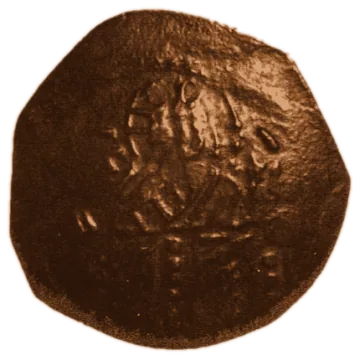
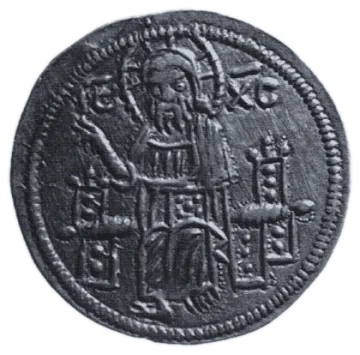
Coinage offers the clearest glimpse of how economic life and political authority intertwined in these years. Under George I Terter, the minting of bronze coins continued, but after 1285 their imagery itself became a statement of subordination: crescent, star, and human figure were placed on the coinage as symbols of the Tatar overlordship under which the kingdom then laboured. At the same time, the appearance of Theodor Svetoslav beside his father on coins associated with the years of his coming of age shows that dynastic legitimacy was still projected through monetary forms even in a time of uncertainty. Coinage thus remained more than a medium of exchange. It was also a public language in which the state announced who ruled, who was heir, and how far sovereignty had been narrowed by external domination.
Taxation and landholding were equally shaped by instability. The royal fisc still depended on dues taken from villages, markets, bridges, river crossings, and roads, and on the revenues attached to productive land. Yet the very language of royal privilege shows how fragmented that fiscal world had become. Charters of the period promise immunity from certain taxes and tolls, protect persons and property, and free merchants from a variety of exactions as they travel, trade, and return. Such formulas were not decorative. They reveal a kingdom in which economic space had to be carved out by legal exception, because ordinary conditions no longer guaranteed safety. At the same time, grants of villages and estates to monasteries and other privileged holders strengthened the concentration of landed wealth in ecclesiastical and aristocratic hands, deepening the dependence of the crown on the support of those whom it rewarded. In an age of rapid turnovers on the throne, landholding became both a source of income and an instrument of alliance.
What the charters reveal most clearly is that the crown still claimed to regulate commerce and property even as its practical reach diminished. The ruler continued to speak in the language of authority over land, customs, and movement, and the charters preserve a world in which merchants could be promised freedom to buy and sell, monasteries could be protected from interference by local ecclesiastical or fiscal officials, and village property could be declared secure and inalienable. Yet such privileges also expose the very pressures they sought to contain. The need to exempt, to protect, and to confirm implies repeated threats to possession and exchange. In these decades, therefore, the Bulgarian economy did not simply shrink; it became more unevenly organised, more dependent on privilege, and more vulnerable to the bargaining power of boyars, churchmen, merchants, and foreign allies. The royal charter was one of the last instruments by which the center tried to impose order on a society increasingly governed by local power and immediate necessity.
6.Foreign Relations
The foreign policy of Bulgaria in the years 1280–1300 unfolded under the pressure of a state crisis and in the midst of a wider Balkan realignment. George I Terter came to the throne in a moment when the court in Tarnovo could no longer rely on stable frontiers or on a single predictable great power. The collapse of Ivan III Asen’s position, the flight of the pretender to Constantinople, and the transfer of the crown to Terter all took place against a background of civil war, Mongol pressure, and Byzantine intervention. In such circumstances diplomacy was never separate from survival: alliances had to be improvised, marriages used as guarantees, hostages sent away to secure agreements, and rival powers played against one another whenever possible. The result was a foreign policy that oscillated between anti-Byzantine coalition, accommodation with the Horde, and desperate attempts to preserve what remained of Bulgarian authority on the Danube and in the east.
The first great external turn in Terter’s reign came through the anti-Byzantine coalition organized by Charles of Anjou after his defeat at Berat. The Angevins sought to gather a broad front against Constantinople, and Bulgaria was quickly drawn into that project. Terter accepted the invitation and in 1281 sent envoys to Naples; his participation was not merely symbolic, for he hoped that a victorious western intervention would help restore lost Bulgarian positions in Thrace and along the Black Sea. The coalition was not limited to one court: it linked Naples, Venice, and the papacy, and it also drew in the rulers of Serbia, Hungary, and the Greek principalities that stood in opposition to Constantinople. In the same diplomatic climate, Terter also tied himself to Thessaly, where the young son of John of Thessaly was promised to his own family through a marriage arrangement, illustrating how dynastic policy and military alliance were fused into a single instrument of statecraft. Yet the Byzantine response was immediate and effective: the emperors turned again to the steppe, and a large Tatar force ravaged the northeastern Bulgarian lands, making active Bulgarian participation in the western coalition almost impossible.
The great anti-Byzantine design soon collapsed under the weight of events beyond Bulgarian control. The Sicilian Vespers shattered Charles of Anjou’s strategy by forcing him into a draining war in the West, while the death of Michael VIII and the repudiation of church union by Andronikos II transformed the Byzantine position. In 1284, with the Angevin threat receding, Constantinople was ready to recognize Terter as ruler of Bulgaria and to confer on him the court title of despot. This did not bring real harmony, but it did mark a diplomatic stabilization after years of military and political confusion. Byzantium, however, never abandoned pressure on Bulgaria. The imperial court remained willing to use Nogai’s raiders as an instrument of policy, and the frontier regions along the Black Sea and in western Thrace continued to be contested terrain. Peace with Constantinople was therefore less a settlement than a pause in a relationship still shaped by distrust, calculated recognition, and the ever-present possibility of renewed manipulation through the steppe.
If Byzantium remained Bulgaria’s principal rival, the decisive force in the late 1280s was Nogai and the wider world of the Golden Horde. After the weakening of central authority in the Horde, Nogai emerged as an almost independent power, and Bulgaria endured the heaviest Tatar interference of the period. Terter, unable to control the raids or to recover the outlying provinces that had slipped from his grasp, was forced in 1285 to accept Nogai’s suzerainty and to pay tribute. The agreement was sealed in the harshest possible way: Terter sent his daughter to the household of Nogai’s son Caka and his son Theodore Svetoslav as a hostage. This was not a ceremonial gesture but a recognition that the Bulgarian crown could no longer dictate terms in the steppe relationship. The same Nogai who could protect or punish Bulgarian rulers also sheltered the ambitions of provincial magnates, and by backing local separatists he made the political fragmentation of Bulgaria even more severe. The rise of minor lordships in Vidin and Braničevo showed how steppe patronage, border warfare, and internal aristocratic autonomy were now intertwined. Even boyars who did not openly rebel could operate under the shadow of Tatar protection, while one of the most striking examples of the era, Smilec, combined local independence with a marriage into the Byzantine imperial family, proving how permeable the boundaries between enemy courts had become.
Relations with Serbia and Hungary were equally shaped by this unstable balance. Serbia moved from opportunistic ally to dangerous rival. In 1282 Stephen Milutin, acting within the wider anti-Byzantine alignment that had brought Bulgaria close to the Angevins, invaded Byzantine Macedonia and seized Skopje. But the most serious Serbian expansion for Bulgaria came later, when the struggle for the Danubian and northwestern zones intensified. In 1291 the united forces of the Serbian rulers struck Braničevo, driving the Bulgarian princes Darman and Kudelin back across the Danube. They turned to Nogai for aid, and their appeal shows how completely the frontier had become dependent on steppe intervention. Nogai then pushed the conflict further by urging the Vidin despot Shishman to attack Serbia. In 1292 Shishman, supported by a sizeable Tatar contingent, invaded deep into Serbian territory, but the campaign ended in defeat near Hvosno; the Serbian king then laid siege to Vidin itself. The episode reveals a Balkan political world in which local Bulgarian lords, Serbian kings, and Mongol overlords all acted through one another, with Tarnovo often reduced to the role of a distant and hesitant observer. Hungary appears in this same northern theater as part of the broader Angevin and papal orbit: the rival claims in the Hungarian kingdom, the papal support for Angevin interests, and the redistribution of Slavonian and Croatian loyalties all formed part of the same regional contest in which Bulgaria had to navigate between stronger or more agile neighbors.
By the end of the decade Bulgaria’s foreign relations had become less a matter of imperial ambition than of managed vulnerability. The court could still seek advantage through marriage, titles, and carefully chosen alliances, but every external relationship now carried the risk of inviting a new dependency. Byzantium could recognize Terter while encouraging Nogai to raid his lands; Serbia could be an ally against Constantinople in one year and an aggressor on the Danube frontier in the next; the papacy could sanctify an anti-Byzantine crusading coalition that never quite materialized; and the Horde could both devastate Bulgaria and arbitrate its succession politics. When Nogai’s power was finally broken in 1299, one great source of pressure relaxed, but the relief was only partial and arrived too late to restore the old balance. The close of the century found Bulgaria still entangled in a diplomacy of coercion, hostage-taking, and opportunistic marriage alliances, its foreign relations reflecting not strength but the struggle to preserve sovereignty amid the rival ambitions of empires, kingdoms, and steppe powers.
1.Political Story
When Ivan III Asen was overthrown and George I Terter took the throne, it did not mark a fresh start. Instead, it began a difficult decade where the king had to carefully balance between the Mongol Horde, the Byzantine Empire, and powerful local nobles to keep his rule. George became ruler in the Bulgarian capital, Tarnovo, in early 1280. This happened after a long conflict involving Ivan Asen III and Ivailo ended with both men fleeing to Nogai, a Mongol leader. Ivailo was killed on Nogai’s orders, while Ivan Asen was spared thanks to Nogai’s wife, Euphrosyne. So, even before George could fully establish himself, the dynasty backed by foreign power was already finished. He inherited a kingdom weakened by civil war, damaged by raids, and divided by competing centers of power.
George’s first move was to seek safety through diplomacy and alliances rather than fighting. In 1281, he joined a coalition against Byzantium and the Holy Roman Empire, led by Charles of Anjou, which included Hungary, Serbia, and Venice. His representatives traveled to Italy to arrange cooperation. At Charles’s suggestion, George also arranged a marriage linking his son Theodore Svetoslav to the daughter of John I Angel, ruler of Thessaly. But these efforts could not hide Bulgaria’s dependence on outside forces. Byzantium responded by calling on Nogai, who sent a large cavalry force. As the Tatars moved into Thrace, they devastated northeastern Bulgaria and effectively stopped Bulgarian action, showing how little freedom the Tarnovo court had.
The balance of power shifted in George’s favor only when Charles of Anjou’s grand plan fell apart. The Sicilian Vespers uprising in 1282 destroyed the coalition aimed at attacking Constantinople. With Charles distracted by conflicts in the western Mediterranean, George lost his powerful western supporter. In 1284, Byzantine Emperor Andronicus II made peace with Bulgaria, officially recognizing George I Terter as ruler and giving him the Byzantine title of despot, a high court rank. However, this agreement was less a victory than an acceptance of reality: Bulgaria was too weak to claim lands in the Black Sea region and Thrace, and Byzantium was willing to accept a Bulgarian ruler mainly because he kept the border peaceful. George gained formal recognition but had to accept his limited power.
These limits became painfully clear in 1285 when a destructive Tatar raid swept through Bulgaria. George had to appear before Nogai as a supplicant and accept full vassal status, going beyond earlier forms of tribute or dependence. To prove his loyalty, he sent his son Theodore Svetoslav as a hostage to the Horde and married his daughter to Nogai’s son Chaka. Even the symbols of sovereignty changed: George’s later coins included marks associated with the Tatars, reminding everyone that the Bulgarian crown now stood under the influence of the steppe rulers. From then on, the Tarnovo court could neither protect the countryside from raids nor stop local nobles from gaining power. The kingdom increasingly stopped functioning as a united state.
At the same time, the weakening of central power became clear in the provinces. Byzantium kept control of the Black Sea coast south of Mesembria and the upper Marica region, while Serbia expanded into lands once linked to Bulgaria. Important border areas like Vidin and Braničevo fell under local lords, and the Bulgarian rulers lacked the strength or will to take them back. Between the Sredna Gora and Balkan Mountains, the noble Smilec built his own power base, likely with Byzantine support and through marriage into the imperial family. To the west, George’s brother Eltimir controlled a separate territory between Sliven and Kopsis. In Braničevo, local lords Darman and Kudelin held out until 1291, when Serbian kings Stephen Dragutin and Stephen Uroš II Milutin defeated them and added the province to Dragutin’s lands. George Terter did not seriously try to reverse this loss, and the northern borderlands gradually slipped away from Tarnovo’s control.
George’s fall probably came in the early 1290s, when Nogai’s forces likely helped replace him with Smilec. Smilec ruled from 1292 to 1298 and accepted the realities of the time, maintaining good relations with both Byzantium and the Tatars. His reign fully reflected the era of provincial fragmentation: local lords kept their strongholds, and the Tarnovo throne increasingly depended on compromises with outside powers. After Smilec died, the crown passed to the young Ivan IV, a child with a royal name but no real power. This brought another period of uncertainty. Only in 1300 did Theodore Svetoslav, who had been a hostage for many years but was now free to act, take advantage of Nogai’s weakening power, capture Chaka, and seize control in Tarnovo, ending the unstable cycle that began with Ivan Asen III’s fall at the decade’s start.
2.Wars and Fighting
The wars from 1280 to 1300 took place in a political setting where Bulgaria was already breaking into armed regional strongholds. George I Terter’s rise to power in Tarnovo came after sieges, revolts, and the fall of rival claimants. His rule never regained the military strength of earlier 13th-century kings. What remained of royal power depended on negotiating with stronger neighbors, relying on boyars (noble landowners) who controlled their own regions, and buying time against the Tatars. This meant that Bulgarian warfare during these years was less about large territorial conquests and more about raids, punitive attacks, defending borders, and desperate alliances. The monarchy still had the symbols of command, but the military reality was divided: border regions like Vidin and Braničevo were ruled by local lords with their own cavalry, and Tarnovo rarely managed to gather all forces for one campaign.
George’s first major military move was joining the anti-Byzantine coalition led by Charles of Anjou in 1281. This alliance promised more than words: it aimed for a coordinated attack where Bulgaria, Hungary, Serbia, and Venice would strike Constantinople together. For George, who was insecure at home, this offered hope to regain lost lands from Byzantium and gain external support for his shaky rule. But the coalition also highlighted Bulgaria’s dependence on outside events. While envoys traveled between Bulgaria, Naples, and Italy, Byzantium called on Nogai’s horsemen. A large Tatar force moved into Thrace, devastating northeastern Bulgaria and turning the country’s own lands into a battlefield. The planned joint attack never happened. The Sicilian Vespers rebellion in 1282 destroyed Charles’s plans, and the whole military effort against Byzantium collapsed before Bulgaria could gain from the alliance.
The real violence came from the Mongol world. Once Nogai’s power was secure, the Tatars stopped being distant overlords and became the main military force in Bulgarian politics. Their warfare was not about occupying land but about repeated fast raids that destroyed border areas, weakened the royal supply lines, and made long campaigns almost impossible. After a particularly damaging raid in 1285, George had to accept Nogai’s overlordship, pay tribute, and seal the deal by sending his daughter to Nogai’s son Chaka and his son Theodore Svetoslav as a hostage. This was warfare through human leverage: the hostage replaced battle, and submission replaced hopes of military comeback. Even after peace with Byzantium in 1284, Bulgaria did not regain freedom because Tatar raids kept the country under control.
The breakdown of Bulgarian military control was clearest on the northwestern frontier. In Braničevo, brothers Darman and Kudelin ruled independently and resisted repeated attempts to bring them under control. Their territory was caught between Hungarian, Serbian, and Tatar ambitions, leading to a series of raids and counter-raids rather than a single war. In 1291, Serbian kings Stefan Dragutin and Stefan Uroš II Milutin joined forces to invade Braničevo. They pushed Darman and Kudelin back across the Danube, where the brothers asked Nogai for help. The region then became part of Dragutin’s lands. This campaign showed the new nature of Balkan warfare: local lords could fight off attacks but could not hold territory against coordinated neighbors without help from a bigger power. Borderlands had become military buffer zones where controlling a fortress or river crossing mattered more than formal claims from Tarnovo.
The same pattern appeared in 1292 when the Vidin lord Shishman, supported by a large Tatar force under Nogai’s protection, invaded Serbian lands far to the west, reaching Hvosno in the Ipek region. His goals were both plunder and trying to regain lost territory, especially Braničevo. But his army was defeated at Ždrelo, and he barely escaped with a few men, retreating to Vidin. The Serbs immediately pursued him to the Danube and laid siege to Vidin. The city’s defense was brief, showing the limits of local fortifications and the fragility of frontier rulers who could strike far but could not withstand counterattacks. In these northern wars, mounted troops moved quickly, but speed could not make up for the lack of a strong royal army.
By the late 1290s, warfare was closely tied to the breakup of royal power. Smilec and then the child Ivan IV ruled under Nogai’s dominance, while local lords acted like semi-independent military princes. Nogai remained the main power until his death in 1299, which eased some pressure but came too late to restore Bulgaria’s old strength. By 1300, the military situation was bleak: the kingdom had lost much territory, its enemies had allies and kings to call on, and its defense relied on fortresses, local troops, and the personal decisions of nobles. The decade ended not with a great victory but with a military order where central command was weak, border fighting constant, and survival depended on whoever could mobilize horses fastest and strike hardest.
3.Government and Institutions
Between 1280 and 1300, the Bulgarian state still existed as an administrative system, but it was under great strain and often worked only where the ruler’s personal influence reached. The throne changed hands quickly, but the language of power remained that of a medieval monarchy based on inherited institutions, court ranks, and territorial administration. What changed was the balance between the center and the provinces. Due to civil war, foreign interference, and powerful local nobles, Tarnovo became less the unquestioned center of control and more a place where competing loyalties were gathered and renegotiated. The rapid changes in rulers—through flight, force, or factional support—show that the state’s survival depended less on laws and more on a ruler’s ability to hold together nobles, household followers, and provincial commanders.
The royal court still served as the main point of authority, but its makeup was increasingly shaped by family ties, patronage, and the need to secure loyalty. In a time when legitimacy was fragile, titles and marriages were as important as military strength. The ruling family had to include men connected to the wider Balkan aristocracy and the Tatars, whose support was uncertain. This dependence encouraged a politics of inclusion rather than strict control: powerful nobles were kept close, appeased, or promoted, not because the king could command them outright, but because he needed their cooperation to survive. This was especially clear in how noble families combined dynastic ambitions with official positions and local power. The boyars were no longer just servants of royal authority; they had become a decisive political force able to decide who ruled and for how long.
This fragmentation was also clear in the provinces, where the old system of territorial administration remained but increasingly served local rather than central power. The kingdom still had officials responsible for military, tax, and legal matters in districts, fortresses, and towns. But in practice, these structures were often controlled or bypassed by regional nobles. The areas around Vidin and Braničevo show this well. There, local rulers and noble families acted with a level of independence that would have been hard to imagine in a more unified monarchy. Their lands were not just distant possessions but centers of power that negotiated with neighbors, sought outside support, and acted like small principalities. This did not mean royal administration disappeared, but it became more varied, uneven, and dependent on local strength.
This fragmentation was most obvious in taxation, where collecting revenue was tied to force. The state still needed tax collectors, garrisons, and agents to gather dues from towns, fortresses, and rural areas. But war, displacement, and Tatar dominance made regular taxation harder. Under George I Terter, survival meant not only military submission but also financial dependence: tribute, hostages, and political guarantees were all part of the same system. The treasury still worked, and coins continued to show royal authority, but that authority existed under the shadow of stronger powers and could signal subordination as much as sovereignty. In these conditions, taxation was not just economic but a way to show who really held power and over whom.
Law was also affected by this instability. There is little evidence of a strong, impartial legal system able to rise above political struggles. Instead, law worked through the court, negotiated privileges, and the enforcement power of whoever controlled a region at the time. The monarchy’s main concern was obedience: collecting taxes, keeping order in fortresses and towns, and maintaining local elites within a workable loyalty system. When this failed, legal rules gave way to force, alliances, and territorial division. The rise of semi-independent boyar domains was not just political; it changed governance, making the state look like overlapping rights and authorities rather than a unified hierarchy. By 1300, the Bulgarian monarchy still had the forms of a centralized kingdom, but beneath that, real rule was fragile, local, and deeply dependent on the bargaining power of powerful nobles standing between the throne and the land.
4.Church and Culture
The church scene in the 1280s was marked by flight, refuge, and broken legitimacy. When Ivan III Asen fled Tarnovo in early 1280, he and his wife Irene took shelter in the monastery of Saint Archangel Michael at Anaplus near Constantinople, waiting for imperial anger to pass. This shows that in times of dynastic collapse, monasteries were not just places of faith but safe havens where defeated rulers could pause their political roles and seek protection. Meanwhile, Georgi Terter took the empty throne in Tarnovo, and the transfer of power was wrapped in ideas of abandonment, hiding, and divine judgment. In such times, the church was not outside politics but part of the stage where political failure, withdrawal, and replacement played out.
Georgi Terter’s family was of Cuman origin, but it was deeply connected to Bulgarian state, church, and cultural traditions. This connection mattered even more in a time when the throne was weakened by civil war, foreign pressure, and powerful local nobles. The late 13th century’s instability reduced the symbolic power of royal authority and with it the ability of the center to command the spiritual prestige that made Tarnovo the kingdom’s heart. The weakening monarchy did not end church continuity but forced it to operate under harder conditions. The patriarchate no longer appeared as the unquestioned partner of a strong ruler but belonged to a troubled polity where the king’s authority was vulnerable to boyars, the Horde’s movements, and neighboring intrigues.
This vulnerability shows clearly in surviving religious texts. On a stone from the Shumen fortress, dating to Georgi Terter’s time, there is a short but powerful prayer: “God, for your name’s sake, deliver us from the Tatars.” This inscription captures the spiritual mood better than any abstract description. It shows not only fear of violent domination but also the hope that deliverance must come from above because earthly power had failed. The brief phrase speaks volumes about a society where political submission, military threat, and religious hope came together. The experience of Tatar rule was not just a political or military fact; it shaped the kingdom’s moral and devotional life and left its mark on writing.
These decades also show how church institutions took part in international politics. In 1291, Pope Nicholas IV sent Marin, the archdeacon of Antivari, to Bulgaria with letters addressed to King Georgi I Terter and Patriarch Joakim III. This mission, arranged through the Serbian queen Helena, shows that the Bulgarian patriarchate remained a recognized authority even when the kingdom was weak and divided. Rome addressed not only the secular ruler but also the church leader, acknowledging that any serious talks with Bulgaria had to involve its church hierarchy. So in 1291, the church was not just a background actor but part of the diplomatic arena where the kingdom’s fate was discussed and contested.
Still, the overall picture was one of strain rather than growth. The late 13th century saw a sharp decline in royal authority, growing involvement of the Horde, and power split among competing noble families. In this world, church institutions preserved memory and legitimacy but could not restore order alone. Their importance lay in continuity: monasteries that sheltered fallen rulers, the patriarchal office that still received papal letters, and prayers written in times of fear. By 1300, as the crisis began to ease and new forms of unity appeared, the church had survived the worst disorder, carrying forward the symbolic unity of a kingdom whose political unity was badly damaged.
5.Economy and Documents
Between 1280 and 1300, Bulgaria’s economy struggled under insecurity but did not collapse. Every part of production felt the strain of war, tribute, and political division. The countryside remained the main source of wealth: farming, livestock, and village life continued, but repeated Tatar raids and armies moving through often destroyed animals, seed, and workers. In northern and northeastern regions, where the Horde was strongest, agriculture suffered not only from direct attacks but also from forced payments. When whole areas had to pay for peace, the countryside became a source of extraction for rival powers, local nobles, and temporary rulers who had to maintain their positions by any means.
Towns, however, remained important. They were centers of administration, trade, and tax collection, and they revealed the era’s weaknesses most clearly. Major trade routes along the Danube, lower Struma River, Black Sea coast, and routes to the interior still mattered, but their security was uneven. The growth of Venetian and Genoese trade along the Bulgarian Black Sea coast and its farming hinterland increased the importance of ports and market towns. But this also brought Bulgarian affairs deeper into the political orbit of foreign powers. Merchants still traveled, but with armed escorts, negotiated protection, and occasional disruptions. In this environment, a town’s prosperity depended less on stable state order and more on its ability to secure privileges, attract trade, and avoid being caught in troop movements.
Coins give the clearest view of how economy and political power were linked. Under George I Terter, bronze coins continued to be minted, but after 1285 their images showed subordination: crescents, stars, and human figures appeared as symbols of Tatar overlordship. At the same time, coins showing Theodore Svetoslav alongside his father during his coming of age show that dynastic legitimacy was still expressed through money even in uncertain times. Coins were more than currency; they were public statements of who ruled, who was heir, and how much sovereignty had been limited by outside domination.
Taxation and landholding were also shaped by instability. The royal treasury still depended on dues from villages, markets, bridges, river crossings, roads, and productive land. But royal privileges from this time show how fragmented the fiscal system had become. Charters promised immunity from certain taxes and tolls, protected people and property, and freed merchants from various charges while traveling and trading. These were not just formalities; they show a kingdom where economic space had to be carved out by legal exceptions because normal conditions no longer guaranteed safety. At the same time, grants of villages and estates to monasteries and privileged holders increased the concentration of land in church and noble hands, deepening the crown’s dependence on those it rewarded. In a time of rapid changes on the throne, landholding was both income and a tool for alliances.
What these charters most clearly show is that the crown still claimed to regulate trade and property even as its real control weakened. The ruler continued to speak as authority over land, customs, and movement. The charters preserve a world where merchants could be promised freedom to buy and sell, monasteries protected from interference by local officials, and village property declared secure and unchangeable. But these privileges also reveal the pressures they tried to control. The need to exempt, protect, and confirm shows repeated threats to ownership and trade. So during these decades, Bulgaria’s economy did not just shrink; it became more uneven, more dependent on privileges, and more vulnerable to the power of nobles, church leaders, merchants, and foreign allies. Royal charters were one of the last tools the center had to impose order on a society increasingly ruled by local power and immediate needs.
6.Foreign Relations
Bulgaria’s foreign policy from 1280 to 1300 unfolded amid a state crisis and a changing Balkan landscape. George I Terter took the throne when Tarnovo could no longer count on stable borders or a single strong power. The fall of Ivan III Asen, the flight of a pretender to Constantinople, and George’s rise all happened during civil war, Mongol pressure, and Byzantine interference. In this situation, diplomacy was closely tied to survival: alliances had to be made quickly, marriages used as guarantees, hostages sent to secure deals, and rival powers played against each other whenever possible. The result was a foreign policy swinging between anti-Byzantine coalitions, accommodation with the Horde, and desperate efforts to hold on to Bulgarian authority along the Danube and in the east.
The first major external move in Terter’s reign was joining the anti-Byzantine coalition organized by Charles of Anjou after his defeat at Berat. The Angevins wanted to build a broad front against Constantinople, and Bulgaria quickly joined. Terter accepted and sent envoys to Naples in 1281. His involvement was more than symbolic; he hoped a western victory would help regain lost lands in Thrace and along the Black Sea. The coalition included Naples, Venice, the papacy, and rulers of Serbia, Hungary, and Greek principalities opposing Constantinople. At the same time, Terter arranged a marriage linking his family to Thessaly’s ruler, showing how dynastic policy and military alliance worked together. But Byzantium responded quickly and effectively by calling on Nogai’s Tatars, who ravaged northeastern Bulgaria, making active Bulgarian participation in the western coalition almost impossible.
This anti-Byzantine plan soon collapsed under events beyond Bulgaria’s control. The Sicilian Vespers uprising forced Charles of Anjou into a draining western war, while the death of Byzantine Emperor Michael VIII and rejection of church union by Andronikos II changed Byzantine policy. In 1284, with the Angevin threat fading, Constantinople recognized Terter as Bulgaria’s ruler and gave him the title of despot. This did not bring real peace but marked a diplomatic stabilization after years of confusion. Byzantium never stopped pressuring Bulgaria. The imperial court continued to use Nogai’s raiders as a political tool, and border areas along the Black Sea and western Thrace remained contested. Peace with Constantinople was more a pause than a settlement, shaped by distrust, cautious recognition, and the constant threat of renewed steppe interference.
While Byzantium was Bulgaria’s main rival, Nogai and the Golden Horde were the decisive force in the late 1280s. After the Horde’s central authority weakened, Nogai became almost independent, and Bulgaria suffered the most Tatar interference of the period. Terter, unable to stop raids or recover lost provinces, had to accept Nogai’s suzerainty and pay tribute in 1285. The agreement was sealed harshly: Terter sent his daughter to Nogai’s son Chaka’s household and his son Theodore Svetoslav as a hostage. This was not a mere formality but an admission that Bulgaria could no longer dictate terms in its relationship with the steppe. Nogai could protect or punish Bulgarian rulers and also supported local separatists, worsening Bulgaria’s political fragmentation. The rise of small lordships in Vidin and Braničevo showed how steppe backing, border warfare, and noble autonomy were connected. Even boyars who did not rebel openly operated under Tatar protection, while Smilec, a notable figure of the era, combined local independence with marriage into the Byzantine imperial family, showing how fluid the borders between enemy courts had become.
Relations with Serbia and Hungary were also shaped by this unstable balance. Serbia changed from a temporary ally to a serious rival. In 1282, Stephen Milutin, within the anti-Byzantine alliance that brought Bulgaria close to the Angevins, invaded Byzantine Macedonia and took Skopje. But the biggest Serbian threat to Bulgaria came later, as fighting over the Danube and northwest regions intensified. In 1291, Serbian rulers united to attack Braničevo, pushing Bulgarian princes Darman and Kudelin across the Danube. The brothers asked Nogai for help, showing how the frontier depended on steppe intervention. Nogai then encouraged Vidin’s ruler Shishman to attack Serbia. In 1292, Shishman, backed by a large Tatar force, invaded deep into Serbian lands but was defeated near Hvosno. The Serbian king then besieged Vidin. This episode shows a Balkan world where local Bulgarian lords, Serbian kings, and Mongol overlords acted through each other, with Tarnovo often a distant, hesitant observer. Hungary also played a role in this northern area as part of the Angevin and papal network: disputes over the Hungarian throne, papal support for Angevin claims, and shifting loyalties in Slavonia and Croatia were all part of the regional contest Bulgaria had to navigate among stronger neighbors.
By the decade’s end, Bulgaria’s foreign relations were less about empire-building and more about managing vulnerability. The court still sought advantages through marriage, titles, and alliances, but every relationship risked new dependence. Byzantium could recognize Terter while encouraging Nogai’s raids; Serbia could be an ally one year and an enemy the next; the papacy could support an anti-Byzantine crusade that never happened; and the Horde could both devastate Bulgaria and decide its succession. When Nogai’s power ended in 1299, some pressure eased, but it was too late to restore the old balance. At the century’s close, Bulgaria was still caught in a diplomacy of force, hostages, and opportunistic marriages, its foreign relations showing not strength but a struggle to keep sovereignty amid competing empires, kingdoms, and steppe powers.
Between 1280 and 1300, Bulgaria was weak and divided. George I Terter became king in 1280 after a civil war. His kingdom was damaged by fighting and raids, and he had to balance between powerful neighbors: the Mongol Horde, Byzantium, and local nobles.
George tried to make alliances, joining a group against Byzantium in 1281. But the plan failed when the Mongols attacked Bulgaria, and the western coalition collapsed in 1282. In 1284, Byzantium made peace with Bulgaria and accepted George as ruler, but Bulgaria had to accept limits on its power.
In 1285, a big Mongol raid forced George to accept Mongol rule and send his son as a hostage. This showed Bulgaria was under Mongol control. Local nobles grew stronger and acted like small rulers, taking lands and fighting neighbors. Serbia took some border lands, and Bulgaria’s central power weakened.
George was replaced in the early 1290s by Smilec, who ruled until 1298. After Smilec died, a child king ruled briefly until Theodore Svetoslav, George’s son, returned from Mongol captivity and took power in 1300, ending the unstable period.
During these years, Bulgaria’s army was weak and divided. Wars were mostly raids and small fights. Mongol raids caused much damage and made it hard for Bulgaria to fight back. Local lords had their own armies and often fought neighbors like Serbia.
The government still worked but was fragile. The king had to rely on powerful nobles and make deals with them. Local rulers controlled many areas, and the king’s power was limited. Taxes and laws depended on who had real control, not on strong central rule.
The church stayed important and helped keep some unity. It sheltered fallen rulers and took part in diplomacy, but it could not fix the kingdom’s problems. People prayed for help against the Mongols, showing how much fear there was.
The economy suffered from war and raids but did not collapse. Farming continued, but land and towns were often unsafe. Trade still happened, especially along the Black Sea, but merchants needed protection. Coins showed that Bulgaria was under Mongol power.
Bulgaria’s foreign relations were difficult. George I Terter tried to make alliances against Byzantium but was blocked by Mongol attacks. Byzantium and the Mongols both pressured Bulgaria. Serbia and Hungary also fought for border lands. Bulgaria had to send hostages and make marriage alliances to survive.
By 1300, Bulgaria was no longer a strong kingdom. It was a land of local rulers, Mongol overlords, and shifting alliances. The throne depended on deals with powerful neighbors and nobles. The kingdom survived, but its power was much smaller than before.
Key Events
- 11280 — Ivan III Asen and Ivailo flee to Nogai’s camp; Ivailo is killed there and Ivan III Asen survives through Euphrosyne’s intervention.
- 21280 — George I Terter takes the throne in Tărnovo amid civil war and a weakened kingdom.
- 31281 — George joins Charles of Anjou’s anti-Byzantine coalition and sends envoys to Italy.
- 41281 — At Charles’s prompting, George binds John I Angel to Bulgaria through the planned marriage of John’s daughter to Theodore Svetoslav.
- 51282 — The Sicilian Vespers collapse Charles of Anjou’s anti-Byzantine project.
- 61284 — Andronicus II makes peace with Bulgaria, recognizes George I Terter, and grants him the title of despot.
- 71285 — A devastating Tatar raid forces George to accept Nogai’s overlordship, send Theodore Svetoslav as hostage, and marry his daughter to Chaka.
- 81291 — Stephanus Dragutin and Stephanus Uroš II Milutin defeat Darman and Kudelin at Braničevo and attach the province to Dragutin’s lands.
- 91291 — Pope Nicholas IV sends the archdeacon Marin to Bulgaria with letters for George I Terter and Patriarch Joakim III, via Queen Helena.
- 101292 — Nogai’s men likely replace George I Terter with Smilec, who rules in accommodation with the Byzantines and the Horde.
- 111292 — Shishman of Vidin, aided by Tatar troops, invades Serbia, is defeated at Ždrelo, and Vidin is then besieged.
- 121298 — After Smilec’s death, the crown passes to the child Ivan IV.
- 131299 — Nogai dies, easing the pressure that had dominated Bulgarian politics.
- 141300 — Theodore Svetoslav seizes Chaka and takes power in Tărnovo.
- 151280s — Provincial fragmentation deepens as Byzantium keeps the Black Sea coast south of Mesembria and the upper Marica, Serbia advances westward, and local lords consolidate Vidin and Braničevo.
Key People
Sources
Ivan Bozhilov, The Asen Family (1186–1460): Genealogy and Prosopography. Sofia: Marin Drinov Academic Publishing House, 1994.
Show the quoted passage
„А в България Георги Тертер по желанието на българите завзел изоставената от Йоан Асен царска власт и бил провъзгласен за цар.“
Read p. 251 in the bookIvan Bozhilov, Vasil Gyuzelev, History of Medieval Bulgaria, 7th–14th Century. Sofia: Anubis, 1999.
Show the 10 quoted passages
„манастира „Св. Архангел Михаил“ в Анапъл“
Read p. 765 in the book„господство на политическия сепаратизъм“
Read p. 773 in the book„църковна и културна традиция“
Read p. 777 in the book„През 1291 г. обединените войски на двамата сръбски крале нахлули“
Read p. 781 in the book„Начело на голяма войска, в състава на която влизали и много татари“
Read p. 782 in the book„послушни оръдия на политиката на татарските ханове“
Read p. 785 in the book„организираната антивизантийска коалиция“
Read p. 786 in the book„се сродил с новия сръбски крал Стефан Урош II Милутин като му дал дъщеря си Анна за съпруга“
Read p. 788 in the book„През 1297 г. татарите нахлули в Източна Тракия“
Read p. 792 in the book„Без да извърши почти нищо за заздравяването на намиращото се в криза Търновско царство, Смилец починал в началото на ноември 1298 г.“
Read p. 793 in the book