
1.Boyars of Paristrion
The Asens enter history in the autumn of 1185, already grown men and already leaders. Of the generation before them almost nothing survives: the family's founder was probably a Bulgarian boyar called Asen, and the name itself, which his sons and grandsons carried as a badge, is of Turkic origin. Ivan Božilov, whose prosopography of the family is the standard work, places them among the new Bulgarian aristocracy that took shape in Paristrion, the Byzantine theme along the lower Danube, during the twelfth century, once the long unrest of that frontier had settled. A stray remark by the French knight Robert de Clari suggests that the family bred horses for the imperial household, but nothing else confirms it.
Their origin has been argued over more than almost any other question of Bulgarian medieval history, and mostly over a single word. Niketas Choniates, the best Byzantine historian of the age, and Geoffrey of Villehardouin, the chronicler of the Fourth Crusade, often call the rebels and their leaders "Vlachs". Romanian scholarship, and Robert Lee Wolff in English, read this as a statement about ethnicity. Božilov reads it as a habit of style. The same authors slip between "Vlachs", "Mysians" and "Bulgarians" for the same people; Villehardouin's "Vlach" army of Kaloyan becomes, in one unguarded sentence, an army "of Bulgarians and Greeks"; and the writers of the next generation, Akropolites, Pachymeres and Gregoras, drop the word altogether. The German chroniclers of Frederick Barbarossa's crusade, who crossed the country in 1189, speak of Bulgarian passes, Bulgarian forests and a Bulgarian road. In Božilov's reading the "Vlachs" of Choniates are the Bulgarians of the north and east, the people of the old Mysia, named with a fashionable archaism; the genuine Vlachs were the subjects beyond the Danube whom Kaloyan listed in his title. The other theories, of a Cuman or a Russian-Cuman descent, or of a link to the last tsars of the First Empire, rest on even less: chiefly the two Turkic names in the family, Asen itself and Belgun, the nickname of the elder brother.
What is not in doubt is how the family saw itself. Every later generation insisted on the line. Ivan Asen II is "the son of old Asen" in the writings of his time; Michael II Asen is the grandson of "old Asen"; a man who married into the house, Constantine Tih, took the name Asen as his own. A century and a half after the revolt, the Bulgarian tsars of the fourteenth century still called themselves descendants of "the most excellent Ivan Asen".
2.The brothers' revolt (1185–1197)
The story, as Choniates tells it, begins with an insult. In late 1185 two brothers, Theodore and Asen, came to Emperor Isaac II Angelos at Kypsela and asked to be enrolled in the army and granted a village in the Haemus. The request was refused, and Asen, the bolder of the two, was struck in the face on the order of the sebastokrator John. Choniates puts the rising of the whole people down to this one humiliation; modern historians add the Norman invasion that had shaken the empire, and the extraordinary tax raised for the emperor's wedding, which fell hard on the herds of the mountain districts.
The brothers chose their moment and their symbols well. The Normans had just sacked Thessaloniki (24 August 1185), and the brothers built a church to St Demetrius, the city's patron, and let it be known that the saint had abandoned the Greeks and come to Tarnovo to fight for the Bulgarians. An icon of the saint saved from the burning city lent the story weight. Theodore, who now took the name Peter, put on a gold crown and the red boots of an emperor, and the rebels marched on Preslav, the old capital of the First Empire. They could not take it, but the point had been made: this was not a mutiny but a restoration of the Bulgarian tsardom. Božilov argues that the real leader from the first was the younger brother, Ivan Asen, who also took the royal title.
The war that followed was long and close. Isaac II drove the brothers north of the Danube in 1186; they came back with Cuman allies. When Frederick Barbarossa's crusade marched through in 1189, the brothers offered him an alliance against Byzantium. In 1190 the emperor's army, retreating from a failed siege of Tarnovo, was trapped in a pass of the Balkan range and destroyed at Tryavna; Isaac himself barely escaped. By the mid-1190s Bulgarian armies were raiding deep into Thrace and Macedonia.
The brothers did not live to see the result. In 1196 Ivan Asen was murdered by the boyar Ivanko, a member of his own circle, who then fled to the Byzantines; Peter was killed the following year. The crown passed, as it had passed between the first two, from brother to brother.
3.Kaloyan and the crown from Rome
The youngest brother, Kaloyan, had spent years as a hostage in Constantinople and knew the empire from inside. He ruled for ten years (1197–1207) and made the restored state a power. He opened a long correspondence with Pope Innocent III, in which he called Symeon, Peter and Samuel his predecessors, and in 1204 received from a papal legate a crown, a royal title and the primacy of the Bulgarian archbishop of Tarnovo. Kaloyan styled himself tsar of the Bulgarians and the Vlachs. Božilov notes that the claim of a blood tie to the old dynasty came from the pope's letters, not Kaloyan's, and that he took it up as a political argument, not a genealogy.
The same year the crusaders took Constantinople and set up the Latin Empire. Kaloyan's offer of friendship was rebuffed, and the Greek cities of Thrace, which had recognised him as their sovereign, rose against the Latins. On 14 April 1205, outside Adrianople, his army of Bulgarians, Cumans and Greeks routed the crusader knights; the Latin emperor Baldwin of Flanders was captured and died in Bulgarian captivity. Kaloyan answered the Byzantine title of Basil II, "Bulgar-slayer", by calling himself "Roman-slayer". He was killed in October 1207 while besieging Thessaloniki, the city of St Demetrius.
4.Boril: regent or usurper?
Kaloyan's nephew Boril, the son of a sister of the three brothers, took the throne and married Kaloyan's widow, a Cuman princess. Most historians have called this a usurpation, since Ivan Asen I had left sons, Ivan Asen and Alexander. Božilov disagrees. There was no settled rule of succession from father to son: the crown had passed from brother to brother twice already, and on the same logic Kaloyan's own accession could be called a usurpation. The marriage was a way of making Boril's power lawful, and he may well have begun as regent for his young cousins. His reign was not a success. In 1208 the Latin emperor Henry defeated him near Plovdiv, his kinsmen Strez and Alexius Slav carved out domains of their own in Macedonia and the Rhodopes, and in 1211 he summoned a church council in Tarnovo against the Bogomils, whose decisions survive in the Synodikon of Tsar Boril.
5.Ivan Asen II and the height of the house
The rightful heir, Ivan Asen, had grown up in exile among the Rus'. In 1218 he returned with a force of his own, besieged Tarnovo for seven months, took it, and had Boril blinded. As Ivan Asen II (1218–1241) he became the most powerful ruler the restored state ever had.
His reign turned on one battle. Theodore Komnenos, ruler of Epirus and self-crowned emperor at Thessaloniki, broke his treaty and marched on Bulgaria; on 9 March 1230, at Klokotnitsa on the Maritsa, he was defeated and captured. Within weeks most of Macedonia, Thrace and Albania had passed to Bulgaria, and Ivan Asen II could have it carved on a column in the church of the Forty Martyrs in Tarnovo that he had conquered from Adrianople to Durrës, and that only Constantinople and the towns around it were left to the Franks. In his title the Vlachs disappear; he is now tsar of the Bulgarians and the Greeks.
He used marriage as other rulers used armies. His Hungarian marriage, to Anna-Maria, daughter of King Andrew II, sealed peace on the north-west; after Klokotnitsa he married Irene Komnene, the daughter of his captive. His daughters went to the great houses of the region: Elena to Theodore Laskaris, heir of Nicaea, in 1235, as the price of an alliance against the Latins; Maria to Manuel, brother of Theodore Komnenos. The same Nicaean alliance brought the recognition of a Bulgarian patriarchate at Tarnovo in 1235. The tsar founded monasteries, endowed Zograf and the houses of Athos, and Tarnovo grew into a capital of churches. He died in 1241, as the Mongol armies that had overrun Hungary were turning towards his northern border.
6.Children on the throne (1241–1256)
What followed was the slow undoing of his work. His son Kaliman Asen, by Anna-Maria, was seven years old when he inherited the crown; a regency renewed the treaties with Nicaea and the Latins, but Akropolites keeps reminding his readers that Bulgaria was now governed by a child. Kaliman died in 1246 at the age of twelve; Akropolites first reports a natural death and then the rumour that he was poisoned.
The next tsar, Michael II Asen, Irene Komnene's son, was younger still, and his mother ruled for him. The Nicaean emperor John III Vatatzes was in the Balkans that very year. Serres fell, Melnik surrendered through the work of the boyar Dragota, and within months Macedonia as far as Skopje and Prilep and the Rhodopes as far as the Maritsa had passed to Nicaea. Michael II spent his reign trying to win them back, and in 1256 accepted a peace at the Regina river that confirmed most of the losses. At the end of the same year he was murdered by his first cousin Kaliman, the son of sebastokrator Alexander, who seized his widow and tried to take the crown. He was killed before he could hold it. With him the male line of Ivan Asen I came to an end.
7.Asens by marriage
The name did not end. The boyars could not agree on a candidate, and two men who had married into the house competed for the throne. Mitso, husband of Ivan Asen II's daughter Maria, was proclaimed tsar but could not hold Tarnovo and withdrew to Mesembria, and from there to Byzantium. The winner, in 1257, was Constantine Tih, a boyar from the region of Skopje with no Asen blood at all. Božilov calls him one of the most tragic figures of the period. He did what a newcomer had to do: he took the surname Asen, and he married Irene Laskarina, a granddaughter of Ivan Asen II through Elena, which put him level with Mitso. His second wife, Maria Palaiologina Kantakouzene, was the niece of Emperor Michael VIII. Lamed in a riding accident, he lost Mesembria and Anchialos to Byzantium, struggled against Hungary in the north-west, and in 1277 was killed in battle by the swineherd-rebel Ivailo.
The last throw came from Constantinople. Michael VIII put forward Ivan Asen III, Mitso's son and a great-grandson of Ivan Asen I, married him to his own daughter Irene, and in 1279 installed him in Tarnovo with a Byzantine army. He held it for a few months. Faced with the rising power of the boyar George Terter, whom he had married to his sister to win him over, Ivan Asen III fled in 1280 with the royal treasury, and the Terters took the throne.
8.The name that outlived the line
For most historians the Asen dynasty ends there, in 1280. Božilov draws the line differently. By his count the family in Bulgaria numbered fifty-eight people, fourteen of them tsars, about seven in ten of all the rulers of the Second Empire. Fourteen Asen tsars ruled for 166 years; only forty-four years of the tsardom's history passed outside the family. The difference is the fourteenth century. Michael III Shishman, Ivan Alexander and their sons, he shows, descend from Ivan Asen II and Irene Komnene through their youngest daughter Anna-Theodora, and they said so themselves.
Through Ivan Asen III the house also struck root in Byzantium. His descendants, eighty-three of them known by name, rose into the first rank of the late Byzantine aristocracy, beside the Palaiologoi, the Kantakouzenoi and the Laskarids. They gave the empire two empresses, a co-emperor, despots and sebastokrators, a grand duke and the governors of the Morea, Lemnos, Mistra and Corinth. In the years 1347–1354 Irene Asenina was empress as the wife of John VI Kantakouzenos, their son Matthew sometimes signed himself Asen, and her brothers John and Manuel were despots. After 1453 the Asens followed the Greek emigration to Italy, to Florence, Milan and Mantua, and two branches, in Naples and on Kefalonia, carried the name into the early modern age.
9.How the family is known
Almost everything comes from outside. The Byzantine historians, Niketas Choniates for the revolt, George Akropolites for the first half of the thirteenth century and George Pachymeres for the second, saw the Asens as rebels and rivals. Villehardouin and Robert de Clari saw them from the crusader camp; the papal registers preserve Kaloyan's correspondence with Innocent III. From inside the country come the inscription of Ivan Asen II in Tarnovo, the charters to Dubrovnik and the Athonite houses, the Synodikon of Boril and the scribal notes in manuscripts. The first genealogy of the house was drawn by Du Cange in 1680; Georgi Rakovski wrote about the Asens in 1860; Božilov's The Family of the Asens (1186–1460), first published in 1985, gathered every known member of the family into one catalogue, and the family tree on this site is built on it.
Rulers
Asen dynasty
- Peter IV (Theodore-Peter)1185–1197Together with his brother Asen I he led the 1185 uprising against Byzantium that founded the Second Bulgarian Kingdom. Crowned tsar under the name Peter.
- Ivan Asen I1190–1196A leader of the 1185 uprising and founder of the Asen dynasty. Murdered in 1196 by the boyar Ivanko. Father of the future tsar Ivan Asen II.
- Kaloyan1197–1207The youngest of the three Asen brothers. Crushed the Latins at Adrianople (1205), capturing Emperor Baldwin I. Killed during the siege of Thessaloniki in 1207.
- Boril1207–1218Nephew of Kaloyan; seized the throne after his death, displacing the underage sons of Asen I. Overthrown in 1218 by Ivan Asen II.
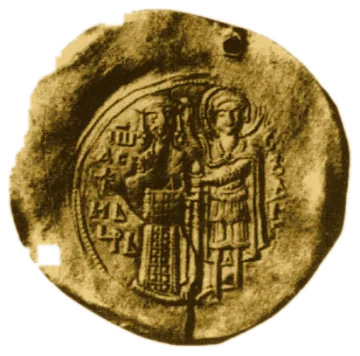
- Ivan Asen II1218–1241The most powerful ruler of the Second Bulgarian Kingdom. After the victory at Klokotnitsa (1230) he destroyed Theodore Komnenos and extended his power from Adrianople to Durrës. First married the Hungarian princess Anna-Maria, then Irene Komnene.
- Kaliman Asen I1241–1246Underage son of Ivan Asen II and Anna-Maria of Hungary. Took the throne at age seven under a regency. Died in 1246 under unclear circumstances.
- Michael II Asen1246–1256Son of Ivan Asen II by Irene Komnene. Acceded as a minor; during his reign Bulgaria lost territory in the wars with Nicaea. Murdered in 1256 by his cousin Kaliman.
- Kaliman Asen II1256–1256Son of sebastokrator Alexander (brother of Ivan Asen II). Murdered his cousin Michael II Asen and seized the throne, but was deposed and killed within months.
- Mitso Asen1256–1257Son-in-law of Ivan Asen II through his marriage to the latter's daughter Maria. Pushed out by Constantine Tih, he withdrew to Byzantine domains; his son Ivan Asen III later briefly seized the throne.
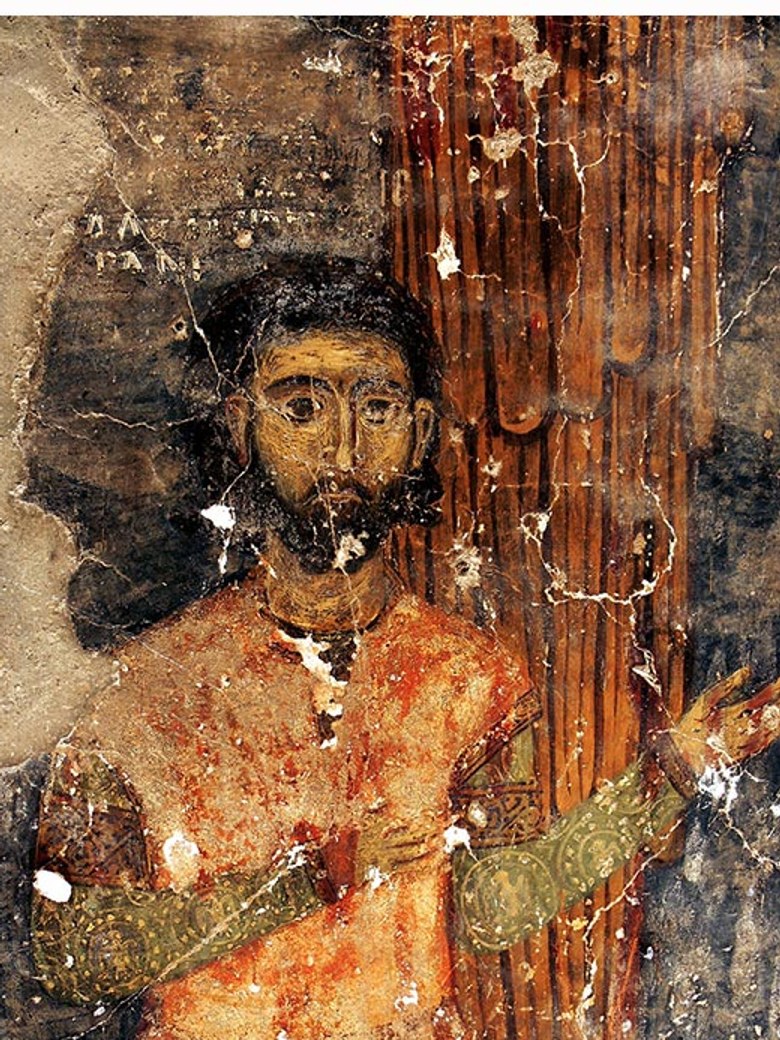
- Constantine Tih Asen1257–1277A boyar of Serbian descent, elected tsar in 1257; he took the name Asen to tie himself to the dynasty through his marriage to Irene Laskarina. Killed in battle against the rebel Ivailo in 1277.
- Ivan Asen III1279–1280Son of Mitso and Maria Asenina, grandson of Ivan Asen II. Installed on the throne with Byzantine backing against Ivailo, but soon fled to Constantinople, leaving power to George Terter I.
Members who did not reign
- Sebastokrator AlexanderSebastokrator
- Maria AseninaPrincess · ~1240–?
- Elena AseninaPrincess · ~1226–?
- Unnamed Asen sisterPrincess
- Unnamed Asen sisterPrincess
- VitleemPrince
- Alexius SlavDespot
- StrezSebastokrator · ?–1214
- Maria AseninaPrincess
- TamaraPrincess
- Anna-TheodoraPrincess
- Michael AsenCo-Tsar
- Maria (Kyramaria)Tsaritsa
Married into the house
- Anna-Maria of HungaryTsaritsa
- Irene KomneneTsaritsa
- Irene LaskarinaTsaritsa
- Maria PalaiologinaTsaritsa
- Irene Palaiologina AseninaTsaritsa · ~1260–?