
1.Political Narrative
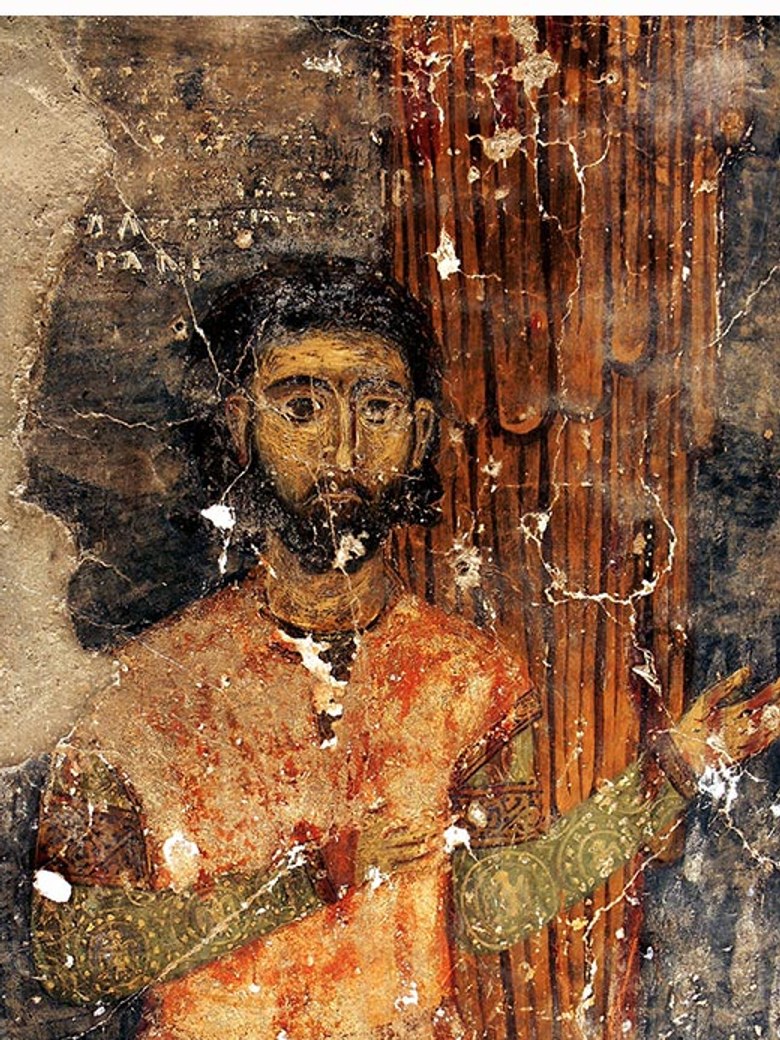
Out of that unstable afterlife of invasion, regency, and dynastic improvisation emerged a new cycle of coups, desperate alliances, and increasingly fragile kingship. The crisis opened in late summer or early autumn 1256, when the young Michael II Asen was murdered by his first cousin Kaliman, a son of seвастократор Alexander and the highest-ranking male of the dynasty still alive. Kaliman’s strike did not restore order; it simply exposed how thin the basis of authority had become. He seized the widow of the murdered tsar, the daughter of Rostislav Mikhailovich of Macva, and for a brief moment tried to take the throne for himself, but he could not hold Tărnovo against the opposition of boyars and soldiers. At the same time other claimants also surfaced beyond the capital: Mico, a relative of the Asenids through marriage, appeared in southeastern Bulgaria, while Rostislav himself stood in Vidin. The result was not a clean succession but a political free-for-all, in which the boyars of Tărnovo finally turned to a powerful but previously uninvolved nobleman, Constantine Tikh, and elevated him as tsar in 1257.
Constantine’s rise was itself a declaration that the old dynastic order had not disappeared so much as been reassembled in a new, more elastic form. He was no Asenid by blood, but he was a rich and influential Bulgarian lord with estates around Sofia and, according to the tradition preserved by the contemporary narratives, half-Serbian ancestry. To make his position defensible, he immediately sought to graft himself onto the old royal house. He took the surname Asen and arranged a marriage to Irene Lascarina, the daughter of Theodore II Lascaris and granddaughter of Ivan II Asen, a union completed in 1258. This was more than a marriage of convenience: it turned the new ruler into a member of the dynastic network that still conferred legitimacy in Bulgarian political culture. Yet the marriage also tied him to the troubled world of Nicaea. As Constantine established himself in Tărnovo, the broader Balkan balance was shifting around him. The assassination of Michael II Asen had already led to the brief appearance of Kaliman and then to his fall; Mico’s own bid for power never reached the capital and, after the struggle had gone against him, he withdrew to his estates and eventually concluded an arrangement with the Byzantines, giving up Mesembria in exchange for land in the Troad. The succession of 1256–1258 was thus not a restoration of stability, but the institutionalization of weakness under a new name.
The first years of Constantine Tikh’s reign were dominated by external pressure from both north-west and south. In 1259 Hungarian troops under Master Chaka invaded the lands beyond the Danube, and in the following year Constantine sent forces into the Severin Banat, only to see them crushed by Master Lawrence. The next Hungarian advance, in 1261, reached still deeper: the attackers crossed into Bulgarian territory south of the river and temporarily occupied Vidin. These blows did not dislodge Constantine, but they showed how vulnerable the north-west frontier had become. At the same time, the new tsar could not escape the Byzantine question. In early 1260 the great logothete George Akropolites came to Tărnovo on a diplomatic mission, and although the surviving account is maddeningly brief, the negotiations are significant because they show both sides still seeking to regularize relations. By then the issue of Mico had already complicated matters: Nicaea had signaled its willingness to recognize a marriage alliance between Constantine and Irene, while Michael VIII Paleologos, now co-emperor in the Byzantine Empire, was prepared to support a rival Asenid claimant. The diplomatic balance did not last. In 1262 Bulgarian troops raided deep into south-eastern Thrace and reached Viza, plundering the countryside before they were stopped by Michael Dukas Tarchaneiotes Glavas. The following year, if the poetic testimony is correctly placed, Byzantine forces recovered the lost fortresses of Stanimaka and Philippopolis. Constantine’s reign had entered into a pattern that would repeat for the rest of his rule: initiative followed by setback, and military action turning almost immediately into bargaining.
By the later 1260s the foreign policy of Tărnovo became increasingly entangled with the personal life of the ruler. Constantine’s first wife, Irene, carried with her the memory of the Lascarid house and a deep hatred of Michael VIII, who had deprived her brother John IV of his imperial dignity and then had him blinded. After 1268–1269, however, Constantine’s second marriage to Maria Palaiologina Kantakouzene altered the tone of the court without giving it real strategic coherence. Maria was linked to opposition circles in the empire, and her own ambitions eventually focused on preserving the Bulgarian crown for her son Michael Asen. Constantine, meanwhile, found himself increasingly hemmed in. In 1272 or 1273 he joined the coalition being assembled by Charles of Anjou against Byzantium, but this did not bring relief. Instead the wider international situation worsened: by 1273 central power was visibly cracking, and in the north-west the brothers Darman and Kudelin established an autonomous lordship in Braničevo. In the same year Bulgaria was ravaged by a major Tatar raid led by Nogai, whose power was now felt much more directly on the Balkan frontier. Constantine was unable to respond effectively. He had broken one leg under unknown circumstances and, according to the contemporary account, was forced to move in a carriage. Real authority therefore drifted into the hands of Maria, who tried above all to preserve the throne for her young son. Constantine himself was not yet finished, but by this point the kingdom was being governed through a weakened, divided household rather than through a commanding monarchy.
That weakness prepared the ground for the convulsion of 1277. In the southeast, another relative of the old ruling world, Mico, had already been proclaimed tsar, while in the west the boyars and regional powers watched the center lose its grip. Then came Ivaylo’s uprising, which exploded from below and transformed the entire political landscape. Late in 1277, after many of Constantine’s supporters had abandoned him, his troops were defeated and he was killed. Maria remained in Tărnovo as regent for the little Michael, but the countryside no longer obeyed the court. Ivaylo captured a series of towns, and the kingdom entered a phase in which the struggle for the capital was inseparable from fighting on every frontier. Michael VIII saw an opportunity in the chaos and moved to impose a Byzantine solution: he raised John Asen III, the son of Mico and a son-in-law of the imperial house, had him swear loyalty to the empire, and married him to his own daughter Irene. Early in 1278 John Asen III entered Bulgaria with Byzantine support, while Ivaylo was still besieging Tărnovo and Nogai’s units were crossing the Danube and plundering as far as the gates of the capital. Yet the imperial plan failed to settle anything. The Byzantine intervention could not overcome the resistance of Ivaylo or the instability of the country, and by 1279 the attempt to enthrone John Asen III had collapsed. The throne in Tărnovo passed briefly to Ivan III Asen, only to change again in 1280, when George I Terter became tsar. By then the period of Constantine Tikh and Ivaylo’s uprising had done its work: it had destroyed the hopes of a stable post-Asenid monarchy and left Bulgaria caught between boyar politics, foreign intervention, and the unpredictable force of popular rebellion.
2.Wars and Warfare
From the middle of the 1250s Bulgarian warfare was shaped by a hard frontier geometry: river crossings, fortress lines, and fast-moving cavalry rather than prolonged set-piece battles. In 1256, when the struggle with Nicaea seemed ready to erupt into a new campaign, the Bulgarians again turned to the classic weapon of the first Asenids and sent a large Cuman force into Thrace. These horsemen inflicted a defeat on the Nicene troops and wintered near Dimotika, a deployment that shows both the mobility of the steppe auxiliary and the intention to keep pressure on the enemy deep in the region between the Marica and the lower Ergene. The Nicene emperor advanced as far as the region of Regina, but the expected campaign dissolved into negotiations. The pattern, however, was already clear: Bulgaria could still mobilize mounted raiders for operations in Thrace, even if the political center in Tarnovo was too unstable to sustain a long war.
The western and northern marches became no less unsettled. In 1259 Hungarian forces under Master Chaka crossed into the lands beyond the Danube, and in the following year the Bulgarian reply, a force sent toward Severin Banat, was beaten by Master Laurence. The conflict then rolled back and forth across the river frontier, with the Hungarians returning in 1261 and briefly occupying Vidin. Such warfare did not depend on a single decisive battle so much as on the possession of key fortified places and the loyalty of local commanders. Vidin’s repeated separation from Tarnovo, sometimes under a foreign-backed ruler, reveals how exposed Bulgaria’s northwestern defense was: a strong river town could become the pivot of an entire campaign, and once it changed hands the balance of power shifted at once. The result was not merely territorial loss but the steady thinning of central authority, with the frontier becoming a zone of raids, counter-raids, and temporary occupations.
Against Byzantium, Constantine Tikh’s wars were marked by sharp incursions into Thrace and equally swift reversals. In 1262 the Bulgarians struck at Byzantine Thrace and appear to have seized a number of fortresses, including Stanimaka and Philippopolis; by the following year the Byzantines had recovered them. In 1263 Bulgarian forces penetrated deep into southeastern Thrace as far as Viza, ravaging the countryside, but were checked by Michael Dukas Tarchaneiotes Glabas. The sources emphasize the speed of movement and the vulnerability of the countryside more than any single heroic encounter: campaigns were measured by the taking and retaking of fortresses, by the ability to devastate the land around them, and by the capacity of a commander to hold his army together long enough to exploit surprise. The fighting of these years also shows how warfare in the Balkans was increasingly international in composition. Byzantine armies could include Hungarians, Serbs, Bulgarians, Turks, and Cumans, while diplomacy constantly sought to use one mounted power against another. In such a world, armies were coalitions, and their effectiveness depended as much on command and cohesion as on numbers.
By the 1270s the military situation had turned catastrophic. After 1273 the Tatars of Nogai repeatedly struck Bulgaria, and by 1271 or thereabouts, after a new Byzantine appeal, Nogai launched a major raid across the Danube that devastated the northern lands. Bulgaria was now pressed by enemies from several directions at once: Hungarians to the northwest, Byzantines to the south, and Nogai’s Tatars to the north and northeast. The state’s military weakness was not only strategic but physical, embodied in the person of Constantine himself, who had broken a leg and was forced to move in a carriage. That disability mattered because it deprived the ruler of the ability to travel with the army, inspect defenses, or respond rapidly to raids; the center of decision-making drifted increasingly to Tsaritsa Maria, whose overriding concern was to preserve the throne for her young son. Meanwhile the internal fabric of defense frayed further as the brothers Darman and Kudelin established an independent lordship in the Braničevo region. The frontier no longer functioned as a single military system, but as a patchwork of local powers, each pursuing its own survival.
The uprising of Ivaylo transformed this already broken military landscape into open civil war. In the autumn of 1277 Constantine’s troops were defeated and he himself was killed after many of his supporters deserted him; the collapse of loyalty was as decisive as any enemy sword. Ivaylo then moved with remarkable speed, taking a whole series of towns while Maria remained in Tarnovo as regent for the child Michael Asen. The struggle quickly became one for the capital and for the roads that fed it. Ivaylo besieged Tarnovo, while Nogai’s units crossed the Danube and plundered Bulgaria as far as the city’s gates, turning the siege into a three-sided crisis: rebellion from within, Tatar pressure from without, and Byzantine intervention from the south. Early in 1278 Michael VIII Palaiologos introduced his own claimant, John Asen III, sending him into Bulgaria with a Byzantine army after marrying him to his daughter Irene. The war around Tarnovo thus united the whole repertoire of thirteenth-century Balkan warfare: fortress siege, mounted raid, foreign auxiliary force, and dynastic proxy. By 1279-1280 the result was a new ruler in Tarnovo, but the military convulsion that brought him there had already shown how fragile the kingdom had become, and how easily peasant insurgency, imperial intervention, and Tatar devastation could converge upon the same battlefield of the state.
3.State and Institutions
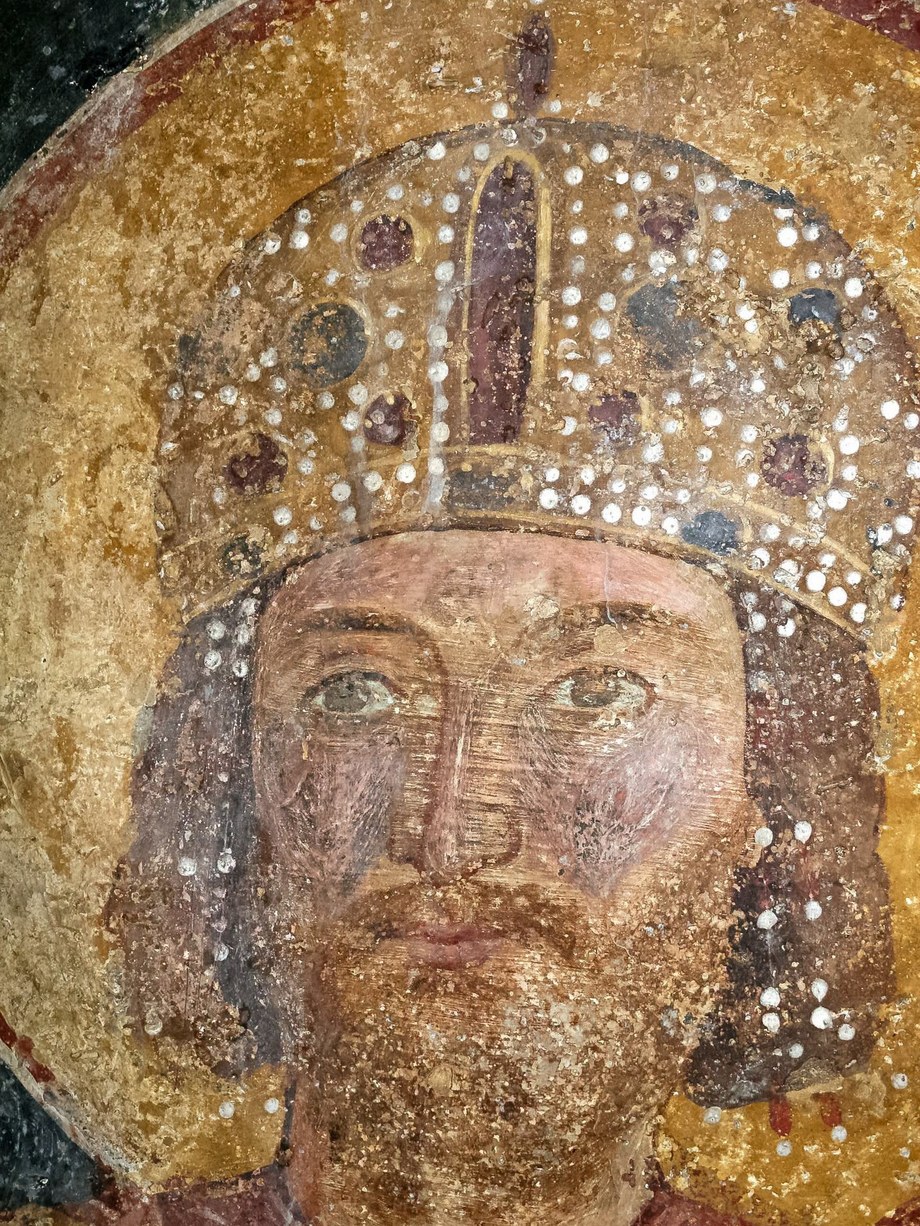
The machinery of the Bulgarian state in the years 1256–1280 was still recognisably that of a monarchy fashioned on Byzantine lines, but it now worked under conditions of acute instability. Târnovo remained the centre of power, and the court continued to embody the idea of a sovereign authority that was supposed to stand above the aristocracy and the provinces. Yet the reality behind that ceremonial façade was increasingly fragile. After the overthrow of the line of Ivan Asen II the throne ceased to pass smoothly from father to son and became, instead, the prize of competing kin-groups, marital alliances, and armed support. The brief reigns and sudden deaths of 1256 opened the way first to Mico, whose claim rested on his connection by marriage with the Asenids, and then to Constantine Tikh, whose legitimacy came not from an unbroken dynastic succession but from the acceptance of a powerful man in the capital and from his own claims to noble descent. Kingship still spoke in the language of dynastic right, but in practice it depended on force, negotiation, and recognition.
That instability can be seen clearly in the structure of the court. The ruler’s authority was not merely personal; it was built up through family, household, and title, and those elements could become decisive in moments of crisis. The empresses were far more than decorative figures at the centre of ceremonial life. Constantine Tikh’s policy was strongly shaped by his wives, first the Lascarina and then Maria Palaiologina Kantakouzene, and the court thus functioned as a place where foreign policy, legitimacy, and dynastic ambition met. The throne was not defended by a fixed constitutional order but by a shifting coalition of the ruler’s household, his kin, and those who could be drawn into his orbit through marriage or favour. This is why the issue of succession mattered so much: without a male heir, the right to rule could pass along collateral or marital lines, and the same principle that had made Mico a king could later be used to justify a different claimant.
The aristocracy, or boyar class, stood at the heart of that political system. In the sources of the period, the leading men of Bulgaria appear not as a stable administrative caste but as the decisive human material out of which power was made. Constantine Tikh himself came from the ranks of the nobility, and his ascent shows that the throne could be seized by a man with standing, connections, and military backing even if he did not belong to the senior dynastic branch. At the same time, the boyars were not a unified bloc. Some were attached to the court; others acted independently when the centre weakened. The rise of autonomous power in the northwest, where Darman and Kudelin built up their own rule in Braničevo, is an unmistakable sign that regional magnates could detach themselves from the royal centre when opportunity allowed. That development did not create a new state structure so much as expose the limits of the old one: the crown could still claim overlordship, but it could not always enforce it.
The same tension between royal pretension and aristocratic self-assertion shaped the local administration of the kingdom, even where direct details are sparse. The state still needed men on the ground to hold territory, secure roads, collect dues, and represent authority in the provinces; but the evidence of the years 1256–1280 suggests that such functions increasingly depended on personal loyalty rather than on an impersonal hierarchy. Campaigns, embassies, and territorial transfers all reveal this dependence. When Mico ceded Mesembria and was compensated with an estate in Asia Minor, the transaction was not simply diplomatic: it was a demonstration that local and dynastic power could be converted into property, service, and patronage. Similarly, the reception of the Byzantine grand logothete in Târnovo shows how the highest political business passed through the court rather than through any separate bureaucratic channel. The state functioned, but it functioned through negotiated relationships, not through secure institutional regularity.
Law and taxation in this period are best understood through that same lens of strain and contraction. The surviving narrative makes plain that the crown was repeatedly forced to deal with war, border losses, and external pressure from the Byzantines, the Hungarians, and especially the Tatars of Nogai. Each of these blows narrowed the material base of royal power. When territories in Thrace were lost, when Mesembria slipped away, when the northwest drifted out of control, the crown was losing not only land but the revenues and obligations that came with it. The result was a state whose fiscal and legal reach was increasingly uneven. The king could still grant, recognise, or punish, but his ability to make law effective across the realm was being eroded by military weakness and by the growing autonomy of local strongmen. Even the court’s diplomatic activity was partly a struggle to stabilise this system of extraction and obedience.
It was precisely this weakness that made Ivaylo’s uprising possible. The peasant movement did not arise in a vacuum; it emerged from a political order in which the crown could no longer guarantee protection and in which aristocratic competition had helped to hollow out central authority. The Tatar raids of the 1270s were not merely military incidents. They exposed the failure of the state’s protective function, the most basic obligation of rulership. In a monarchy whose legitimacy depended so heavily on being seen as the guardian of order, the inability to defend the countryside had profound consequences. Ivaylo’s rise therefore represented more than a social revolt: it was a direct challenge to the very machinery by which kings ruled, judged, and collected their due. The peasant who became tsar stepped into a political world already weakened by dynastic crisis, aristocratic fragmentation, and fiscal exhaustion, and his success showed how far the institutions of the kingdom had been strained before they finally broke.
4.Church and Letters
In the years between the death of Michael II Asen and the outbreak of Ivaylo’s rising, the Bulgarian Church stood at the centre of a world whose political ground was repeatedly giving way. The succession crisis after 1256, the rapid appearance of rival rulers, and the constant pressure from Nicaea, Byzantium, Hungary, and the Tatars made the Tărnovo patriarchate more than a ceremonial institution. It was one of the chief custodians of continuity, the place where the idea of kingship could still be translated into sacred language when dynastic legality itself had become uncertain. In a state that had returned to the logic of usurpation, the church remained the most durable vocabulary of legitimacy: rulers came and went, but the patriarchal centre continued to embody the older claim that the Bulgarian realm was not merely a political possession but a Christian order protected by divine favor.
This struggle for legitimacy can be felt in the way the ruling house presented itself. Constantine Tikh, whose position was always contested by the uncertainty of dynastic politics, needed more than victory on the battlefield or success in diplomacy; he needed the visible endorsement of a Christian monarchy. That endorsement was especially important in the face of foreign humiliation and internal fragmentation, for every setback against Byzantium or the Tatars weakened the aura of the crown. The church did not simply bless power from the outside. It helped define what counted as rightful power at a moment when the distinction between heir and usurper had become dangerously blurred. The very instability of the period made sacred sanction more valuable, and the patriarchate, as the highest spiritual authority in the kingdom, became an indispensable part of the political theater of rule.
The manuscripts of the 1270s show this world of piety and self-definition in miniature. A note preserved in the so-called Tărnovo Gospel from 1272–1273 refers to Patriarch Ignatius as a pillar of Orthodoxy, a concise but revealing phrase. It suggests a court and scribal milieu in which patriarchal authority was not abstract, but commemorated in writing and made visible through the book itself. Such manuscript culture was not confined to liturgical routine. It was part of the kingdom’s attempt to preserve its spiritual centre under conditions of external threat and domestic insecurity. The written page, like the crown, served legitimacy; it preserved names, offices, and memory, and in doing so it gave continuity to a polity that was often politically interrupted. Even in an age of turmoil, the copying and glossing of books remained a way of asserting order, orthodoxy, and historical presence.
Diplomatic correspondence likewise belonged to this culture of writing, and in these years letters moved between Bulgarian and Byzantine rulers as instruments of both negotiation and pressure. The peace arrangements of 1256, the later diplomatic exchange around 1260, and the unstable contacts that followed all depended on written communication, even when the content of those letters has not survived. The important point is that political action was not carried only by swords and mounted retinues; it was also carried by the written word, by envoys, replies, and formal assurances. In this sense, the age of Constantine Tikh was also an age of chancery politics, where the pen could ratify peace, recognize claims, or expose weakness. The culture of letters gave shape to the empire of diplomacy just as the church gave shape to the empire of sanctity.
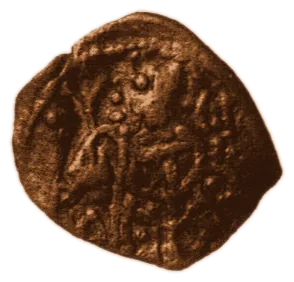
Yet the religious landscape was not one of untroubled unity. Old heterodox currents, above all Bogomil ideas, remained part of the moral and spiritual background of the kingdom, while monastic withdrawal testified to the same sense of deep crisis. The rise of ascetic life and the persistence of heresy were two responses to a world perceived as unstable, violent, and corrupted. In that atmosphere monasteries were more than places of retreat: they were refuges of prayer, memory, and writing, and also sanctuaries of artistic expression. Court and church art alike continued to assert the Christian nature of kingship, whether through the solemn imagery of sovereign authority or through the sacred imagery that framed it. Even the coinage of the period, with Christ placed in relation to the ruler, expressed that fusion of power and sanctity. In the years leading up to Ivaylo’s uprising, Bulgarian culture thus revealed a striking duality: political disorder on the surface, but beneath it a stubborn effort to preserve the forms of Orthodox civilization through the patriarchate, the monastery, the manuscript, and the image.
5.Economy and Charters
The economic life of Bulgaria under Constantine Tikh and during the years of Ivaylo’s rising was shaped less by steady growth than by the pressures of war, dynastic insecurity, and the shifting control of routes, towns, and revenue points. The countryside remained the foundation of wealth: grain production, stock-keeping, and the dues extracted from village communities sustained the state and the elite. Yet these decades were harsh for rural society. Recurrent campaigns against Byzantium, the encroachment of Hungary in the northwest, the loss and recovery of border districts, and, above all, the Tatar devastation of 1273 struck directly at the peasantry and at the landed estates that tied peasants to monasteries and nobles. The weakening of central power made the countryside more exposed, and the fact that separatist lordship could emerge in the Braničevo region shows how easily the fiscal and military fabric of the kingdom could fray when the crown could no longer guarantee protection or regular collection.
The towns fared no better, though they remained indispensable nodes of authority and exchange. Tărnovo stayed the main political and economic centre, but the reign was marked by the vulnerability of other urban strongholds. Vidin could be occupied from outside, and Mesembria, on the Black Sea, became a prize valuable enough to be ceded by a rival claimant. Such cities were not merely symbolic trophies: they controlled roads, river crossings, coastal access, and the channels through which customs, provisions, and coin circulated. In a period when power was contested by several would-be rulers, a town meant storage, markets, gates, walls, and the ability to command movement. The repeated struggle over frontier and littoral towns therefore reflected an economy in which urban centres were inseparable from fiscal control. Whoever held them could tap trade, guard strategic routes, and project legitimacy far beyond the walls themselves.
Trade continued, but under conditions that made privilege and protection especially valuable. The surviving charters and the diplomatic habits of the age reveal an economy in which merchants expected guarantees of safe passage, freedom from arbitrary exactions, and protection for both persons and goods. Toll stations at towns, markets, bridges, ferries, roads, and river crossings were points at which royal power translated into income; to exempt a merchant or an entire group from these charges was therefore to confer real economic advantage. At the same time, such exemptions were also a declaration of sovereign control, because only a ruler confident enough to regulate tolls could suspend them. The very language of privilege shows that commerce depended on the crown’s ability to define who might pass, where they might sell, and what dues could be levied. In a kingdom strained by war and invasion, the written guarantee of commercial freedom was as much a political act as an economic one.
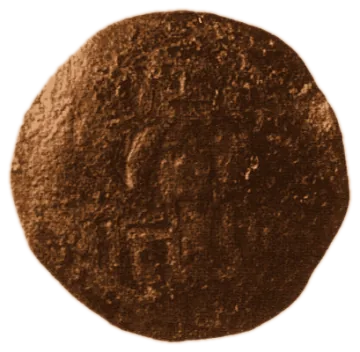
Coinage offers another clear sign of that political economy. Both Mico and Constantine Tikh asserted their claims by striking coins, and the act itself mattered almost as much as the metal. In the medieval Balkans, minting was one of the most visible signs of rulership: it proclaimed that a man possessed not merely a following, but a state capable of regulating value and circulating authority. Coins were thus instruments of legitimacy in a time when legitimacy was brittle. They also imply that despite disruption, monetary exchange did not disappear. Payment in coined money continued to matter in royal and ecclesiastical transactions, in urban life, and in the exchange between ruler and great men. Yet the circulation of coinage must have been increasingly uneven as warfare disturbed markets, displaced populations, and reduced security on the roads. The mint remained a sign that the kingdom still aspired to order, even when that order was repeatedly challenged from within and without.
The royal charters of these years reveal most clearly how the crown sought to anchor itself in landholding and ecclesiastical patronage. Grants to monasteries, such as the mid-thirteenth-century charter likely issued for the monastery of St George Gorgo near Skopje, show how the ruler tried to bind religious houses to the dynasty by confirming their possessions and privileges. Such acts were not simple acts of piety. They transferred land, income, and protection into a sphere where royal favour and spiritual authority reinforced one another. In a kingdom shaken by succession crisis, monastic endowments helped create islands of continuity: villages, fields, mills, vineyards, or income streams could be fixed in writing and placed under sacred protection. Charters therefore illuminate a society in which landed wealth was not abstract but attached to named places and communities, and in which rulers sought to secure loyalty by legalizing possession.
What these documents ultimately reveal is the fragility of royal control over the material basis of power. A charter could protect a monastery’s property, exempt merchants from tolls, or confirm a town’s status, but it could not by itself prevent raids, restore lost districts, or stabilize the countryside. That is why the economic history of 1256–1280 is so inseparable from the political story. Mico and Constantine Tikh both needed written acts, coinage, and patronage to present themselves as true rulers; Ivaylo’s uprising erupted in a land where village burdens, insecurity, and the pressure of outside predation had become acute. The written record of the reigns thus shows a kingdom still rich in institutional memory and legal forms, yet increasingly unable to shield the people and revenues on which those forms depended. The economy endured, but it did so under the shadow of instability, and the charters of the period speak as much of striving and self-assertion as of settled order.
6.Foreign Relations
Constantine Tikh’s foreign policy began under the shadow of defeat and compromise. In 1256 the Bulgarians tried once more the old Asenid expedient of steppe support and sent a large Cuman force into Thrace, where it beat the Nicene troops and wintered near Dymotika. Yet the campaign that had been prepared on such a scale ended not in renewed expansion but in a humiliating peace. The Bulgarian envoys, led above all by Rostislav Mikhailovich, accepted terms that preserved the existing frontier, left the disputed lands conquered in 1254–1255 to the empire, and even ceded the fortress of Cepina. The settlement restored the peace with Nicaea, but it did so at a cost that reverberated at Tărnovo: it publicly exposed the limits of Bulgarian strength and helped create the atmosphere in which dynastic violence again broke out at the center of power. The dynastic alliance itself remained important, however, for Constantine Tikh cemented his own claim by marrying Irene, the granddaughter of the Hungarian king and niece of the Nicene ruling house, thereby weaving together marriage diplomacy and great-power politics in a way that gave his new regime a semblance of legitimacy even as it remained precarious.
That precariousness became obvious as soon as the Nicene succession crisis transformed the political map. The blinding and deposition of John IV Laskaris at the end of 1261 sharpened relations with Constantine, whose wife was the deposed boy-emperor’s sister, and the old Nicene ally-ship gave way to mutual hostility. The Bulgarian court, according to the sources, was deeply affected by the memory of the loss of imperial kinship, while at the same time the Byzantines were reaching out to Mico, a rival claimant whose own claims rested on marriage into the Asen family. In the early 1260s diplomacy still continued: the great logothete George Akropolites came to Tărnovo to negotiate, but his laconic report conceals more than it reveals, and the result was no lasting settlement. By 1262 the truce had effectively collapsed. Bulgarian troops penetrated deep into southeastern Thrace and seized strongholds such as Stanimaka and Philippopolis; in 1263, according to other testimony, the Byzantines had to recover them. The fighting on the frontier was interlaced with dynastic bargaining, for Mico eventually handed Mesembria over to the Byzantines and withdrew to an estate in the Troad in return for land and a marriage arrangement. Constantine’s struggle with Byzantium was therefore never simply a border war: it was a contest over rival Asenid, Laskarid, and Palaiologan claims, in which fortresses, marriages, and defections all mattered at once.
To the northwest, Hungary remained an equally dangerous and more persistent problem. In 1259 Hungarian forces under Master Csák invaded the lands beyond the Danube, and the following year Bulgarian troops sent into the Severin Banat were defeated by Master Lawrence. The reverse encouraged the Hungarians to press their advantage; in 1261 they reappeared on Bulgarian soil and temporarily occupied Vidin. This frontier struggle mattered not only because it drained manpower, but because it demonstrated how vulnerable the Bulgarian northwestern marches had become in a political landscape dominated by stronger neighbors and semi-autonomous border lords. The same Hungarian connection also widened the dynastic field in which Tărnovo had to operate: Rostislav Mikhailovich, who had mediated the 1256 peace and whose family was tied by marriage to the Bulgarian throne, stood in the background of the northern problem, linking Bulgaria to Hungarian politics and making compromise harder, not easier. By the 1270s the pressure had become structural: Constantine knew that any serious attempt to dislodge the Hungarian-supported Jacob Svetoslav from Vidin would mean war with the kingdom’s protectors, and the northwest had turned from a frontier into a permanent strategic trap.
The steppe powers were no less decisive. Constantine’s first diplomatic use of the Cumans in 1256 recalled the methods of the early Asenids, when mounted auxiliaries from the steppe had served as force multipliers in Thrace. But the later decades of his reign show how far that old pattern had changed. In 1273 Bulgaria was devastated by a raid of Nogai’s Tatars, and from that point on Tatar incursions became frequent on the Balkan Peninsula. Constantine was now caught between a weakened Tatar overlord, Mangu Timur, and Nogai, whose forces could strike independently and with impunity. The sources stress that Bulgaria still paid tribute to Mangu Timur, yet this did not protect it; indeed, it may even have made the country more tempting prey for Nogai’s followers, who were also allied to Byzantium. When Constantine raided Thrace, probably in 1271, the Byzantines answered by calling on Nogai, who swept across the Danube and plundered Bulgaria on a large scale. The result was a brutal encirclement: the Bulgarians faced hostility from the south, the north, and the steppe simultaneously. Constantine’s broken leg and consequent physical incapacity only worsened the crisis, for the burden of government passed increasingly into the hands of his wife Maria, whose political horizon centered on preserving the throne for her young son Michael Asen.
By the later 1260s and 1270s the papacy and the wider anti-Byzantine coalition also entered Bulgarian diplomacy. Michael VIII’s union policy, affirmed at Lyon in 1274, gave the Byzantine emperor a temporary advantage by securing papal recognition and freeing him to concentrate on political and military rivals. Constantine responded not by reconciling himself to Constantinople, but by moving closer to Charles of Anjou’s anti-Byzantine camp in 1272 or 1273. That choice fit the domestic mood at Tărnovo, where the “national” ecclesiastical line and the hostility to union coincided with Maria’s determination to defend her son’s rights. It also aligned Bulgaria with a broader anti-Byzantine strategy in which Charles sought to gather the Balkan rulers around his plans for the East. Yet this was a diplomacy of weak states and unstable coalitions. The papal side gained the language of union; the anti-Byzantine side gained little more than false hopes; and Bulgaria, instead of escaping pressure, became more exposed to Byzantine retaliation and Tatar revenge. By the eve of Ivaylo’s rising the kingdom stood isolated in a hostile diplomatic world, dependent on marriages and temporary alignments, but unable to turn any of them into a durable security system.
1.Political Story
After a period of invasion, regency, and makeshift rule, Bulgaria entered a new cycle of power struggles, shaky alliances, and weak kings. This crisis began in late summer or early autumn of 1256 when the young ruler Michael II Asen was killed by his cousin Kaliman. Kaliman was the son of Alexander, a high-ranking noble, and the closest surviving male relative in the royal family. However, Kaliman’s violent takeover didn’t bring stability. Instead, it revealed how fragile the authority of the throne had become. He took Michael’s widow—who was the daughter of Rostislav Mikhailovich of Macva—and briefly tried to claim the throne. But he couldn’t hold the capital city, Tărnovo, against the resistance from powerful nobles (boyars) and soldiers.
At the same time, other contenders appeared outside the capital. Mico, related to the royal family through marriage, showed up in southeastern Bulgaria, while Rostislav himself was in Vidin. Rather than a smooth transfer of power, the result was a chaotic scramble for control. Eventually, the boyars in Tărnovo turned to a strong nobleman who had not been involved before: Constantine Tikh. In 1257, they made him tsar.
Constantine’s rise showed that the old royal family hadn’t disappeared but had been reshaped in a more flexible way. He wasn’t a blood relative of the Asen dynasty, but he was a wealthy and influential Bulgarian lord with lands near Sofia. According to contemporary stories, he had some Serbian ancestry. To strengthen his claim, he quickly linked himself to the old royal family. He took the royal surname Asen and married Irene Lascarina, daughter of Theodore II Lascaris and granddaughter of Ivan II Asen, in 1258. This marriage was more than a political convenience—it made him part of the royal network that still gave rulers legitimacy in Bulgarian politics. But it also connected him to the troubled empire of Nicaea.
While Constantine settled in Tărnovo, the political situation in the Balkans was shifting. After Michael II Asen’s assassination, Kaliman briefly appeared but soon fell. Mico’s attempt to take power never reached the capital; after losing, he retreated to his lands and made a deal with the Byzantines, giving up the town of Mesembria in exchange for land in the Troad region of Asia Minor. So, the succession from 1256 to 1258 didn’t bring stability—it simply made weakness official under a new name.
During the early years of Constantine’s reign, Bulgaria faced pressure from both the northwest and the south. In 1259, Hungarian forces led by Master Chaka invaded the lands beyond the Danube River. The next year, Constantine sent troops into the Severin Banat region, but they were defeated by Master Lawrence. In 1261, the Hungarians pushed even further, crossing into Bulgarian territory south of the Danube and briefly occupying Vidin. These attacks didn’t overthrow Constantine, but they showed how vulnerable Bulgaria’s northwest border had become.
At the same time, Constantine couldn’t ignore the Byzantine Empire. In early 1260, the Byzantine official George Akropolites visited Tărnovo on a diplomatic mission. Although the records of this meeting are brief, they show that both sides still wanted to manage their relationship peacefully. By then, the issue of Mico complicated matters. The Nicaean Empire was willing to accept Constantine’s marriage to Irene, but Michael VIII Palaiologos, now co-emperor of Byzantium, supported a rival claimant from the Asen family. This uneasy balance didn’t last. In 1262, Bulgarian troops raided southeastern Thrace, reaching the town of Viza and plundering the area before being stopped by Byzantine forces under Michael Dukas Tarchaneiotes Glabas. The following year, Byzantine troops recaptured the fortresses of Stanimaka and Philippopolis. Constantine’s reign settled into a pattern of taking the initiative, suffering setbacks, and then negotiating.
By the late 1260s, Constantine’s foreign policy became closely tied to his personal life. His first wife, Irene, reminded people of the Lascarid dynasty and hated Michael VIII, who had blinded her brother John IV and stripped him of his imperial title. After 1268 or 1269, Constantine married a second time to Maria Palaiologina Kantakouzene. This changed the atmosphere at court but didn’t bring clear strategic gains. Maria was connected to opposition groups in Byzantium and focused on securing the throne for her son, Michael Asen. Constantine found himself increasingly trapped. Around 1272 or 1273, he joined a coalition led by Charles of Anjou against Byzantium, but this did not ease Bulgaria’s troubles. Instead, the country’s situation worsened. By 1273, central power was visibly weakening, and in the northwest, the brothers Darman and Kudelin set up their own independent rule in Braničevo. That same year, Bulgaria suffered a major Tatar raid led by Nogai, whose influence was now felt directly on the Balkan border. Constantine was unable to respond effectively. He had broken a leg under unknown circumstances and, according to accounts, had to travel in a carriage. Real power shifted to Maria, who focused on protecting the throne for her young son. While Constantine was still alive, the kingdom was now ruled by a divided and weakened household rather than a strong monarch.
This weakness set the stage for the upheaval of 1277. In the southeast, Mico had already declared himself tsar, while in the west, the boyars and regional leaders watched the central government lose control. Then came Ivaylo’s uprising—a popular revolt that changed the political landscape completely. Late in 1277, after many of Constantine’s supporters abandoned him, his forces were defeated and he was killed. Maria stayed in Tărnovo as regent for the young Michael, but the countryside no longer obeyed the court. Ivaylo captured several towns, and the kingdom entered a phase where fighting for the capital was linked to battles on every border.
Michael VIII saw a chance in this chaos. He tried to impose a Byzantine solution by putting forward John Asen III, Mico’s son and a member of the imperial family by marriage. John swore loyalty to Byzantium and married Michael VIII’s daughter Irene. Early in 1278, John Asen III entered Bulgaria with Byzantine support while Ivaylo was still besieging Tărnovo and Nogai’s Tatars were raiding as far as the city gates. But this plan failed. The Byzantine intervention couldn’t overcome Ivaylo’s resistance or the country’s instability. By 1279, John Asen III’s attempt to take the throne collapsed. The throne briefly passed to Ivan III Asen, then changed again in 1280 when George I Terter became tsar. The period of Constantine Tikh and Ivaylo’s uprising destroyed hopes for a stable monarchy after the Asen dynasty. Bulgaria was left caught between boyar politics, foreign interference, and unpredictable popular rebellion.
2.Wars and Fighting
From the mid-1250s, Bulgarian warfare was shaped by the geography of the frontier: rivers, fortress lines, and fast cavalry raids rather than long, formal battles. In 1256, as conflict with Nicaea seemed likely, the Bulgarians used their traditional strategy and sent a large force of Cumans—steppe horsemen—into Thrace. These horsemen defeated Nicene troops and spent the winter near Dimotika. This showed both their mobility and the plan to keep pressure on the enemy deep in the area between the Marica and lower Ergene rivers. The Nicene emperor advanced as far as Regina, but the expected campaign ended in negotiations. This pattern was clear: Bulgaria could still send mounted raiders into Thrace, but the unstable government in Tărnovo couldn’t support a long war.
The western and northern border regions were just as unsettled. In 1259, Hungarian forces under Master Chaka crossed the Danube, and the next year, Bulgarian troops sent to Severin Banat were defeated by Master Lawrence. The fighting moved back and forth across the river frontier. In 1261, Hungarians returned and briefly occupied Vidin. This kind of warfare wasn’t about one big battle but about controlling key fortresses and winning the loyalty of local commanders. Vidin’s repeated break from Tărnovo, sometimes under foreign-backed rulers, showed how exposed Bulgaria’s northwest defenses were. A strong river town could become the center of a campaign, and when it changed hands, the balance of power shifted immediately. This didn’t just mean losing land but also weakening central authority. The frontier became a zone of raids, counter-raids, and temporary occupations.
Against Byzantium, Constantine Tikh’s wars were marked by quick raids into Thrace and equally quick losses. In 1262, Bulgarians attacked Byzantine Thrace and took several fortresses, including Stanimaka and Philippopolis. By the next year, the Byzantines had retaken them. In 1263, Bulgarian forces reached deep into southeastern Thrace, plundering around Viza, but were stopped by Michael Dukas Tarchaneiotes Glabas. The sources focus on the speed of these movements and the vulnerability of the countryside rather than on any single heroic battle. Campaigns were measured by taking and retaking fortresses, devastating the surrounding land, and commanders’ ability to keep their armies together long enough to surprise the enemy. These wars also show how Balkan armies were increasingly mixed. Byzantine forces could include Hungarians, Serbs, Bulgarians, Turks, and Cumans. Diplomacy constantly tried to use one mounted power against another. Armies were coalitions, and their success depended on leadership and unity as much as on numbers.
By the 1270s, the military situation became disastrous. After 1273, Nogai’s Tatars repeatedly raided Bulgaria. Around 1271, following a Byzantine request, Nogai launched a major raid across the Danube that devastated northern Bulgaria. Now Bulgaria faced enemies from several directions: Hungarians in the northwest, Byzantines in the south, and Tatars from the north and northeast. The state’s military weakness was not just strategic but physical, shown by Constantine himself, who had a broken leg and had to travel by carriage. This mattered because it kept him from traveling with the army, inspecting defenses, or responding quickly to raids. Power shifted to Tsaritsa Maria, who focused on protecting the throne for her young son. Meanwhile, the internal defense system weakened further as the brothers Darman and Kudelin set up an independent rule in Braničevo. The frontier no longer worked as a single military system but as a patchwork of local powers, each looking out for itself.
Ivaylo’s uprising turned this broken military situation into open civil war. In autumn 1277, Constantine’s troops were defeated, and he was killed after many supporters deserted him. The collapse of loyalty was as important as any enemy attack. Ivaylo quickly took many towns while Maria stayed in Tarnovo as regent for the child Michael Asen. The fight soon focused on the capital and the roads leading to it. Ivaylo besieged Tarnovo, while Nogai’s Tatars crossed the Danube and plundered Bulgaria up to the city gates. This siege became a three-way crisis: rebellion inside, Tatar raids from outside, and Byzantine interference from the south. Early in 1278, Michael VIII Palaiologos sent his own claimant, John Asen III, into Bulgaria with a Byzantine army after marrying him to his daughter Irene. The war around Tarnovo included fortress sieges, mounted raids, foreign troops, and dynastic rivals. By 1279–1280, a new ruler sat on the throne, but the military chaos showed how fragile the kingdom had become. Peasant rebellion, imperial intervention, and Tatar destruction all came together on the battlefield of the state.
3.Government and Institutions
Between 1256 and 1280, Bulgaria’s government still looked like a monarchy modeled on Byzantine traditions, but it operated in a time of deep instability. Tărnovo remained the center of power, and the royal court still symbolized a sovereign authority meant to stand above the nobles and provinces. But behind this ceremonial image, the situation was fragile. After the fall of Ivan Asen II’s line, the throne no longer passed smoothly from father to son. Instead, it became a prize fought over by competing family groups, marriage alliances, and armed supporters. The short reigns and sudden deaths after 1256 opened the way first to Mico, whose claim came through marriage ties to the Asen family, and then to Constantine Tikh, whose legitimacy came not from direct royal blood but from acceptance by powerful people in the capital and his noble background. Kingship still talked about dynastic right, but in reality, it depended on force, negotiation, and recognition.
This instability is clear in the court’s structure. The ruler’s authority wasn’t just personal; it was built through family, household, and titles, which could become crucial in times of crisis. The empresses were more than just decorative figures. Constantine’s policies were strongly influenced by his wives—first Irene Lascarina, then Maria Palaiologina Kantakouzene. The court was a place where foreign policy, legitimacy, and dynastic ambitions met. The throne wasn’t protected by fixed laws but by a shifting alliance of the ruler’s household, relatives, and those brought into his circle through marriage or favors. That’s why succession mattered so much. Without a male heir, the right to rule could pass through other family lines or marriage, and the same logic that made Mico king could later support a different claimant.
The aristocracy, known as the boyars, were at the heart of this political system. The sources show that Bulgaria’s leading men were not a stable administrative class but the key human resources from which power was made. Constantine Tikh himself came from the nobility, showing that a man with status, connections, and military support could seize the throne even without belonging to the main royal branch. But the boyars were not united. Some were loyal to the court; others acted independently when central power weakened. The rise of independent rule in the northwest, where Darman and Kudelin built their own lordship in Braničevo, shows that regional nobles could break away when the chance arose. This didn’t create a new state but revealed the limits of the old one: the crown could claim authority but couldn’t always enforce it.
This tension between royal claims and noble independence also shaped local government, even though details are scarce. The state still needed officials on the ground to hold land, secure roads, collect taxes, and represent authority in the provinces. But evidence from 1256 to 1280 suggests these roles depended more on personal loyalty than on a formal hierarchy. Campaigns, diplomatic missions, and land deals all show this dependence. When Mico gave up Mesembria and was compensated with land in Asia Minor, it wasn’t just diplomacy—it showed how local and family power could be turned into property, service, and patronage. Similarly, the visit of the Byzantine official George Akropolites to Tărnovo shows that important political business went through the court, not a separate bureaucracy. The state worked, but through negotiated relationships, not secure institutions.
Law and taxation during this time also reflected strain and contraction. The records make clear that the crown faced war, border losses, and pressure from Byzantines, Hungarians, and especially Nogai’s Tatars. Each blow reduced the royal power base. Losing lands in Thrace, losing Mesembria, and losing control of the northwest meant losing not only territory but also income and obligations. The result was a state whose reach in law and taxes became uneven. The king could still grant privileges, recognize rights, or punish, but his ability to enforce laws across the kingdom was weakened by military losses and growing local independence. Even diplomacy was partly a struggle to stabilize this system of control and obedience.
This weakness made Ivaylo’s uprising possible. The peasant revolt didn’t come out of nowhere; it grew from a political order where the crown could no longer protect the people and where noble rivalries hollowed out central authority. The Tatar raids of the 1270s weren’t just military attacks—they showed the state’s failure to protect its basic duty. In a monarchy where legitimacy depended on maintaining order, failing to defend the countryside had serious consequences. Ivaylo’s rise was more than a social revolt—it was a direct challenge to how kings ruled, judged, and collected taxes. The peasant who became tsar stepped into a political world already weakened by dynastic crisis, noble division, and financial exhaustion. His success showed how much the kingdom’s institutions had been stretched before they finally broke.
4.Church and Culture
Between Michael II Asen’s death and Ivaylo’s uprising, the Bulgarian Church stood at the center of a world where political ground kept shifting. The succession crisis after 1256, the quick rise of rival rulers, and constant pressure from Nicaea, Byzantium, Hungary, and the Tatars made the Tărnovo patriarchate more than a ceremonial institution. It was a key guardian of continuity, where the idea of kingship could still be expressed in sacred terms even when royal legitimacy was uncertain. In a state that had returned to rule by usurpation, the church remained the strongest source of legitimacy. Rulers came and went, but the patriarchate kept alive the older claim that Bulgaria was not just a political territory but a Christian kingdom protected by divine favor.
This fight for legitimacy influenced how the ruling family presented itself. Constantine Tikh, whose position was always uncertain, needed more than military victories or diplomatic success. He needed the visible support of a Christian monarchy. This support was especially important when the country suffered defeats and internal division because every loss to Byzantium or the Tatars weakened the crown’s prestige. The church didn’t just bless power from outside; it helped define what counted as rightful power when the line between heir and usurper was unclear. The instability of the time made sacred approval even more valuable, and the patriarchate, as the highest spiritual authority, became a vital part of the political stage.
Manuscripts from the 1270s give a small glimpse into this world of faith and self-definition. A note in the so-called Tărnovo Gospel from 1272–1273 calls Patriarch Ignatius a “pillar of Orthodoxy,” a brief but telling phrase. It suggests a court and scribal culture where patriarchal authority was real and commemorated in writing. This manuscript culture wasn’t just about church rituals; it was part of the kingdom’s effort to protect its spiritual center amid external threats and internal insecurity. Like the crown, the written word preserved names, offices, and memory, giving continuity to a kingdom often interrupted politically. Even in troubled times, copying and annotating books was a way to assert order, faith, and historical presence.
Diplomatic letters were also part of this culture of writing. During these years, letters passed between Bulgarian and Byzantine rulers as tools of negotiation and pressure. Peace agreements in 1256, later talks around 1260, and unstable contacts afterward all relied on written communication, even if the texts haven’t survived. The key point is that politics wasn’t carried only by swords and soldiers but also by the written word, envoys, replies, and formal promises. In this way, Constantine Tikh’s era was also a time of chancery politics, where writing could confirm peace, recognize claims, or reveal weakness. The culture of letters shaped diplomacy just as the church shaped sanctity.
However, the religious scene was not peaceful. Old heresies, especially Bogomil beliefs, remained part of the kingdom’s moral background, and many monks withdrew from the world, showing a sense of deep crisis. The rise of ascetic life and the persistence of heresy were two responses to a world seen as unstable, violent, and corrupt. In this atmosphere, monasteries were more than places of retreat—they were refuges for prayer, memory, writing, and artistic expression. Both court and church art continued to emphasize the Christian nature of kingship, through solemn images of royal authority and sacred symbols. Even the coins of the period, showing Christ alongside the ruler, expressed this blend of power and holiness. In the years before Ivaylo’s uprising, Bulgarian culture showed a striking contrast: political chaos on the surface, but beneath it a determined effort to preserve Orthodox civilization through the church, monasteries, manuscripts, and images.
5.Economy and Documents
Bulgaria’s economy under Constantine Tikh and during Ivaylo’s uprising was shaped less by steady growth and more by the pressures of war, dynastic uncertainty, and shifting control over trade routes, towns, and sources of income. The countryside remained the foundation of wealth. Grain farming, livestock, and taxes collected from village communities supported the state and the elite. But these decades were hard on rural society. Frequent wars with Byzantium, Hungarian advances in the northwest, the loss and recovery of border areas, and especially the Tatar raid of 1273 hit peasants and the landed estates that connected peasants to monasteries and nobles. Weak central power left the countryside exposed. The fact that separatist rule arose in Braničevo shows how easily the kingdom’s financial and military system could unravel when the crown couldn’t guarantee protection or regular tax collection.
Towns fared no better, though they remained vital centers of authority and trade. Tărnovo stayed the main political and economic hub, but other towns were vulnerable. Vidin could be occupied by foreign forces, and Mesembria on the Black Sea was valuable enough to be given away by a rival claimant. These cities were not just symbolic prizes; they controlled roads, river crossings, coastal access, and the flow of customs duties, goods, and money. In a time when several rulers competed for power, a town meant storage, markets, gates, walls, and the ability to control movement. The repeated battles over frontier and coastal towns reflected an economy where urban centers were tied to fiscal control. Whoever held them could tap into trade, guard strategic routes, and project legitimacy far beyond the city walls.
Trade continued but under conditions that made privileges and protection especially important. Surviving charters and diplomatic practices show an economy where merchants expected guarantees of safe passage, freedom from unfair taxes, and protection for themselves and their goods. Toll stations at towns, markets, bridges, ferries, roads, and river crossings were places where royal power turned into income. To exempt a merchant or group from these charges was a real economic advantage. At the same time, such exemptions declared sovereign control because only a confident ruler could regulate or suspend tolls. The language of privilege shows that commerce depended on the crown’s ability to decide who could pass, where they could sell, and what taxes they had to pay. In a kingdom strained by war and invasion, a written guarantee of commercial freedom was as much a political act as an economic one.
Coinage also shows this political economy clearly. Both Mico and Constantine Tikh issued coins to assert their claims, and the act mattered almost as much as the metal. In the medieval Balkans, minting coins was one of the most visible signs of rulership. It showed that a man had not just followers but a state capable of regulating value and spreading authority. Coins were tools of legitimacy in a time when legitimacy was fragile. They also show that despite disruption, money exchange continued. Payment in coins still mattered in royal and church transactions, urban life, and exchanges between the ruler and nobles. But coin circulation must have been uneven as warfare disturbed markets, displaced people, and made roads unsafe. The mint remained a sign that the kingdom still aimed for order, even when that order was repeatedly challenged.
Royal charters from this time show most clearly how the crown tried to anchor itself in landholding and church support. Grants to monasteries, like a mid-13th-century charter probably issued for the monastery of St George Gorgo near Skopje, show how the ruler tried to tie religious houses to the dynasty by confirming their lands and privileges. These acts were not just pious gestures. They transferred land, income, and protection into a sphere where royal favor and spiritual authority reinforced each other. In a kingdom shaken by succession crises, monastic endowments helped create islands of continuity. Villages, fields, mills, vineyards, or income streams could be fixed in writing and placed under sacred protection. Charters reveal a society where landed wealth was tied to named places and communities, and where rulers sought loyalty by legalizing possession.
But these documents also reveal how fragile royal control over the kingdom’s resources was. A charter could protect a monastery’s property, exempt merchants from tolls, or confirm a town’s status, but it couldn’t stop raids, recover lost lands, or stabilize the countryside. That’s why the economic history of 1256–1280 is closely linked to the political story. Mico and Constantine Tikh both needed written documents, coins, and patronage to present themselves as true rulers. Ivaylo’s uprising broke out in a land where village burdens, insecurity, and outside attacks had become severe. The written records show a kingdom still rich in institutional memory and legal forms but increasingly unable to protect the people and revenues those forms depended on. The economy survived, but under the shadow of instability. The charters of the period speak as much of struggle and self-assertion as of settled order.
6.Foreign Relations
Constantine Tikh’s foreign policy began under the shadow of defeat and compromise. In 1256, Bulgaria again used the old Asenid strategy of steppe allies by sending a large Cuman force into Thrace. The Cumans defeated Nicene troops and wintered near Dymotika. But the campaign ended not with expansion but with a humiliating peace. Bulgarian envoys, led by Rostislav Mikhailovich, accepted terms that kept the existing borders, left disputed lands conquered in 1254–1255 to the empire, and even gave up the fortress of Cepina. This settlement restored peace with Nicaea but exposed Bulgaria’s limits and helped create the atmosphere for renewed dynastic violence in the capital. Still, dynastic alliances remained important. Constantine strengthened his claim by marrying Irene, granddaughter of the Hungarian king and niece of the Nicene ruling family. This marriage combined marriage diplomacy and great-power politics, giving his regime some legitimacy even though it was unstable.
This instability became clear when the Nicene succession crisis changed the political map. The blinding and removal of John IV Laskaris at the end of 1261 worsened relations with Constantine, whose wife was the deposed emperor’s sister. The old alliance with Nicaea turned into hostility. The Bulgarian court was deeply affected by the loss of imperial kinship, while the Byzantines reached out to Mico, a rival claimant whose claims also came through marriage into the Asen family. In the early 1260s, diplomacy continued. The Byzantine official George Akropolites came to Tărnovo to negotiate, but his brief report hides more than it reveals, and no lasting peace resulted. By 1262, the truce had effectively ended. Bulgarian troops pushed deep into southeastern Thrace and took fortresses like Stanimaka and Philippopolis. By 1263, the Byzantines had retaken them. The fighting on the border mixed with dynastic bargaining. Mico eventually gave Mesembria to the Byzantines and withdrew to an estate in the Troad in exchange for land and a marriage deal. Constantine’s struggle with Byzantium was never just a border war; it was a contest over rival claims from the Asen, Laskarid, and Palaiologan families, where fortresses, marriages, and defections all mattered.
To the northwest, Hungary was an equally dangerous and persistent threat. In 1259, Hungarian forces under Master Csák invaded lands beyond the Danube. The next year, Bulgarian troops sent to Severin Banat were defeated by Master Lawrence. This encouraged the Hungarians to press their advantage. In 1261, they returned and briefly occupied Vidin. This border struggle mattered not only because it drained manpower but because it showed how vulnerable Bulgaria’s northwest marches had become in a political landscape dominated by stronger neighbors and semi-independent border lords. The Hungarian connection also complicated dynastic politics. Rostislav Mikhailovich, who helped mediate the 1256 peace and whose family was tied by marriage to the Bulgarian throne, was involved in the northern problem, linking Bulgaria to Hungarian politics and making compromise harder. By the 1270s, this pressure became structural. Constantine knew that any serious attempt to remove the Hungarian-backed Jacob Svetoslav from Vidin would mean war with Hungary. The northwest had turned from a border into a permanent strategic trap.
The steppe powers were also crucial. Constantine’s first use of the Cumans in 1256 recalled the early Asenid pattern, when steppe horsemen served as force multipliers in Thrace. But later in his reign, this pattern changed. In 1273, Nogai’s Tatars devastated Bulgaria, and from then on, Tatar raids became frequent in the Balkans. Constantine was caught between a weakened Tatar overlord, Mangu Timur, and Nogai, whose forces could strike independently and with impunity. Sources say Bulgaria still paid tribute to Mangu Timur, but this didn’t protect it. In fact, it may have made Bulgaria more tempting to Nogai’s followers, who were allied with Byzantium. When Constantine raided Thrace around 1271, the Byzantines called on Nogai, who swept across the Danube and plundered Bulgaria on a large scale. Bulgaria was now surrounded by enemies from south, north, and steppe. Constantine’s broken leg and physical weakness made things worse, as government power passed increasingly to his wife Maria, who focused on protecting the throne for her young son Michael Asen.
By the late 1260s and 1270s, the papacy and the wider anti-Byzantine coalition also entered Bulgarian diplomacy. Michael VIII’s policy of church union, confirmed at Lyon in 1274, gave the Byzantine emperor a temporary advantage by winning papal recognition and allowing him to focus on his political and military rivals. Constantine responded not by accepting Constantinople but by moving closer to Charles of Anjou’s anti-Byzantine alliance around 1272 or 1273. This fit the mood in Tărnovo, where the national church opposed union and Maria was determined to defend her son’s rights. It also linked Bulgaria to a broader anti-Byzantine strategy, where Charles sought to rally Balkan rulers around his plans for the East. But this was diplomacy among weak states and unstable alliances. The papacy gained the language of union; the anti-Byzantine side gained little beyond false hopes. Bulgaria, instead of escaping pressure, became more exposed to Byzantine retaliation and Tatar attacks. By the time of Ivaylo’s uprising, the kingdom stood isolated in a hostile diplomatic world, dependent on marriages and temporary alliances but unable to build lasting security.
In 1256, after the young king Michael II Asen was killed by his cousin Kaliman, Bulgaria fell into chaos. Many nobles fought for power, and the boyars (noble class) chose Constantine Tikh as tsar in 1257. He was not from the royal family but married into it to gain legitimacy. His rule was weak and full of struggles.
Constantine faced attacks from Hungary in the northwest and Byzantium in the south. His armies had some success but often lost ground quickly. The Tatars also raided Bulgaria in the 1270s, making the situation worse. Constantine was injured and could not lead well, so his wife Maria took charge, trying to protect their son’s claim to the throne.
In 1277, a peasant leader named Ivaylo led a big uprising. He defeated Constantine, who was killed, and took control of many towns. The Byzantines tried to put their own ruler on the Bulgarian throne, but Ivaylo resisted. The country became a battleground with fighting inside and attacks from outside powers.
Bulgaria’s government was fragile. Kingship depended on family ties, marriages, and support from nobles, not on strong laws or institutions. The boyars often acted independently, and local lords sometimes ignored the king. The state struggled to collect taxes and keep order, especially after losing lands and towns.
The Bulgarian Church was important for keeping the idea of a Christian kingdom alive. It gave rulers religious support when their political power was weak. Books and letters helped preserve this authority and kept communication with other states.
The economy suffered from constant war and raids. Villages and towns were often unsafe, and trade needed protection from the rulers. Coins were still made to show royal power, but money and goods moved less freely. Kings gave land and privileges to monasteries and merchants to secure loyalty.
Foreign relations were difficult. Bulgaria made peace with the Byzantine Empire but soon fought again. Hungary invaded and took some border towns. The Tatars raided from the north. Bulgaria tried to join anti-Byzantine alliances but remained weak and isolated. Marriages were used to build alliances, but these often failed to bring lasting peace.
Overall, from 1256 to 1280, Bulgaria was a kingdom in crisis. It had weak kings, fighting nobles, foreign enemies, and a peasant revolt. The old royal order was broken, and the country struggled to stay united and strong.
Key Events
- 11256 — Michael II Asen is murdered by his cousin Kaliman, who seizes the tsar's widow and briefly tries to take power in Tărnovo.
- 21256 — Bulgarian forces send a large Cuman contingent into Thrace, defeating Nicene troops and wintering near Dimotika before peace is restored with Nicaea.
- 31257 — The boyars of Tărnovo elevate Constantine Tikh as tsar.
- 41258 — Constantine takes the name Asen and marries Irene Lascarina, linking himself to the old dynastic network.
- 51259 — Hungarian troops under Master Chaka invade the lands beyond the Danube.
- 61260 — Constantine's forces are sent into the Severin Banat and are crushed by Master Lawrence; George Akropolitēs arrives in Tărnovo on a diplomatic mission.
- 71261 — The Hungarians advance again, cross south of the Danube, and temporarily occupy Vidin.
- 81262 — Bulgarian troops raid deep into southeastern Thrace and reach Viza before being stopped by Michael Dukas Tarchaneiotes Glavas.
- 91263 — Byzantine forces recover the fortresses of Stanimaka and Philippopolis.
- 101268/1269 — Constantine marries Maria Palaiologina Kantakouzene, whose influence later shapes the court and the succession question.
- 111272/1273 — Constantine joins the coalition assembled by Charles of Anjou against Byzantium.
- 121273 — Darman and Kudelin establish an autonomous lordship in Braničevo, and Nogai's Tatars devastate Bulgaria in a major raid.
- 131277 — Constantine's supporters abandon him, his troops are defeated, he is killed, and Ivaylo's uprising captures towns while Maria acts as regent in Tărnovo.
- 141278 — Michael VIII Palaiologos raises John Asen III, sends him into Bulgaria with Byzantine support, and Ivaylo continues besieging Tărnovo as Nogai's troops raid the capital's approaches.
- 151279 — The Byzantine-backed attempt to enthrone John Asen III collapses, and the throne in Tărnovo passes briefly to Ivan III Asen.
- 161280 — George I Terter becomes tsar.
Key People
Sources
Ivan Bozhilov, The Asen Family (1186–1460): Genealogy and Prosopography. Sofia: Marin Drinov Academic Publishing House, 1994.
Show the quoted passage
„възприел фамилното име Асен“
Read p. 115 in the bookIvan Bozhilov, Vasil Gyuzelev, History of Medieval Bulgaria, 7th–14th Century. Sofia: Anubis, 1999.
Show the 8 quoted passages
„40 000 кумани“
Read p. 741 in the book„задействало отново правото на фамилията“
Read p. 746 in the book„задействало отново правото на фамилията“
Read p. 746 in the book„опирайки се на родството си с Асеневата фамилия“
Read p. 750 in the book„През август 1259 г. унгарски войски“
Read p. 753 in the book„централната власт се пропукала“
Read p. 756 in the book„издал грамота в полза на манастира“
Read p. 766 in the book„1277 г. — Начало на движението на Ивайло и убийството на цар Константин Тих. 1279–1280 г. — Иван III Асен — цар в Търново. 1280–1292 г. — Цар Георги I Тертер“
Read p. 1032 in the book