
1.Political Narrative
In 1218 Ivan Asen returned from exile at the head of Russian mercenaries, advanced on the capital, and when the gates of Tărnovo were opened to him he took the throne, overthrew Boril, and restored the senior Asen line to power. The new ruler was still a young man, but he came to power at a moment when the political centre of gravity in the Balkans was shifting and the Bulgarian state, after the setbacks of Boril’s reign, was ready for a rapid recovery. The first years of his rule were therefore shaped less by grand design than by the need to secure the frontier and stabilize the kingdom. Yet the circumstances that confronted him also gave him an immediate diplomatic opening: a few years after his accession the Hungarian king Andrew II, returning from the East with an exhausted army, was allowed to pass through Bulgaria only after agreeing to give his daughter in marriage to the Bulgarian ruler. The dynastic marriage, completed around 1221 with papal approval, was followed, most likely at the same time, by the return of the lost Braničevo and Belgrade regions. Ivan Asen thus began his reign with a mixture of force and conciliation, recovering territory while avoiding a premature confrontation with a stronger neighbour.
After that first success he adopted for a time a deliberately measured posture. The sources suggest a pause, or at least a lull in visible action, but it was only apparent. The Bulgarian ruler was watching a Balkan world in which the old order had not yet settled. Serbia sought to free itself from the pressures of its powerful neighbours; its ruler Stefan concluded a treaty that secured peace and opened the way for dynastic marriages with the Bulgarian house, while the archbishop Sava went to Nicaea in 1219 and obtained recognition of Serbian ecclesiastical autonomy. At the same time the ruler of Epirus, Theodore Doukas, was expanding aggressively, first against the Latins and then into Macedonia, and by 1224 he had taken Thessaloniki. By 1227 he had gone so far as to proclaim himself emperor, and he therefore became both a danger and an opportunity for Ivan Asen. The Bulgarian court responded in the same diplomatic language: Theodore’s friendship was sealed through marriage ties, with Ivan Asen’s daughter Maria married to Theodore’s brother Manuel. In this period the Bulgarian king was not rushing into battle; he was allowing rivals to define themselves against one another, while he placed Bulgaria in the role of indispensable arbiter.
That position became even more conspicuous in 1228, when the Latin Empire, shaken by the death of Robert of Courtenay and by the pressure of Epirus and Nicaea, considered turning to Ivan Asen. For a moment Constantinople seemed ready to treat the Bulgarian ruler as the man who might hold the balance in the struggle for the imperial city. There was talk that the child emperor Baldwin II might marry Ivan Asen’s daughter and that the Bulgarian king might become the regent of his son-in-law; long later historians even mistook a Venetian report for evidence of a Bulgarian-Latin treaty. What actually emerges is more subtle: the Latin barons were indeed testing a policy of delay and negotiation, but they were simultaneously pursuing other arrangements, especially the invitation to John of Brienne, whose agreement with them was reached in 1229. Ivan Asen was therefore not yet the master of Constantinople’s fate, but he had already become a factor too important to ignore. The balance of the peninsula, with four rival imperial claims entangled around him, made a larger conflict increasingly likely. The trigger came in early 1230, and it came from Epirus.
Theodore Doukas broke his agreements and, instead of striking at Constantinople, marched against Bulgaria. At Klokotnitsa on 9 March 1230 his large army, drawn from Romans and Italians, was crushed by Ivan Asen. The victory transformed the political map of south-eastern Europe in a single campaign. The Bulgarian ruler’s own inscription celebrates the scale of the triumph: he had defeated the Greek army, taken Theodore himself and his boyars captive, and extended his power from Adrianople to Durrës, over Greek, Serbian, and Albanian lands alike. The Franks, he says, held only the cities around Constantinople, and even these survived only by his sufferance. Whether or not every line of that triumphal language should be read literally, the consequence was unmistakable. Epirus ceased to be the dominant power in the region, Bulgaria became the chief force on the European side of the former Byzantine world, and Ivan Asen could now claim a new political status to match his success. He used the victory immediately in title and symbol: first as tsar of the Bulgarians, then as “in Christ God faithful tsar and autocrat of the Bulgarians,” and soon, in keeping with the wider ambitions of his rule, as ruler of the Bulgarians and the Greeks. The new dignity appeared not only in inscriptions but also in coinage, where Bulgarian sovereignty was proclaimed in a form that the state had never used before.
The aftermath of Klokotnitsa was not merely military occupation; it was a wholesale reordering of authority. Ivan Asen installed Bulgarian bishops in the Macedonian lands he now controlled, replacing Greek incumbents and drawing the conquered territory into the institutional orbit of the kingdom. The old spiritual structures of the region were pushed aside in favour of a new hierarchy, and in 1235 the culmination of this process came with the restoration of the Bulgarian patriarchate. That same year the king entered into a grand Orthodox alignment with Nicaea and joined John Vatatzes in an assault on Constantinople. The alliance expressed the logic of the age: the Latin Empire still stood in the middle of the peninsula, but both Bulgaria and Nicaea regarded Constantinople as the prize that could not remain indefinitely in Latin hands. Yet Ivan Asen did not remain fixed in one diplomatic camp for long. In 1237, after becoming a widower, he married Theodore’s daughter, whom he had taken captive in 1230, and then released Theodore himself. The blind former ruler of Epirus returned to Thessaloniki, helped depose his brother Manuel, and placed his son John on the throne there, while Manuel fled to Nicaea and sought Vatatzes’s support. The move reopened the Byzantine rivalries in the west and made the balance around Thessaloniki unstable again, but it also showed that Ivan Asen still thought in terms of managing the political chessboard rather than simply occupying territory. By the end of his reign he had become the central figure in Balkan diplomacy, but the death that came in June 1241 ended that ascendancy abruptly. He left the throne to his infant son Koloman, and with that succession the golden age closed, even if its consequences would continue to shape the peninsula after his death.
2.Wars and Warfare
When Ivan Asen II returned to Tărnovo in 1218, his rise was inseparable from the military networks that had sustained his claim during Boril’s troubled reign. He came not as the head of a fully centralized standing army, but with the support of Rus’ mercenaries and, more importantly, with the backing of those Bulgarian forces that had remained attached to the legitimate Asenid line. In the Balkans of the early thirteenth century, power still rested heavily on the ability of a ruler to gather the retinues of leading boyars and to coordinate the loyalties of frontier strongholds, mounted raiders, and allied steppe groups. Ivan Asen II inherited a polity weakened by defections and secessions, yet his first advantage was that the gates of the capital opened to him. Boril was blinded, and the new tsar set about rebuilding royal authority before attempting large-scale conquest. His early military policy was cautious and diplomatic, but it rested on a clear strategic calculation: Bulgaria could not restore its place merely by defending what remained; it had to recover the initiative, first by stabilizing the western frontier and then by exploiting the fractures among the Latin, Epirote, and Nicaean powers that surrounded it.
The first campaigns of his reign were therefore inseparable from diplomacy. Around 1221, after a hard-won understanding with Hungary, Ivan Asen II married the daughter of Andrew II and received back the lands of Belgrade and Braničevo, which had been lost under Boril. That settlement mattered militarily because it removed one pressure point on the Danube while giving the Bulgarian ruler room to turn southward. He also maintained workable relations with Serbia and for a time with the Latins, thereby avoiding a two-front conflict while the greater powers of the south were consuming one another. In those years the Balkans were dominated by two aggressive Greek states: Epiros in the west under Theodore Komnenos Doukas, and Nicaea in Asia Minor under John Vatatzes. Theodore’s advance was the more immediate danger. By the early 1220s he had consolidated Macedonia, pushed through Thessaly, and reduced the fortresses around Thessaloniki, leaving the great city more and more isolated. Ivan Asen II watched this rise from the north while strengthening his own position, and the struggle for the balance of power increasingly centered on who would first strike at Constantinople and who would be strong enough to dominate the route there.
That confrontation came in the spring of 1230, in the campaign that ended at Klokotnitsa and transformed the political map of southeastern Europe. Theodore Komnenos, breaking his agreements and abandoning the expected move against Constantinople, led a large army composed of Romans and Italians against Bulgaria. Ivan Asen II met him in battle on 9 March and utterly destroyed him. The victory was not merely tactical but strategic and psychological: Theodore himself was captured together with his magnates, and the Epirote state, which had seemed on the verge of mastering the Balkans, collapsed in a single blow. The aftermath was extraordinary. Bulgarian authority spread with astonishing speed from the Black Sea to the Adriatic, over lands described in contemporary memory as Greek, Serbian, and Albanian alike, while the remaining Frankish enclaves around Constantinople survived only because the balance of power had suddenly shifted. Klokotnitsa was the kind of battle that made a ruler’s reputation. It showed Bulgaria’s army capable of decisive field action after years in which Balkan warfare had often been a matter of raids, local engagements, and the cautious avoidance of pitched battle. Under Ivan Asen II, the kingdom demonstrated that it could still win a full-scale war against one of the most formidable commanders of the age.
The military consequences of Klokotnitsa reached far beyond the battlefield itself. In the occupied territories Ivan Asen II asserted control not only through garrisons and local submission, but also through the reorganization of ecclesiastical and regional authority. Bulgarian bishops were installed in Macedonian lands, Greek incumbents were displaced, and the monasteries of Mount Athos were brought under his protection through charters and gifts. Such measures reveal that conquest in this period did not mean simple occupation by force; it required the creation of loyal institutions in territory newly brought under the crown. The ruler who had broken Theodore’s army now sought to make conquest durable. His policy toward the defeated Epirote ruler was equally revealing. He held Theodore for years and only later allowed him to return to Thessaloniki, where the old rival’s presence helped reconstitute a shadow of the Byzantine political order in Greece. This was not a sign of weakness so much as of Ivan Asen II’s confidence: he could use a captured emperor as a piece on the strategic board. Yet the restoration of Theodore’s house also complicated the wider struggle for Constantinople, because it revived a Greek competitor that could distract both Bulgaria and Nicaea.
The next major phase was the alliance with Nicaea and the joint pressure on Constantinople in 1235. Ivan Asen II and John Vatatzes joined forces in a concerted assault on the Latin capital, sealing their partnership by dynastic marriage and by a settlement of church questions that recognized the full independence of the Bulgarian church and the patriarchal rank of its head. Militarily, the alliance was directed against the last Latin stronghold in the eastern Balkans. Nicene troops crossed the Dardanelles and occupied Gallipoli, while Bulgarian and Nicene forces operated together in eastern Thrace, dividing the conquered region between them. The advance alarmed the Latins enough to prompt appeals for help, and the city was saved at least in part by Venetian shipping and by the energy of John of Brienne. The campaign shows Ivan Asen II at the height of his power: not simply fighting enemies, but coordinating with an equal partner in a bid to overturn the Latin order altogether. It also demonstrates the flexibility of his military strategy. He could rely on a field victory when the moment was right, as at Klokotnitsa, but he could also wage war through coalition, exploiting the fact that the Latin Empire was too weak to withstand pressure on several fronts at once.
Even so, the reign was not one of uninterrupted triumph. The northwestern frontier remained vulnerable, and in 1232–1233 Hungarian forces laid siege to Vidin. Ivan Asen II’s brother Alexander led a Bulgarian army to relieve the city, and though he suffered defeat before the walls, the defenders held out and the Hungarians failed to take the fortress itself. The invaders then crossed the Danube and occupied the Severin region, creating a new banate there. This episode is a reminder that Bulgaria’s military strength under Ivan Asen II was real but not absolute: it could crush a major southern enemy in open battle, yet still struggle against stubborn frontier warfare and opportunistic incursions in the northwest. By the end of the reign, however, the kingdom had recovered a place of commanding influence. Its ruler had shown that he could defeat a major imperial opponent, coordinate with allies, contain rival powers, and convert victory into durable political control. When Ivan Asen II died in 1241, he left a realm whose frontiers and enemies were already changing again, but the wars of his reign had already established the Second Bulgarian Empire as one of the principal military powers of the Balkans.
3.State and Institutions
Under Ivan Asen II, the restored kingdom acquired a markedly more coherent state form than it had possessed at the beginning of his reign. The prince who entered Tarnovo in 1218 inherited not a settled administrative machine but a polity still shaped by the upheavals of the late twelfth and early thirteenth centuries, by shifting loyalties, and by the need to rebuild authority after years of instability. His greatness lay not only in territorial expansion, but in the gradual consolidation of a central power that could speak the language of sovereignty with confidence and could impose that sovereignty upon towns, fortresses, and provincial elites alike. The monarchy’s prestige, already rooted in older Bulgarian traditions, now became more visibly articulated in the forms of rule, titles, ceremonial, and control over the fiscal and military apparatus of the state.
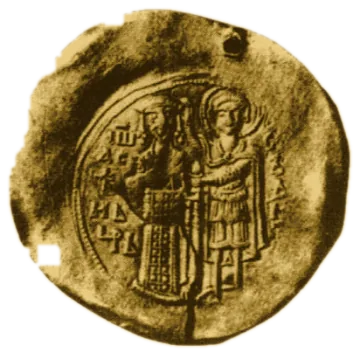
That consolidation is especially visible in the carefully staged transformation of the ruler’s titulature after Klokotnitsa. The victory of 1230 did not merely enlarge the kingdom; it changed the political vocabulary of the monarchy. Ivan Asen II could now appear as “tsar of the Bulgarians,” a formulation of compact dynastic clarity, and immediately after the victory as “in Christ God faithful tsar and autocrat of the Bulgarians,” a title that projected both sacral legitimacy and full sovereign independence. On the celebrated gold coin issued after Klokotnitsa, the ruler’s title itself became an instrument of state ideology: the coin did not simply circulate as money, but as a portable declaration of authority, one that announced that the Bulgarian ruler stood at the summit of a fully sovereign political order. The same message was repeated in monumental form in the inscription at the church of the Forty Holy Martyrs in Tarnovo, where the ruler was represented in a solemn formula that linked dynastic victory, divine favor, and autocratic rule. The choice of such formulas shows that the monarchy no longer needed to define itself by dependence on any other political center; rather, Tarnovo now claimed its own place as an imperial-style capital.
The expansion that followed Klokotnitsa also reveals the practical machinery of government. The newly subjected fortresses were not left to symbolic submission alone: they were garrisoned, placed under strategoi, and equipped with collectors of state taxes. This is the clearest sign that military occupation, provincial command, and fiscal extraction were inseparable in Ivan Asen II’s system. The state did not merely conquer; it integrated. Strategic points were held by royal force, but they were also folded into a hierarchy in which provincial authorities served both defense and revenue. Such an arrangement suggests a government increasingly attentive to administrative specialization. In the lands newly brought under Bulgarian power, control was established quickly and concretely, and the king’s authority was translated into regular office-holding and tax collection. The result was a more visible state presence in the provinces than the kingdom had known in the turbulent first years of the dynasty’s restoration.
At court, too, the reign reflects a pronounced movement toward a more differentiated hierarchy of rank and service. The political world of Ivan Asen II was not one of abstract centralization alone; it was a world of noble kinship, graded titles, and carefully managed loyalties. The boyars remained indispensable, but their importance now lay within a framework increasingly shaped by royal initiative. The dynasty had to work with men who might be powerful, well connected, or semi-autonomous in their own regions, yet the ruler’s strategy was to bind them to the crown through proximity to the throne, participation in high office, and inclusion in the royal order. The state’s language of dignity and rank thus served a double purpose: it rewarded loyalty and contained ambition. In this respect the court of Tarnovo functioned as a political stage on which the ruler’s supremacy was constantly reaffirmed, while the aristocracy was admitted to honor only insofar as it remained inside the dynastic and hierarchical logic of the monarchy.
The restored Bulgarian patriarchate, achieved in 1235, completed this architecture of authority by giving the kingdom an ecclesiastical counterpart to its political consolidation. The creation of a patriarchal dignity did more than crown a successful reign with a symbolic triumph; it anchored the ruler’s authority in a church structure that could legitimize the kingdom as a fully sovereign Christian state. The elevation of the church hierarchy at this moment was inseparable from the monarchy’s own self-representation as autocratic and independent. It strengthened Tarnovo not only as a political capital but as a sacral center, while the replacement and reorganization of episcopal leadership in the newly integrated regions reinforced the unity of the realm. In a kingdom now extending over diverse lands and populations, ecclesiastical hierarchy helped to stabilize royal rule and to knit the provinces more closely to the center. Under Ivan Asen II, law, taxation, office, title, and church order together formed the visible machinery of a mature medieval monarchy, one that combined Byzantine models with a distinctly Bulgarian dynastic ambition.
4.Church and Letters
The church life of Ivan Asen II’s reign was inseparable from the political consolidation that followed his accession. In the years after 1218, and especially after the triumph at Klokotnitsa in 1230, the Bulgarian monarchy recovered not only territory and prestige but also the language of sacred sovereignty. The king’s power was increasingly framed as a Christian mandate, one that linked the revival of the state to the revival of ecclesiastical order. This was not merely an ideological flourish. The restored Bulgarian authority reached deep into regions where the church had long been tied to Byzantine structures, and the reordering of those lands required bishops, metropolitans, and a hierarchy capable of expressing the new reality. In the aftermath of expansion, new metropolitans and bishops were appointed in districts that had previously belonged to the Ohrid or Bulgarian archbishopric and had lived apart from the Bulgarian church; these appointments likely filled vacant sees and also replaced Greek clergy. The archbishopric itself continued its separate existence, and after the death of Demetrios Chomatenos in 1234, the Bulgarian Johnikius appears to have been enthroned as archbishop, with Sergius succeeding him sometime before 1241. The picture is one of a church that remained autocephalous in form while being steadily drawn into the orbit of a strengthened Bulgarian monarchy.
The great turning point of 1230 gave this ecclesiastical order a visible and public expression. Ivan Asen II’s titulature changed with the changed political landscape, and the written and monumental record began to proclaim a ruler who no longer merely defended a kingdom but stood as its divinely sanctioned autocrat. Immediately after Klokotnitsa, the king used the short formula “tsar of the Bulgarians,” a form suited to coinage and to the assertion of unambiguous sovereignty. Soon afterward a fuller formulation appeared in the church of the Holy Forty Martyrs in Tarnovo: the ruler was styled as a faithful emperor in Christ and autocrat of the Bulgarians. The church itself thus became a medium of political theology, a place where inscription, architecture, and dynastic memory met. Its completion marked the year 1230 as a sacred as well as a military threshold, and the church’s dedication provided a fitting framework for the celebration of victory, rule, and the renewed place of Tarnovo at the center of the Bulgarian world.
The same year witnessed the first Bulgarian gold coin, and its appearance belongs as much to the history of faith and kingship as to that of economic exchange. The coin was not primarily a commercial instrument; it was an ideological object, a compact declaration that Bulgarian power had attained a rank expressed in precious metal. Its imagery joined the ruler to a saintly patron, while the reverse placed Christ and the language of triumph at the center of the composition. Gold in the medieval imagination carried sacral associations of light, baptism, and imperial dignity, and in Ivan Asen II’s reign that symbolism was deliberately activated. The coin, like the inscription in the Forty Martyrs church, transformed victory into a visible sign of divine favor. It announced that the monarchy had entered a new phase in which sovereignty could be represented not only in battlefield success or treaty-making, but in enduring, crafted forms that circulated through space and memory.
Monastic patronage formed another major strand of Ivan Asen II’s church policy. Around 1230 he turned toward Mount Athos, following a long imperial tradition of protecting and enriching the monasteries there. This was not a casual act of piety but a statement that the Bulgarian ruler had taken up a role associated with the highest Orthodox sovereignty. During his stay on the Athonite peninsula he issued charters in favor of Vatopedi, Iviron, Zograph, the Protaton, and the Great Lavra of Saint Athanasios. The gesture linked Tarnovo to one of the most revered monastic landscapes of the Orthodox world. Later traditions even attributed to the new church administration an attempt to subject the Holy Mountain to Bulgarian authority; whether or not this reflects the exact historical reality, it reveals how strongly Ivan Asen II’s patronage of Athos was remembered as an assertion of royal reach. The monasteries were not only places of prayer. They were repositories of privilege, memory, and prestige, and by endowing them the Bulgarian monarch inserted his reign into the spiritual geography of the eastern Mediterranean.
Written documents played a central role in this culture of authority. Ivan Asen II’s charters show the monarchy speaking in a formal, elevated register that tied law to benefaction and rule to protection. The Dubrovnik charter, issued after Klokotnitsa, opened the king’s realm to Ragusan merchants across a remarkably broad territorial space, from the Danubian and interior regions to the Adriatic and the Aegean borderlands. Its language is that of safe-conduct and sovereign order: the ruler commands free movement, free buying and selling, and the protection of those who travel under his authority. Such a text belongs not only to commercial history but to the literary and diplomatic culture of the age. It shows a chancery capable of articulating the scope of the state in carefully composed prose, and it reveals a ruler who understood that power had to be written as well as wielded. In the same reign, the church, the charter, the inscription, the coin, and the monastic gift all worked together to produce a coherent image of restored kingship—Christian, learned, and magnificently visible.
5.Economy and Charters
The economic life of Ivan Asen II’s reign unfolded in the wake of political consolidation. The first years after his accession still belonged to a world shaped by frontier uncertainty and the aftershocks of earlier wars, but by the time of Klokotnitsa the kingdom had begun to move toward a different rhythm: roads were safer, authorities more confident, and royal power more visible in everyday exchange. The great expansion after 1230 did not merely enlarge the map of the state; it also widened the economic horizon of the capital and its merchant communities. From the Danubian line to the Thracian and Macedonian interior, the ruler now presided over a far more integrated space, one in which old centers and newly incorporated regions could be connected by the movement of goods, people, and royal privilege.
The Dubrovnik charter reveals this world with unusual clarity. Its language draws a mental map of the kingdom not as a vague territorial mass, but as a chain of towns, passes, and market places through which merchants could travel freely. Vidin, Braničevo, Belgrade, Tarnovo, Zagorje, Preslav, the Karvuna region, the Krn region, Boruy, Adrianople, Demotika, the Skopje district, Prilep, Devol, the Albanian land, and Thessaloniki all appear within the same commercial horizon. This was not accidental enumeration. It signaled that the ruler understood the strength of the state to lie in circulation: the safe passage of people carrying merchandise, and the ability of royal authority to knit together distant districts by guaranteeing movement across them. The charter promises Dubrovnik merchants freedom to buy, sell, import, export, and transport their wares throughout the kingdom, including in cities and passes, without obstruction and without damage. In other words, royal favor was not a ceremonial gift alone; it was a framework for economic integration.
The same document shows how seriously the crown treated commercial order. Passes and markets were places where violence, extortion, or interference could occur, and the charter turns these local disturbances into a matter of public offense. Anyone who caused harm to the merchants, whether at a pass, at a market, or elsewhere, stood not merely against the traders but against the kingdom itself. This is a revealing formulation, for it places the king at the center of commerce as its guarantor and judge. Trade was no longer a matter left to local goodwill; it was protected by royal law and backed by royal displeasure. The Dubrovnik privilege therefore tells us as much about state power as it does about merchant activity. It shows a monarchy confident enough to police the arteries of exchange, and pragmatic enough to invite a foreign trading community into the daily life of the country.
Monetary policy also gained a new symbolic dimension under Ivan Asen II. In the same memorable year of 1230, the first gold coin in Bulgarian history was struck. Its importance was less economic than political, less a response to everyday circulation than an announcement of sovereign standing. The coin stood beside the victory at Klokotnitsa and the building program of the period as another sign that the ruler wished to make his triumph visible in durable form. Gold was not merely precious metal; it was a language of authority. By issuing his own gold money, Ivan Asen II placed his kingdom among the powers whose status could be expressed through coinage, and he reinforced the image of a ruler whose prestige now reached beyond regional kingship. Even when the practical use of the coin was limited, its message was unmistakable: the Bulgarian crown had entered a new level of self-presentation.
The charters also open a window onto landholding, privilege, and the material basis of wealth. Ivan Asen II’s donations to the great Athonite monasteries show a ruler who did not separate political success from the redistribution of property. His patronage of Vatopedi, Iviron, Zograf, the Protaton, and the Great Lavra formed part of the same pattern as the commercial charter to Dubrovnik: in both cases, royal authority defined rights, protected possessions, and turned written grant into an instrument of rule. These acts suggest a kingdom where land, revenue, and privilege were increasingly articulated through documents. The crown could enlarge monastic property, confirm older rights, and regulate access to routes and settlements. Economic life therefore appears not as a static rural background, but as a field shaped by royal writing, by legal privilege, and by the managed relationship between rulers, merchants, and ecclesiastical landlords.
Taken together, the royal charters and the first gold coin reveal a kingdom that had moved beyond mere survival. Agriculture remained the foundation of prosperity, but the reign of Ivan Asen II made towns, routes, and markets more visible than before, and it linked them to a state that knew how to reward loyalty and organize exchange. The geography of the Dubrovnik charter suggests a dense urban network; the gold coin proclaims sovereignty in precious metal; the monastic grants show the crown distributing wealth and authority through written acts. Economic life under Ivan Asen II was therefore neither primitive nor purely local. It was a kingdom in which the authority of the ruler could be read on roads, in towns, in monastery holdings, and on the glitter of gold, all within the decisive years between 1218 and 1241.
6.Foreign Relations
Ivan Asen II came to power in 1218 as a ruler who had first to repair a weakened kingdom and then to turn that recovery into leverage. His accession itself was a diplomatic act as much as a dynastic one: he returned to Tărnovo with the support of Rus’ mercenaries and with Cuman backing, while the political fragmentation left behind by Boril’s decade made it possible for a vigorous claimant to reassemble authority quickly. The first great test of the new reign came almost at once, when the Hungarian king Andrew II crossed Bulgarian territory on his way home from crusade. Ivan Asen seized the opportunity and turned passage into bargaining. Andrew could continue only if he agreed to a marriage alliance, and the result was a dynastic settlement that, with papal blessing, united Ivan Asen to Andrew’s daughter around 1221. As part of that arrangement Bulgaria probably recovered the important Danubian borderlands of Branichevo and Belgrade, lost earlier in the reign of Boril. The marriage was thus no mere ceremonial gesture: it helped stabilize the north-western frontier, gave the young tsar a recognized place among royal houses, and signaled that Bulgaria had again become a power with which even a crusading king had to negotiate.
Having secured the Hungarian frontier, Ivan Asen could afford a more deliberate posture toward the great rival blocs in the south and east. For several years he appears to have waited, but the wait was calculated rather than passive. The ambitions of Theodore Komnenos Doukas in Epiros and Thessalonica made Bulgaria a necessary factor in every plan for Constantinople. Ivan Asen entered Theodore’s orbit through diplomacy and marriage: the two rulers drew together against the Latin Empire, and the bond was sealed by the marriage of Ivan Asen’s daughter Maria to Theodore’s brother, the despotes Manuel. This was a serious alliance, one designed to keep Bulgaria from being outflanked while Theodore pressed northward and eastward. Yet the same years also revealed how highly the Bulgarians were already prized by the Latins of Constantinople. When Robert of Courtenay died and the child Baldwin II succeeded, the barons sought a regent who might serve as the needed counterweight to Epiros and Nicaea, and Ivan Asen’s name quickly entered the discussion. Rumors circulated that Baldwin might even marry a daughter of the Bulgarian ruler and that Ivan Asen might act as guardian of the Latin emperor’s interests. In reality, the episode exposed the tsar’s value rather than binding him to the Latin cause. The barons toyed with Bulgarian aid while they pursued a parallel solution in the person of John of Brienne, and the negotiations at Constantinople never ripened into a durable agreement with Tărnovo.
The balance was shattered in 1230, when Theodore Komnenos Doukas broke his commitments and attacked Bulgaria instead of moving on Constantinople. That decision produced one of the decisive victories of the century. At Klokotnitsa, Ivan Asen not only destroyed the Epirote army but captured Theodore himself along with his magnates. The consequences reached far beyond the battlefield. In a lightning campaign Bulgaria extended its authority from the Black Sea to the Adriatic, absorbing lands described in the sources as Greek, Serbian and Albanian alike, while the Latin Empire, reduced to its precarious core around Constantinople, survived only in the shadow of Bulgarian might. Ivan Asen’s political language rose to match the new reality. He styled himself a faithful tsar and autocrat of the Bulgarians, and the first gold coin in Bulgarian history, struck soon after Klokotnitsa, proclaimed the same sovereign claim. The victory also transformed the diplomatic map of the Balkans: Bulgaria was no longer one participant among several, but the power around which every other ruler had to calculate.
That supremacy had important implications for Serbia, whose rulers had long balanced between larger neighbors. The Balkan order that emerged after 1230 made it clear that Serbian politics now unfolded within the Bulgarian sphere of influence. Ivan Asen did not need to overthrow Serbia in order to dominate it; he could instead shape the wider environment in which the Serbian crown acted, and the sources explicitly connect his reign with a growing Bulgarian influence there. The point is significant because it shows how the Klokotnitsa settlement radiated outward. Serbia had earlier enjoyed a measure of freedom from pressure as the great powers struggled among themselves, but after the fall of Theodore Komnenos Doukas it had to reckon with a Bulgarian ruler whose authority reached deeply into Macedonia and the western Balkans. This was one reason why Ivan Asen could present himself not simply as a Balkan king among kings, but as a monarch whose decisions affected the political choices of his neighbors, whether they were Serbian dynasts, Epirote claimants, or the barons of Constantinople.
The alliance with Nicaea marked the next major phase of his foreign policy. Once John III Vatatzes had consolidated his position, Bulgaria and Nicaea found common cause against the Latin Empire, and in 1235 the two powers joined forces in a concerted assault on Constantinople. The partnership was both strategic and ideological. Each side claimed to act in the name of Orthodoxy, and each hoped to exploit the Latin Empire’s exhaustion. Pope Gregory IX responded by calling on the western world to defend the city against what he denounced as a union of schismatics in impiety, but the appeal produced little more than rhetoric. The West had grown weary of sustaining the Latin experiment, and only Venetian shipping, together with the energy of John of Brienne, kept the empire alive. For a time the alliance of Bulgaria and Nicaea seemed to open the road to the recovery of Constantinople itself. Yet the relationship remained contingent, not harmonious. Ivan Asen’s policy was one of balance and opportunity, and when circumstances changed he was prepared to alter course again. In 1237 he allowed the blinded Theodore Komnenos Doukas to return to Thessalonica, where a diminished and revived Byzantine polity took shape once more. That decision complicated Nicaea’s hopes and showed that Ivan Asen still wanted room to maneuver among competing Greek claimants rather than surrender the regional stage to a single ally.
The final years of the reign were increasingly shaped by the wider shock of the steppe. The Cumans had helped bring Ivan Asen back to Tărnovo in 1218, but by the late 1230s the older nomad order north of the Black Sea was itself collapsing under Mongol pressure. The destruction of the Cuman state in 1238/39 and the fall of Kiev in 1240 brought the Mongols to the edges of both Bulgaria and Hungary, and the effect was immediate in diplomacy. Old rivalries mattered less than the need for coordinated defense. A Bulgarian envoy visited Hungary between January and May 1240 and was well received by King Béla IV, an indication that the northern frontier was now governed by common anxiety about the advance from the east. This rapprochement with Hungary, together with the smoother relations that had developed with the Latin Empire, gave Ivan Asen’s final years a different tone from the crisis politics of the early 1230s. But the larger horizon had darkened. When Ivan Asen died in June 1241, he left an infant heir and a state whose foreign relations had been recast by victory, marriage, opportunism and the growing menace of the steppe. His diplomacy had made Bulgaria the pivotal power of the central Balkans; his death came just as that world was about to be tested by forces far beyond the peninsula itself.
1.Political Story
In 1218, Ivan Asen returned from exile leading a group of Russian mercenaries. He marched on the capital city, Tărnovo, and when its gates were opened to him, he took the throne. He overthrew Boril and restored the senior Asen family line to power. Although still young, Ivan Asen came to power at a time when the political balance in the Balkans was changing. After the difficulties during Boril’s rule, Bulgaria was ready to recover quickly. His early years as ruler were focused less on grand plans and more on securing the borders and stabilizing the kingdom.
These challenges also gave Ivan Asen a chance to make important diplomatic moves. A few years after becoming ruler, the Hungarian king Andrew II was returning from the East with a tired army. Andrew was only allowed to pass through Bulgaria after agreeing to marry his daughter to Ivan Asen. This marriage, completed around 1221 with the approval of the pope, was followed by Bulgaria regaining the lost regions of Braničevo and Belgrade. Ivan Asen started his reign by combining force with diplomacy, regaining land while avoiding conflict with stronger neighbors.
After this initial success, Ivan Asen took a cautious approach for a while. Although it seemed like there was a pause in action, he was carefully watching the shifting political scene in the Balkans. Serbia was trying to free itself from the influence of its powerful neighbors. Its ruler, Stefan, made a peace treaty and arranged marriages with the Bulgarian royal family. The Serbian archbishop Sava also went to Nicaea in 1219 and gained recognition for Serbian church independence. Meanwhile, Theodore Doukas, the ruler of Epirus, was expanding aggressively. By 1224, he had taken Thessaloniki, and by 1227 he declared himself emperor. This made him both a threat and a potential ally for Ivan Asen. The Bulgarian court responded by sealing friendship through marriage: Ivan Asen’s daughter Maria married Theodore’s brother Manuel. During this time, Ivan Asen avoided rushing into war, instead letting his rivals define themselves and positioning Bulgaria as an essential mediator.
Ivan Asen’s role became even more important in 1228 when the Latin Empire, weakened by the death of its ruler Robert of Courtenay and under pressure from Epirus and Nicaea, considered turning to him for support. For a moment, Constantinople seemed ready to treat Ivan Asen as the key figure who could decide the fate of the imperial city. There was talk that the young emperor Baldwin II might marry Ivan Asen’s daughter and that Ivan Asen might become regent for his son-in-law. Later historians even misread a Venetian report as proof of a Bulgarian-Latin treaty. In reality, the Latin nobles were testing a policy of delay and negotiation but were also pursuing other options, especially inviting John of Brienne, whose agreement was reached in 1229. So, while Ivan Asen was not yet in control of Constantinople’s fate, he had become an important player. With four rival imperial claims around him, a bigger conflict was becoming more likely. That conflict began in early 1230, triggered by Epirus.
Theodore Doukas broke his promises and, instead of attacking Constantinople, marched against Bulgaria. On March 9, 1230, at Klokotnitsa, Ivan Asen crushed Theodore’s large army made up of Romans and Italians. This victory changed the political map of southeastern Europe in one campaign. Ivan Asen’s own inscription boasts of defeating the Greek army, capturing Theodore and his nobles, and extending his power from Adrianople to Durrës, over Greek, Serbian, and Albanian lands. He claimed that the Franks only controlled cities around Constantinople, and even those survived only because of his tolerance. Whether every word of this boast is literally true, the result was clear. Epirus stopped being the dominant power, Bulgaria became the main force on the European side of the former Byzantine world, and Ivan Asen claimed a new political status. He immediately used his victory in his titles and symbols: first as tsar of the Bulgarians, then as “in Christ God faithful tsar and autocrat of the Bulgarians,” and soon as ruler of both Bulgarians and Greeks. This new status appeared not only in inscriptions but also on coins, where Bulgarian sovereignty was declared in a way never done before.
After Klokotnitsa, Ivan Asen didn’t just occupy land; he reshaped authority. He placed Bulgarian bishops in the Macedonian lands he now controlled, replacing Greek church leaders and bringing the conquered territories into the kingdom’s religious structure. The old church arrangements were replaced by a new hierarchy, and in 1235 the Bulgarian patriarchate was restored. That same year, Ivan Asen formed a major Orthodox alliance with Nicaea and joined John Vatatzes in an attack on Constantinople. This alliance reflected the times: the Latin Empire still held the center of the peninsula, but both Bulgaria and Nicaea saw Constantinople as a prize that could not stay in Latin hands forever. However, Ivan Asen did not stay loyal to one side for long. In 1237, after becoming a widower, he married Theodore’s daughter, whom he had captured in 1230, and then released Theodore himself. The blind former ruler of Epirus returned to Thessaloniki, helped remove his brother Manuel, and placed his son John on the throne, while Manuel fled to Nicaea seeking help. This move reopened Byzantine rivalries in the west and made the balance around Thessaloniki unstable again. It also showed that Ivan Asen preferred managing political alliances over simply holding territory. By the end of his reign, he was the key figure in Balkan diplomacy, but his death in June 1241 ended this golden age. He left the throne to his infant son Koloman, and although the golden age ended, its effects continued to shape the region.
2.Wars and Fighting
When Ivan Asen II returned to Tărnovo in 1218, his rise depended on the military support that had backed him during Boril’s troubled rule. He did not lead a fully organized standing army but came with Russian mercenaries and, more importantly, with Bulgarian forces loyal to the legitimate Asen family. In the early 1200s Balkans, power depended on a ruler’s ability to gather the support of powerful nobles (boyars), coordinate frontier strongholds, mounted raiders, and allied steppe groups. Ivan Asen inherited a weakened state, but his first advantage was that the capital’s gates opened to him. Boril was blinded, and Ivan Asen set about rebuilding royal authority before trying large conquests. His early military policy was cautious and diplomatic but based on a clear plan: Bulgaria could not just defend what it had; it had to take the initiative by stabilizing the western border and then exploiting divisions among the Latin, Epirote, and Nicaean powers around it.
His first campaigns were closely tied to diplomacy. Around 1221, after tough negotiations with Hungary, Ivan Asen married Andrew II’s daughter and regained the lands of Belgrade and Braničevo, lost under Boril. This was important militarily because it eased pressure on the Danube and allowed Bulgaria to focus south. He also kept good relations with Serbia and for a time with the Latins, avoiding fighting on two fronts while the southern powers fought among themselves. At that time, the Balkans were dominated by two aggressive Greek states: Epirus under Theodore Komnenos Doukas in the west and Nicaea under John Vatatzes in Asia Minor. Theodore’s rise was the more immediate threat. By the early 1220s, he had taken Macedonia, pushed through Thessaly, and isolated Thessaloniki. Ivan Asen watched this from the north while strengthening his own position. The struggle for power increasingly focused on who would first attack Constantinople and who would control the route there.
This confrontation came in spring 1230 at the battle of Klokotnitsa. Theodore Komnenos broke his agreements and instead of attacking Constantinople, marched against Bulgaria. Ivan Asen met him on March 9 and completely defeated him. The victory was not just a battlefield win but a strategic and psychological blow: Theodore and his nobles were captured, and the Epirote state, which had seemed close to dominating the Balkans, collapsed. After the battle, Bulgarian control spread quickly from the Black Sea to the Adriatic, over lands remembered as Greek, Serbian, and Albanian, while the remaining Frankish enclaves near Constantinople survived only because the balance of power had shifted. Klokotnitsa was a battle that made Ivan Asen’s reputation. It showed that Bulgaria’s army could win a major battle after years of smaller raids and cautious fighting. Under Ivan Asen, Bulgaria proved it could win a full-scale war against one of the best commanders of the time.
The military effects of Klokotnitsa went beyond the battlefield. In the new territories, Ivan Asen established control not just through troops and submission but by reorganizing church and regional authority. Bulgarian bishops replaced Greek ones in Macedonia, and monasteries on Mount Athos came under his protection through charters and gifts. This shows that conquest was not just about force but about creating loyal institutions in new lands. Ivan Asen held Theodore captive for years and later allowed him to return to Thessaloniki, where he helped restore a form of Byzantine rule in Greece. This was not weakness but confidence: Ivan Asen used a captured emperor as a strategic tool. However, restoring Theodore’s family also complicated the fight for Constantinople, reviving a Greek rival that could distract both Bulgaria and Nicaea.
The next major phase was the alliance with Nicaea and their joint attack on Constantinople in 1235. Ivan Asen and John Vatatzes worked together to pressure the Latin capital, sealing their partnership through marriage and church agreements that recognized the Bulgarian church’s independence and patriarchal status. Militarily, the alliance targeted the last Latin stronghold in the eastern Balkans. Nicene troops crossed the Dardanelles and took Gallipoli, while Bulgarian and Nicene forces operated together in eastern Thrace, dividing the conquered lands. This advance worried the Latins enough to ask for help, and the city was saved partly by Venetian ships and John of Brienne’s efforts. This campaign shows Ivan Asen at his peak: not just fighting enemies but working with an equal partner to overthrow the Latin order. It also shows his flexible military strategy: he could win battles like Klokotnitsa or wage war through alliances, taking advantage of the Latin Empire’s weakness on multiple fronts.
Still, Ivan Asen’s reign was not all victories. The northwest border remained weak, and in 1232–1233 Hungarian forces besieged Vidin. Ivan Asen’s brother Alexander led a Bulgarian army to defend the city but was defeated outside the walls. However, the defenders held, and the Hungarians failed to capture the fortress. The invaders then crossed the Danube and took the Severin region, creating a new border province there. This shows that Bulgaria’s military power was strong but not unbeatable: it could crush a major southern enemy in open battle but still struggle with tough frontier fighting and opportunistic attacks in the northwest. By the end of his reign, though, Bulgaria had regained a position of great influence. Ivan Asen had shown he could defeat a major imperial rival, work with allies, contain enemies, and turn victory into lasting control. When he died in 1241, he left a kingdom whose borders and enemies were already shifting, but his wars had made the Second Bulgarian Empire one of the main military powers in the Balkans.
3.Government and Institutions
Under Ivan Asen II, the restored kingdom became a more organized state than it had been at the start of his reign. When he entered Tarnovo in 1218, he inherited a kingdom still unsettled by recent upheavals, shifting loyalties, and the need to rebuild authority after years of instability. His success was not only in expanding territory but also in gradually building a central power that could confidently claim sovereignty and enforce it over towns, fortresses, and local elites. The monarchy’s prestige, rooted in older Bulgarian traditions, now showed more clearly in how the state was run, in titles, ceremonies, and control over taxes and the military.
This consolidation is especially clear in how Ivan Asen changed his official titles after Klokotnitsa. The 1230 victory did more than enlarge the kingdom; it changed how the monarchy presented itself. Ivan Asen began to call himself “tsar of the Bulgarians,” a clear and simple dynastic title. Soon after, he used the longer title “in Christ God faithful tsar and autocrat of the Bulgarians,” which emphasized both religious legitimacy and full independence. On the gold coin issued after Klokotnitsa, his title became a tool of state ideology: the coin was not just money but a portable declaration of authority, showing that the Bulgarian ruler stood at the top of a fully sovereign state. The same message appeared in the inscription at the church of the Forty Holy Martyrs in Tarnovo, where Ivan Asen was described in a formal way linking his victory, divine favor, and absolute rule. These titles show that the monarchy no longer needed to depend on any other political center; Tarnovo claimed its own place as an imperial capital.
The expansion after Klokotnitsa also shows how the government worked in practice. The new fortresses were not just symbolically submitted; they were garrisoned, placed under military governors (strategoi), and had tax collectors. This shows that military control, local command, and tax collection were all connected in Ivan Asen’s system. The state did not just conquer land; it integrated it. Strategic places were held by royal forces but also became part of a hierarchy where local officials served both defense and revenue collection. This suggests a government paying more attention to specialized administration. In the new territories, control was established quickly and clearly, and the king’s authority was enforced through regular offices and taxes. This created a stronger state presence in the provinces than the kingdom had seen in its early, turbulent years.
At court, the reign also showed a move toward a clearer hierarchy of rank and service. Ivan Asen’s political world was not just about central power but about noble family ties, ranked titles, and carefully managed loyalties. The boyars remained essential, but their role was now shaped by royal initiative. The dynasty had to work with powerful, connected, or semi-independent men in the regions, but the ruler’s strategy was to tie them to the crown by bringing them close to the throne, giving them high offices, and including them in the royal order. The state’s language of rank served two purposes: rewarding loyalty and controlling ambition. The court of Tarnovo was a political stage where the ruler’s supremacy was constantly shown, and the aristocracy was honored only as long as it fit within the monarchy’s family and hierarchical system.
The restoration of the Bulgarian patriarchate in 1235 completed this structure of authority by giving the kingdom a church organization that matched its political consolidation. Creating a patriarch was more than a symbolic victory; it gave the ruler’s authority a church foundation that legitimized Bulgaria as a fully independent Christian state. The rise of the church hierarchy went hand in hand with the monarchy’s self-image as absolute and independent. It strengthened Tarnovo not only as a political capital but also as a sacred center. Replacing and reorganizing bishops in the new regions helped unify the kingdom. In a realm covering diverse lands and peoples, the church hierarchy helped stabilize royal rule and connect the provinces more closely to the center. Under Ivan Asen II, law, taxes, offices, titles, and church order together formed the visible workings of a mature medieval monarchy, blending Byzantine models with a distinct Bulgarian royal ambition.
4.Church and Culture
The church life during Ivan Asen II’s reign was closely tied to the political consolidation after he took power. After 1218, and especially after the victory at Klokotnitsa in 1230, the Bulgarian monarchy regained not just land and prestige but also the language of sacred authority. The king’s power was increasingly seen as a Christian mission, linking the revival of the state to the revival of church order. This was not just political talk. The restored Bulgarian authority reached deeply into areas where the church had long been connected to Byzantine structures. Reorganizing those lands required appointing bishops, metropolitans, and a hierarchy that could reflect the new reality. After expansion, new church leaders were appointed in areas that had belonged to the Ohrid or Bulgarian archbishoprics and had been separate from the Bulgarian church. These appointments likely filled empty positions and replaced Greek clergy. The archbishopric itself continued separately, and after the death of Demetrios Chomatenos in 1234, the Bulgarian Johnikius became archbishop, with Sergius succeeding him before 1241. This shows a church that remained self-governing but was increasingly drawn into the strengthened Bulgarian monarchy.
The key moment of 1230 gave this church order a public expression. Ivan Asen’s titles changed with the new political situation, and official records began to show a ruler who no longer just defended a kingdom but stood as its divinely approved autocrat. Right after Klokotnitsa, he used the short title “tsar of the Bulgarians,” suitable for coins and clear sovereignty claims. Soon after, a longer title appeared in the church of the Holy Forty Martyrs in Tarnovo, calling him a faithful emperor in Christ and autocrat of the Bulgarians. The church became a place where political theology was expressed through inscriptions, architecture, and dynastic memory. This marked 1230 as a sacred as well as military turning point. The church’s dedication provided a fitting setting to celebrate victory, rule, and Tarnovo’s renewed central role in Bulgaria.
That same year saw the first Bulgarian gold coin, which was as much about faith and kingship as about money. The coin was not mainly for trade but an ideological object, a clear statement that Bulgarian power had reached a high status. Its images linked the ruler to a saintly protector, while the reverse showed Christ and words of triumph. In medieval thought, gold symbolized light, baptism, and imperial dignity. During Ivan Asen’s reign, this symbolism was deliberately used. The coin, like the church inscription, turned victory into a visible sign of divine favor. It showed that the monarchy had entered a new phase where sovereignty could be represented not only by military success or treaties but in lasting, crafted forms that spread across space and memory.
Monastic support was another important part of Ivan Asen’s church policy. Around 1230, he focused on Mount Athos, following a long tradition of protecting and enriching its monasteries. This was not just piety but a statement that the Bulgarian ruler took on a role linked to the highest Orthodox authority. While on Athos, he issued charters supporting monasteries like Vatopedi, Iviron, Zograph, the Protaton, and the Great Lavra of Saint Athanasios. This connected Tarnovo to one of the most respected monastic centers in the Orthodox world. Later stories even claimed that the Bulgarian church tried to bring Mount Athos under its control. Whether true or not, this shows how Ivan Asen’s patronage of Athos was remembered as an assertion of royal influence. Monasteries were not only places of worship but also centers of privilege, memory, and prestige. By supporting them, the Bulgarian king linked his reign to the spiritual geography of the eastern Mediterranean.
Written documents played a key role in this culture of authority. Ivan Asen’s charters used formal language that connected law to gifts and rule to protection. The Dubrovnik charter, issued after Klokotnitsa, opened the kingdom to Ragusan merchants across a wide area, from the Danube and interior regions to the Adriatic and Aegean borders. Its language promised safe passage, free trade, and protection for merchants traveling under the king’s authority. This document is important not just for trade history but for the literary and diplomatic culture of the time. It shows a royal chancery able to express the state’s reach in carefully written prose and a ruler who understood that power had to be written down as well as exercised. In Ivan Asen’s reign, church, charters, inscriptions, coins, and monastic gifts all worked together to create a clear image of restored kingship—Christian, learned, and grandly visible.
5.Economy and Documents
The economy during Ivan Asen II’s reign grew out of political stability. The early years after he became ruler were still marked by frontier uncertainty and the effects of earlier wars. But by the time of Klokotnitsa, the kingdom was moving toward a new rhythm: roads were safer, authorities more confident, and royal power more visible in everyday trade. The large expansion after 1230 did more than increase the kingdom’s size; it also broadened the economic reach of the capital and its merchants. From the Danube to the Thracian and Macedonian interior, the king now ruled over a more connected area where old centers and new regions could be linked by the movement of goods, people, and royal privileges.
The Dubrovnik charter clearly shows this world. It draws a mental map of the kingdom not as a vague territory but as a chain of towns, mountain passes, and markets where merchants could travel freely. Places like Vidin, Braničevo, Belgrade, Tarnovo, Zagorje, Preslav, the Karvuna region, Adrianople, Demotika, Skopje, Prilep, Devol, Albania, and Thessaloniki all appear within the same trading area. This was no random list. It showed that the king understood the state’s strength lay in movement: safe travel for merchants and royal authority connecting distant regions by guaranteeing passage. The charter promised Dubrovnik merchants freedom to buy, sell, import, export, and transport goods throughout the kingdom, including cities and passes, without interference or harm. Royal favor was not just ceremonial; it was a framework for economic integration.
The document also shows how seriously the crown took commercial order. Passes and markets were places where violence or extortion could happen, and the charter made such acts offenses against the kingdom itself, not just against merchants. This is important because it placed the king at the center of commerce as protector and judge. Trade was no longer left to local goodwill; it was protected by royal law and backed by the king’s authority. The Dubrovnik privilege tells us as much about state power as about trade. It shows a monarchy confident enough to police trade routes and practical enough to welcome a foreign trading community into the country’s life.
Monetary policy also gained symbolic importance under Ivan Asen II. In 1230, the first Bulgarian gold coin was minted. Its significance was more political than economic, more a statement of sovereignty than a response to daily trade. The coin stood alongside the victory at Klokotnitsa and the building projects of the time as a sign that the king wanted to make his triumph visible in lasting form. Gold was not just valuable metal; it was a language of authority. By issuing gold coins, Ivan Asen placed Bulgaria among powers whose status was shown through coinage and reinforced the image of a ruler whose prestige went beyond regional kingship. Even if the coin’s practical use was limited, its message was clear: the Bulgarian crown had reached a new level of self-presentation.
The charters also give insight into landholding, privilege, and wealth. Ivan Asen’s donations to the great monasteries on Mount Athos show a ruler who linked political success with redistributing property. His support of Vatopedi, Iviron, Zograf, the Protaton, and the Great Lavra followed the same pattern as the commercial charter to Dubrovnik: royal authority defined rights, protected possessions, and used written grants as tools of rule. These acts suggest a kingdom where land, income, and privilege were increasingly expressed through documents. The crown could expand monastic property, confirm old rights, and regulate access to routes and settlements. Economic life was not a static rural background but shaped by royal writing, legal privileges, and managed relations between rulers, merchants, and church landlords.
Together, the royal charters and the first gold coin reveal a kingdom that had moved beyond mere survival. Farming remained the base of wealth, but under Ivan Asen II, towns, roads, and markets became more visible and linked to a state that knew how to reward loyalty and organize trade. The geography in the Dubrovnik charter suggests a dense network of towns; the gold coin proclaims sovereignty in precious metal; the monastic grants show the crown distributing wealth and authority through documents. Economic life under Ivan Asen II was not primitive or purely local. It was a kingdom where the ruler’s authority could be seen on roads, in towns, in monasteries, and on shining gold, all within the crucial years from 1218 to 1241.
6.Foreign Relations
Ivan Asen II came to power in 1218 as a ruler who first had to fix a weakened kingdom and then use that recovery to gain influence. His return to Tărnovo was as much a diplomatic event as a family matter: he came with Russian mercenaries and Cuman support, while the political chaos left by Boril’s rule made it possible for a strong claimant to quickly rebuild authority. His first big test came soon after when Hungarian king Andrew II crossed Bulgarian land on his way home from a crusade. Ivan Asen took advantage and made Andrew agree to a marriage alliance before letting him pass. This marriage, with papal approval, united Ivan Asen to Andrew’s daughter around 1221. As part of the deal, Bulgaria likely regained the important Danubian borderlands of Braničevo and Belgrade, lost earlier under Boril. The marriage was more than ceremonial: it helped secure the northwest border, gave the young tsar recognition among royal families, and showed that Bulgaria was again a power even a crusading king had to negotiate with.
With the Hungarian border secure, Ivan Asen could take a more careful approach to the powerful rivals in the south and east. For several years, he seemed to wait, but this was a calculated pause. Theodore Komnenos Doukas’s ambitions in Epirus and Thessaloniki made Bulgaria a key player in any plan for Constantinople. Ivan Asen entered Theodore’s circle through diplomacy and marriage: the two rulers allied against the Latin Empire, sealed by Ivan Asen’s daughter Maria marrying Theodore’s brother, Manuel. This was a serious alliance meant to protect Bulgaria from being outflanked while Theodore expanded. At the same time, the Latins of Constantinople valued the Bulgarians highly. When Robert of Courtenay died and the child Baldwin II became emperor, the nobles looked for a regent to counter Epirus and Nicaea, and Ivan Asen’s name came up. Rumors spread that Baldwin might marry Ivan Asen’s daughter and that Ivan Asen might act as guardian of the young emperor. In reality, this showed Ivan Asen’s importance rather than binding him to the Latin cause. The nobles considered Bulgarian help while also making a deal with John of Brienne, and talks with Tarnovo never became a lasting agreement.
The balance broke in 1230 when Theodore Komnenos Doukas broke his promises and attacked Bulgaria instead of Constantinople. This led to one of the century’s decisive victories. At Klokotnitsa, Ivan Asen destroyed the Epirote army and captured Theodore and his nobles. The consequences went far beyond the battlefield. Bulgaria quickly extended its rule from the Black Sea to the Adriatic, taking lands described as Greek, Serbian, and Albanian, while the Latin Empire shrank to a fragile core around Constantinople, surviving only in the shadow of Bulgarian power. Ivan Asen’s political language rose to match this new reality. He called himself a faithful tsar and autocrat of the Bulgarians, and the first Bulgarian gold coin, minted soon after Klokotnitsa, declared the same sovereign claim. This victory changed the Balkans’ diplomatic map: Bulgaria was no longer just one player among many but the power around which all others had to plan.
This dominance affected Serbia, whose rulers had long balanced between bigger neighbors. After 1230, Serbian politics clearly fell within Bulgaria’s sphere of influence. Ivan Asen did not need to overthrow Serbia to control it; he shaped the environment in which the Serbian crown operated. Sources link his reign with growing Bulgarian influence there. This shows how the Klokotnitsa settlement had effects beyond immediate borders. Serbia had earlier enjoyed some freedom while the great powers fought each other, but after Theodore’s fall, it had to deal with a Bulgarian ruler whose authority reached deep into Macedonia and the western Balkans. This helped Ivan Asen present himself not just as a Balkan king among kings but as a monarch whose decisions affected neighbors, whether Serbian rulers, Epirote claimants, or Constantinople’s barons.
The alliance with Nicaea marked the next major phase of his foreign policy. Once John III Vatatzes secured his position, Bulgaria and Nicaea joined forces against the Latin Empire. In 1235, they launched a joint attack on Constantinople. Their partnership was both strategic and ideological. Each claimed to act for Orthodoxy and hoped to take advantage of the Latin Empire’s weakness. Pope Gregory IX called on the West to defend the city against what he called a union of schismatics, but this produced little beyond words. The West was tired of supporting the Latin Empire, and only Venetian ships and John of Brienne’s efforts kept it alive. For a time, the Bulgaria-Nicaea alliance seemed to open the way to retaking Constantinople. Yet the relationship was fragile, not fully harmonious. Ivan Asen’s policy was one of balance and opportunity, and when things changed, he was ready to shift again. In 1237, he allowed the blinded Theodore Komnenos Doukas to return to Thessaloniki, where a smaller Byzantine state took shape again. This complicated Nicaea’s plans and showed that Ivan Asen wanted to keep options open among competing Greek rulers rather than give the stage to one ally.
The last years of his reign were shaped by the growing threat from the steppe. The Cumans had helped bring Ivan Asen back to power in 1218, but by the late 1230s, the old nomadic order north of the Black Sea was collapsing under Mongol attacks. The destruction of the Cuman state in 1238/39 and the fall of Kiev in 1240 brought the Mongols to Bulgaria’s and Hungary’s borders. This changed diplomacy immediately. A Bulgarian envoy visited Hungary between January and May 1240 and was warmly received by King Béla IV, showing that the northern border was now governed by shared fear of the eastern threat. This improved relationship with Hungary, along with better ties to the Latin Empire, gave Ivan Asen’s final years a different tone from the crisis of the early 1230s. But the wider outlook had darkened. When Ivan Asen died in June 1241, he left an infant heir and a state whose foreign relations had been shaped by victory, marriage, opportunism, and the growing danger from the steppe. His diplomacy had made Bulgaria the central power in the central Balkans, but his death came just as the region faced challenges far beyond its borders.
In 1218, Ivan Asen II returned to Bulgaria with Russian soldiers, took the throne, and restored his family’s rule. Early in his reign, he made peace with Hungary by marrying the king’s daughter and regained some lost lands. He carefully watched his neighbors and made alliances, especially with the ruler of Epirus through marriage.
In 1230, Ivan Asen defeated the ruler of Epirus at the battle of Klokotnitsa. This victory made Bulgaria the strongest power in the Balkans, stretching from the Black Sea to the Adriatic. He took new titles to show his power and reorganized the church and government in the lands he conquered.
Ivan Asen worked with the Empire of Nicaea to fight the Latin Empire in Constantinople. They attacked together in 1235 but did not capture the city. He also managed relations with Serbia and Hungary, balancing power in the region.
His reign saw stronger government control, with better organization of taxes, military, and officials. The Bulgarian church gained independence and importance, supporting the king’s rule. Ivan Asen issued the first Bulgarian gold coin, showing his kingdom’s wealth and status.
Trade improved under Ivan Asen, with safe roads and privileges for merchants, especially from Dubrovnik. He protected monasteries and used written documents to strengthen royal authority.
Ivan Asen’s foreign policy was flexible, using marriage, alliances, and war to expand and secure Bulgaria. By his death in 1241, Bulgaria was a major Balkan power, but new threats from the Mongols were rising. His young son inherited the throne, marking the end of Bulgaria’s golden age under Ivan Asen II.
Key Events
- 11218 — Ivan Asen returns from exile with Rus’ mercenaries, enters Tărnovo, overthrows Boril, and restores the senior Asen line.
- 21219 — Serbia secures peace, and Archbishop Sava obtains recognition of Serbian ecclesiastical autonomy at Nicaea.
- 31221 — Ivan Asen marries Andrew II’s daughter with papal approval and Bulgaria recovers Braničevo and Belgrade.
- 41224 — Theodore Doukas captures Thessaloniki and expands Epirote power in the Balkans.
- 51227 — Theodore Doukas proclaims himself emperor, becoming a major rival in the struggle around Constantinople.
- 61228 — Latin barons consider Ivan Asen as a possible regent for Baldwin II and discuss a marriage alliance.
- 71230 — At Klokotnitsa on 9 March, Ivan Asen crushes Theodore Doukas’s army and captures Theodore and his boyars.
- 81230 — In the aftermath, Ivan Asen installs Bulgarian bishops in Macedonian lands and issues the first Bulgarian gold coin with new royal titulature.
- 91232–1233 — Hungarian forces besiege Vidin; Alexander’s relief attempt fails, the fortress holds, and the invaders occupy Severin.
- 101235 — The Bulgarian patriarchate is restored and Ivan Asen joins John Vatatzes in an assault on Constantinople.
- 111237 — Ivan Asen marries Theodore’s captive daughter, releases Theodore, and the former Epirote ruler returns to Thessaloniki.
- 121238–1240 — The destruction of the Cuman state and the fall of Kiev bring Mongol pressure to the frontier; a Bulgarian envoy is well received by Béla IV.
- 131241 — Ivan Asen dies in June and leaves the throne to his infant son Koloman.
Key People
Sources
Ivan Bozhilov, Vasil Gyuzelev, History of Medieval Bulgaria, 7th–14th Century. Sofia: Anubis, 1999.
Show the 8 quoted passages
„То има сакрална стойност, символизира светлината, слънцето, светото кръщение.“
Read p. 377 in the book„начело на руски наемници се появил край българската столица“
Read p. 698 in the book„най-големия възход на Второто българско царство“
Read p. 698 in the book„през 1228 г. — година на голяма дипломатическа кампания“
Read p. 706 in the book„събрал голяма войска, съставена от ромеи и италийци“
Read p. 708 in the book„цар на българи“
Read p. 713 in the book„всякаква, дори теоретическа зависимост от друго държавнополитическо средище, е отхвърлена“
Read p. 724 in the book„1235 г. — Възстановяване на Българската патриаршия.“
Read p. 1032 in the bookIvan Bozhilov, The Asen Family (1186–1460): Genealogy and Prosopography. Sofia: Marin Drinov Academic Publishing House, 1994.
Show the 3 quoted passages
„Договореният царствен брак“
Read p. 78 in the book„Тази битка изведнъж променила съотношението на силите и пре кроила политическата карта на Балканите.“
Read p. 80 in the book„Така четиригодишните усилени дипломатически действия били увенчани с възобновяването на българската патриаршия и установяване на българо-никейския съюз.“
Read p. 83 in the book