
1.Political Narrative
Yet one Bulgarian stronghold still stood on the Danube: Vidin, where the house of Sratsimir endured for a little while longer after the ruin of Tarnovo. In the last months before the Ottoman conquest, Ivan Sratsimir still acted as ruler in his own right, and the court at Vidin briefly looked eastward in a final act of dynastic piety and political calculation. Among the few visible results of that uncertain moment was the journey of the heir, Constantine, together with the Vidin metropolitan Joasaph, on important royal business to Tarnovo; from there they brought back the relics of Saint Philothea, a precious spiritual possession that symbolically tied the Danubian court to the older royal capital. It was a gesture of continuity at the very edge of collapse, for the political world that had made sense of such gestures was already dissolving under Ottoman pressure.
The catastrophe came in the wake of the crusade of King Sigismund and the battle of Nicopolis on 25 September 1396. The crusading host, moving down the Danube, had briefly lifted Christian hopes and may even have strengthened Sratsimir’s confidence, but the defeat before Nicopolis ended the last serious attempt to reverse Ottoman expansion in the lower Danube region. Bayezid I no longer had reason to tolerate the existence of a semi-independent Bulgarian principality on his northwestern frontier. Vidin was taken soon after the crusader defeat, probably in the closing months of 1396, though one chronicle places the event in 1397. Ivan Sratsimir was captured and carried away to Bursa, where he ended his life in captivity. With his removal, the last free Bulgarian land on the Danube ceased to exist as a sovereign political centre.
His son and successor, Constantine, escaped the conquerors and began the long life of an exile. At first he went to Hungary, then to Serbia, where he found refuge at the court of Despot Stefan Lazarević. The movement of the young heir from Danubian capital to foreign court marked the transformation of the Vidin tsardom from a territorial polity into a dynastic claim sustained by memory, diplomacy, and hope. Constantine was not merely a refugee prince: in foreign correspondence he was remembered as the illustrious emperor of Bulgaria, a title that preserved the idea that the Bulgarian political order still had a legitimate representative. His position, however, was precarious. He could not act alone, and the collapse of Vidin, together with Ottoman dominance over the Balkans, made any direct restoration impossible without a wider anti-Ottoman coalition.
Such a coalition seemed briefly possible in 1404, when Constantine was linked with Stefan Lazarević and the Wallachian voivode Mircea in a common anti-Ottoman arrangement. The very fact that the three rulers could be named together shows how the Danubian and Balkan frontier world was attempting to regroup after the shock of Bayezid’s victories and, more importantly, after the turning point of Ankara in 1402. The defeat and capture of Bayezid by Timur shattered Ottoman unity and opened a decade of civil war among Bayezid’s sons. That struggle loosened the pressure on the Balkans and revived hopes among the Christian rulers and the conquered peoples. Constantine, who had spent years near the centres of Serbian and Hungarian power, now had a broader field in which to imagine restoration, but the alliance of 1404, though harmful to the Turks, did not bring back Vidin or re-create a Bulgarian state.
The most serious attempt at recovery came with the uprising of Constantine and Fruzhin. Its only secure literary witness is brief, but the event itself becomes clearer when placed against the political map of the years after Ankara. The revolt broke out in 1408 and spread across several regions of the conquered Bulgarian lands: in Vidin, where Constantine himself acted; in the Temska region; and in eastern Bulgaria, where Fruzhin, son of Ivan Shishman, led the struggle. In this sense the movement united the western and eastern survivals of Bulgarian dynastic legitimacy, gathering together the heirs of both fallen royal branches. The uprising lasted for about five years. It was finally crushed in 1413, when Musa devastated the Bulgarian rebels and ordered their removal on 23 April of that year. The end of the revolt did not merely mark a military defeat; it extinguished the last large-scale effort to restore Bulgarian rule on native soil during the first phase of Ottoman civil conflict.
After the defeat of the uprising, Constantine’s hopes narrowed further. The political world around him was still unsettled, and the Ottoman princes continued to fight one another, but the Bulgarian cause had been broken. A vague later reference suggests that Bulgarians appeared in Mehmed I’s forces in the decisive struggle against Musa, and it is reasonable to suppose that Constantine’s name and authority still mattered in such diplomatic and military transactions. Yet after Mehmed’s victory the new sultan contented himself with restoring the expelled Bulgarians to their homes and announcing a general peace with his subjects and neighbours. For Constantine, this meant little more than the recognition that survival had replaced liberation as the best available outcome. He appears to have settled first in Hungary and later in Belgrade, where he died on 17 September 1422. With his death the line that had carried the last hope of Vidin’s independence passed from living politics into memory, and the Danubian tsardom, once the final refuge of Bulgarian statehood, vanished from the medieval Balkan political order.
2.Wars and Warfare
In 1396 the Vidin Tsardom was drawn into the great crusading venture that gathered under Sigismund of Hungary. The host was unusually mixed: the bulk came from Hungary and France, with Germans, and smaller contingents from Poland, Bohemia, Italy, Spain, and England swelling its numbers; Venetians prepared ships to patrol the Hellespont, while Genoese and the knights of Rhodes guarded the Black Sea coast and the mouth of the Danube. The army moved down the river corridor toward Nikopolis, and at Vidin the Bulgarian ruler Stracimir broke his oath to the sultan and opened the fortress gates to the crusaders. That act placed his land squarely in the path of Bayezid’s response: Vidin became not a neutral border lordship but a forward base for the Christian advance and therefore one of the first prizes to be crushed once the campaign failed.
The campaign itself revealed with brutal clarity the military imbalance on the lower Danube. At Rahova the crusaders forced their way through the Turkish garrison and massacred the inhabitants; at Nikopolis the rival styles of war collided in a decisive field battle. Sigismund, who understood Turkish methods, urged caution and a defensive battle, but the French knights were eager for a headlong offensive. On the morning of 25 September they charged uphill toward what seemed to be only a small body of light cavalry. In fact the visible horsemen were a lure; the main Ottoman force waited behind the hill, together with a squadron under Stephen Lazarević. The French were drawn forward, then shattered and driven back in bloodshed. Once their charge broke, the cohesion of the whole Christian host collapsed, and the battle turned into flight, capture, and slaughter. The defeat at Nikopolis was therefore not only a triumph of Ottoman numbers, but also of discipline, concealment, and the tactical exploitation of terrain against an army divided by competing ideas of war.
Bayezid moved quickly after the victory. The crusaders had already made Vidin a political and military target by bringing Stracimir openly into their camp, and the sultan would not tolerate such a semi-independent stronghold on the river frontier. Vidin fell soon after Nikopolis, and Stracimir was taken away captive to Asia Minor. The last Bulgarian territory that still stood outside direct Ottoman control was thus absorbed into the expanding imperial frontier. From that point forward, the war in the Bulgarian lands was no longer a contest between equal regional powers, but a struggle against a state that was embedding itself militarily in the country through administrators, garrisons, and cavalry settled on military fiefs. The old tsardom had been reduced to a conquered border province, its fortresses now serving Ottoman needs rather than Bulgarian ones.
The destruction of Bayezid’s power at Ankara in 1402 briefly reopened the military horizon. The defeat by Timur threw the Ottoman state into civil war and divided it between rival princes, first and foremost Mehmed and Süleyman. That fracture mattered on the Danubian frontier. The sons and followers of Ivan Stracimir, especially Constantine, who had found refuge first in Hungary and then in Serbia, could once again rely on a wider anti-Ottoman alignment. In North Bulgaria the people took up arms, and they did so in conjunction with Wallachian troops. The excerpted sources describe serious Ottoman defeats inflicted in this phase, which suggests a warfare of movement rather than siege: small forces crossing frontier lines, striking detached units, and exploiting the fact that the Ottoman centre could not yet concentrate all of its strength. The struggle around Constantine belonged to this kind of war, where the survival of a dynastic claim depended on the ability to coordinate with neighboring princes and on the temporary weakness of the enemy rather than on any single great battle.
Yet the military possibilities remained narrow. The Ottomans held the crossings of the Danube and, once Mehmed secured his position in 1413, they needed only time before resuming their forward pressure. For nearly a decade the imperial civil war gave the Balkans a breathing space, but it was a breathing space, not a recovery. Serbia survived by the strength of Stefan Lazarević and by the residual troops he had brought back from Ankara; Byzantium also survived, but only in reduced form. Vidin, whose house had lost its fortress and ruler, could no longer return to the old pattern of independent field armies and defended river strongholds. Constantine’s cause lived on as an exile’s and rebel’s cause, sustained by alliances and memory, but the balance of military force had shifted irreversibly. By 1422 the Ottoman recovery was far enough advanced that the last hopes of the Vidin line belonged less to conquest than to endurance, and to the memory of a frontier war that had been lost in stages: first in the open field at Nikopolis, then in the capture of the fortress, and finally in the long struggle to keep the idea of a Bulgarian last resistance alive.
3.State and Institutions
The last years of the Vidin tsardom were marked by a sharp contrast between the familiar language of medieval rulership and the fragility of the state that language was meant to sustain. Before the Ottoman conquest, Vidin had been more than a fortified city: it was a dynastic capital, a territorial center, and the seat of a compact but recognisable courtly and fiscal order. In the late fourteenth century that order still spoke the political idiom of the wider Balkan world, in which titles, seals, ceremonial, and the control of men and revenues all belonged to a single conception of sovereignty. Yet in 1396 this machinery was struck at its core. The defeat of the crusading army at Nicopolis was followed soon after by the fall of Vidin itself, the capture of Ivan Sratsimir, and the collapse of the last independent Bulgarian center on the Danube. What remained after that was no longer a functioning tsardom in its own territory, but a dynastic claim carried into exile and later invoked as a banner of restoration.
The Vidin court had long participated in the same institutional culture that shaped the other Bulgarian centers of power. Its rulership was expressed through the high title of tsar and through the broader conception of autocratic authority that had developed in the Second Bulgarian Empire. Even where the exact reach of central power was limited, the state still depended on the familiar mechanisms of medieval monarchy: a ruler’s household, court dignitaries, military retainers, and local notables who mediated between the center and the land. Vidin, precisely because it had been a special and often semi-independent political unit, stood at the intersection of this wider tradition and a more local politics of frontier power. By 1396, however, those structures were no longer able to defend the realm. The Ottoman advance did not merely remove a ruler; it destroyed the administrative center around which authority had been organized, leaving the title behind while the apparatus of rule was dispersed or subordinated.
The fate of the court in the final months before the conquest reveals how closely late medieval Bulgarian statehood still linked political legitimacy to ceremonial and sacred capital. In Vidin, high-level diplomacy remained part of sovereign action, and the acquisition of relics was treated as an act of state. The transfer of the relics of Saint Philothea to Vidin on the initiative of leading envoys was not a minor pious gesture, but a classic assertion of prestige and protection, a way of inscribing the tsardom within a sacred geography of rule. Such acts mattered because they made visible a court that still expected to behave as a sovereign court: receiving, sending, collecting, and sanctifying. The conquest of 1396 abruptly ended this world. After the city fell, its court culture survived only in memory, and the relics that had been brought as symbols of blessing could not preserve the political organism that had requested them.
The collapse of the Vidin state also meant the collapse of its local administrative and social hierarchy. The boyars who had once formed the supporting framework of regional power no longer had a native throne to serve, and with the disappearance of the tsar’s court their role as the governing stratum of an independent polity was broken. In a medieval state such as Vidin, boyars were not only landholders but also the personnel through whom command, obligation, and local order were translated into practice; once the capital was lost, that translation ceased to operate in its old form. The Ottoman takeover therefore did more than replace one ruler with another. It dismantled the very setting in which boyar authority had meaning, while the surviving elite had to seek protection, patronage, or exile elsewhere. What had been a territorial nobility attached to a sovereign center was reduced to scattered remnants, unable to sustain the old balance between ruler, local magnates, and land.
For Constantine II Asen, the son and successor of Ivan Sratsimir, statehood after 1396 existed above all as claim and memory. His flight first to Hungary and then to the Serbian court shows how the Vidin dynasty continued to live politically, even after its territorial basis had vanished. Yet this was a state without taxation, without local courts, and without the regular machinery of command that had once tied the city to its countryside. There could be no stable fiscal administration in Vidin under its own rulers once the Ottomans held the land, and no independent law-giving authority once the court had been removed. The revolt of Constantine and Fruzhin after Ankara belongs to this same world of restoration: it was an attempt to recover a lost political order, not the operation of an intact state. Its significance lies precisely in that tension. The name of the tsardom endured, the dynastic line survived in exile, and the hope of return remained real enough to animate resistance; but the machinery of the Vidin state had already been broken, and the struggle of 1402–1422 unfolded in the shadow of that irrevocable loss.
4.Church and Letters
In the final years of independent Vidin, church authority remained one of the last and most visible forms of statehood. The tsardom could no longer speak with the full confidence of the old imperial formula, yet it still clung to the sacral language that had once made Bulgarian sovereignty intelligible. What survived best was not political power but the habit of thinking in holy signs: relics, prayers, titles, and the prestige of the written word. Even the ruler’s more restrained self-presentation belonged to that world of inherited legitimacy, in which dynastic rule was expected to be mirrored by ecclesiastical favor and by the protection of saints. In Vidin, as the Ottoman advance tightened around the lower Danube, the church did not merely stand beside power; it became one of the few remaining vessels of continuity.
This is why the most telling episode from the last phase of the Vidin tsardom is also a religious one. Among the important but mostly hidden affairs of the court, the best-documented result of a high embassy was the transfer of the relics of St Philothea from Tarnovo to Vidin. Those relics had been in Tarnovo since the days of Kaloyan, and their removal to Vidin clearly carried more than devotional meaning. It was an act of sacred acquisition, an effort to endow the Danubian capital with the protection and prestige of a saint whose bodily presence could embody both memory and hope. Yet even this gesture reveals the tragic limits of late medieval piety under pressure. The relics were received, honored, and undoubtedly cherished, but they did not become a shield against catastrophe. Their translation to Vidin is best understood as the last attempt to strengthen a threatened Christian polity by gathering holiness around it.
The collapse came swiftly after the crusading disaster at Nicopolis in 1396. Once the crusader army had been shattered and the Ottoman victory secured, Bayezid no longer needed to tolerate a semi-independent Bulgarian enclave on the Danube. Vidin fell shortly thereafter, and Ivan Sratsimir was captured and taken to Bursa, where he ended his life. His son Constantine chose exile, first in Hungary and then at the court of Stefan Lazarević in Serbia. With that movement into foreign lands, the political center of Vidin dissolved, and the church inherited the burden of remembering what the state could no longer preserve. The catastrophe was not only territorial. It struck the sacred geography of the Bulgarian lands, in which a city, its saints, its books, and its ruler had once formed a single order of meaning.
What the conquest meant for letters is captured in the lament of the Vidin metropolitan Joasaph: better that the sun should be extinguished than the language of Euthymius fall silent. In a single sentence he condensed the cultural devastation of the age. The issue was not simply the loss of buildings or even of clergy, but the danger that the liturgical and literary idiom associated with Patriarch Euthymius, and with the high style of late medieval Bulgarian piety, might be silenced together with the political regime that had fostered it. Such words show how closely scripture, preaching, and cultivated written expression were linked to the fate of the state. When Joasaph spoke of language, he was speaking of more than grammar or style: he was naming a whole spiritual civilization, one whose voice had been formed in the monasteries, chancelleries, and episcopal circles of the fallen kingdom.
For the years between 1396 and 1422, this is perhaps the central cultural fact about Vidin: not the creation of a new artistic or literary flourishing, but the persistence of a memory-bearing church culture under conditions of defeat. The relics of St Philothea, the figure of the exiled prince Constantine, and the lament of Metropolitan Joasaph all point in the same direction. The old framework of Bulgarian sacred kingship had broken, yet the habits of devotion and the reverence for written word endured as forms of resistance. In that sense, Vidin’s last decades were not culturally empty. They were an age of conservation, in which the church became the keeper of legitimacy, the language of worship became a sign of survival, and the memory of the vanished tsardom continued to live in saints’ cults and in the solemn, endangered voice of Bulgarian letters.
5.Economy and Charters
In the last years of the Vidin polity, economic life was shaped less by novelty than by endurance under pressure. The fall of Vidin in 1396 and the removal of Ivan Sratsimir did not erase the older patterns of settlement and exchange at once. The Danube still anchored the region to the wider Balkan and Central European world, and the old junction of fortress, river landing, town market, and rural hinterland remained the basis of survival. Even in political defeat, Vidin stood on a route that had long connected the northwestern Bulgarian lands with Belgrade, Braničevo, and the interior, while the towns and fortified places of the region continued to draw their sustenance from the countryside around them. The picture that emerges is one of a frontier economy under strain, yet still recognizably urban and still tied to movement, storage, and exchange rather than to isolated village self-sufficiency.
The balance between town and countryside was therefore fundamental. Vidin itself, as a riverine stronghold and administrative center, depended on the regular flow of foodstuffs, raw materials, and labor from the lands behind it. Late medieval Bulgarian urban life, as the charter evidence from the wider kingdom suggests, was not a world of trade alone but one in which grain, flour, livestock, and craft production were closely interwoven. Towns and fortified settlements needed bread, meat, wine, animal products, timber, metalwork, textiles, and transport services; in return they concentrated craftsmen, markets, and the small-scale exchange that kept daily life going. The surviving descriptions of fortified urban centers from the late fourteenth century show that a stronghold was expected to contain not only soldiers but stored food, workshops, and an economic hinterland. Vidin, even as the last royal center of resistance, belonged to this same economic universe: a place where military survival and civilian provisioning were inseparable.
Trade remained the most visible sign of that wider world. The royal charter tradition reveals an economy in which merchants were expected to travel across the realm, buy and sell freely, and receive protection for both person and property. The formulas are strikingly concrete: they speak of movement through cities, fairs, merchant villages, bridges, rivers, and roads, and they insist that no toll, customs duty, or arbitrary levy should obstruct commerce. Such language exposes a commercial landscape in which rulers sought to attract traffic by promising legal certainty. The routes named in these charters place Vidin within a network that extended far beyond the lower Danube: Dubrovnik merchants, and the goods they handled, moved through the Bulgarian lands as through an interconnected commercial corridor. The merchandise itself was varied and practical—wines, olive oil, iron, nails, knives, needles, candles, hides, wool, and wax—while the most prized Bulgarian exports included animal skins and particularly wax, famous for its quality and known widely in trade as a product of the Bulgarian interior. In this economy, Vidin was not a dead end at the edge of a collapsing polity; it was a node on a living route, even if the political frame around it was rapidly being broken apart.
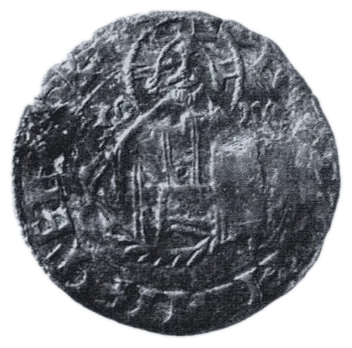
Coinage offers another window into that life. The money struck for Ivan Sratsimir shows a late medieval economy in which silver and copper had distinct roles. Silver coinage circulated more broadly and served larger transactions and exchange beyond the immediate region, while copper fulfilled the needs of daily circulation inside the kingdom. The iconography itself—royal monograms, heraldic devices, Christian imagery—announced authority, but the very abundance of such issues points to a monetized environment in which money had become part of ordinary economic behavior. This was not a purely barter world. Goods had prices, merchants needed payment, and the ruler’s coin was a sign that market exchange had become sufficiently important for the state to intervene through minting. In the northwestern lands especially, Sratsimir’s coins remained tied to the older economic life of Vidin, a life that the conquest did not immediately extinguish but rather interrupted and dispersed.
Taxes and landholding, as the royal charters reveal them, were organized around the ruler’s power to define who should pay and who should be exempt. The charters distinguish sharply between the normal burdens of circulation and the privileged status granted to merchants favored by the crown. They also show that the monarchy understood revenue not simply as direct seizure but as a regulated system of duties, immunities, and protected domains. Bridges, river crossings, and market places were points at which fiscal claims could be asserted; equally, they were points at which the king could grant relief. At the same time, the royal charters preserved and confirmed property, whether monastic or secular, and thereby made visible the layered structure of landholding in the late medieval Bulgarian state: royal authority above, estates and privileges below, and between them a dense web of obligations, immunities, and local offices. The importance of this documentation is especially great for the last Vidin period, because it shows that the state still thought in terms of ordered circulation, taxable traffic, and legally protected possession even as its political horizon was shrinking.
What the charters ultimately reveal is a political economy of survival. They make clear that the Bulgarian ruler’s authority was measured not only by armies and fortresses but by his ability to regulate roads, markets, crossings, and property. They also show how closely commerce and sovereignty were linked: to protect merchants was to advertise rule, and to guarantee exemptions was to draw goods and people into the ruler’s sphere. For the Vidin Tsardom between 1396 and 1422, this mattered all the more because the old system survived now only in fragments and memories, while the land itself passed into a new order. Yet the economic world that had once supported the last independent northwestern Bulgarian court did not disappear into emptiness. Towns still stood, fields still had to be worked, merchants still moved, money still changed hands, and the language of royal charters preserved the outlines of an older, more confident state whose economic life had been rich, regulated, and deeply connected to the wider Balkans.
6.Foreign Relations
The destruction of Vidin’s independence in 1396 was not merely a local catastrophe but the climax of a wider international crisis that had gathered around the lower Danube. The crusading expedition of King Sigismund of Hungary, backed by the prestige of both popes and by Western naval and military assistance, moved down the river in the hope of checking Ottoman power. At Vidin, the Bulgarian prince Stracimir broke his oath to the sultan and opened the fortress gates to the crusaders; soon afterwards the host pushed on to Rahova and Nikopolis, where the campaign ended in ruin. The defeat on 25 September 1396 gave Bayezid I the opportunity to extinguish the last independent Bulgarian principality on the Danube. Vidin was taken soon afterwards, Ivan Sratsimir was captured and carried to Bursa, and the political history of the tsardom entered a new phase in exile.
For Constantine, Sratsimir’s son and heir, the fall of Vidin meant a forced passage from sovereignty to displacement, yet it did not sever him from the diplomatic world of the Balkans. He first sought refuge in Hungary and then at the court of the Serbian despot Stefan Lazarević, whose own position had become central after Ankara and whose court offered a natural meeting-place for anti-Ottoman politics. Constantine’s presence there shows how the exiled Bulgarian dynasty remained tied to the great neighbours of the northern Balkans, especially Hungary and Serbia, even after its territorial base had been lost. His title still mattered in these circles: in 1404 Sigismund of Hungary referred to him as Constantine, the magnificent emperor of Bulgaria, in connection with a threefold alliance with Stefan Lazarević and the Wallachian voivode Mircea. That coalition damaged Ottoman interests, but it could not yet restore the Bulgarian state.
The horizon changed after Bayezid’s defeat at Ankara in 1402 and the opening of the Ottoman interregnum. The shock of Timur’s victory, together with the rivalry of Suleyman, Musa and Mehmed for Bayezid’s inheritance, created a breathing-space for all the Balkan lands that still resisted direct Ottoman rule. In the same years Byzantium itself, reduced and threatened, turned once more to western Christendom: Manuel II travelled to Venice, Milan and France, and his embassies sought aid from the pope and from the kings of the West. Boniface IX renewed his appeal for crusade or defence funds, and the collapse of Ottoman pressure briefly revived hopes far beyond the Bulgarian lands. It was in this atmosphere that Constantine and Fruzhin, the sons of fallen Bulgarian rulers, launched the most important resistance movement of the period. Beginning in 1408, the uprising spread across Vidin, the Temsko region and eastern Bulgaria, linking the western and eastern lands of the old Bulgarian state in a common anti-Ottoman effort.
The revolt was not an isolated rebellion of a frontier lord, but part of the broader contest produced by Ottoman civil war. Its leaders acted while the empire of the conquerors was divided, and they seem to have counted on that division to make restoration possible. Yet the struggle dragged on for about five years and ended only when Musa crushed the Bulgarian resistance in 1413, deporting part of the population on 23 April. The final Ottoman victory over Musa brought no immediate liberation either: Mehmed I, after defeating his brother, restored the displaced Bulgarians to their homes and announced a general peace, but that peace meant only the resumption of life under Ottoman overlordship. Even so, Bulgaria was not simply erased from diplomacy. When Mehmed addressed the envoys of Serbia, Bulgaria, Wallachia, the duke of Janina, the despot of Lacedemonia and the prince of Achaea, the Bulgarian name still appeared among the recognized political actors of the Balkans, and it is likely that Constantine’s own representatives were among those received.
After the failure of the uprising, Constantine’s existence became increasingly that of a displaced dynast living on the margins of the political order that had destroyed his kingdom. He appears to have settled for a time in Hungary and later in Belgrade, where he died on 17 September 1422. His trajectory from Vidin prince to Balkan exile encapsulates the foreign relations of the tsardom in its last years: dependence on Hungarian power, partnership with Serbia and Wallachia, reliance on the ebb and flow of Ottoman civil war, and the continuing, if frustrated, expectation that a wider Christian front could still reverse the loss of Bulgaria. The papacy, Byzantium, Serbia, Hungary and the Wallachian principality all figured in that expectation; none could restore Vidin, but together they kept alive the political language of Bulgarian statehood long after the state itself had been overrun.
1.Political Story
Even after Tarnovo fell, one Bulgarian stronghold remained on the Danube River: Vidin. There, the ruling family of Sratsimir held on a little longer. In the final months before the Ottomans took over, Ivan Sratsimir still ruled independently. The court in Vidin made a last effort to connect with the past and plan for the future. One sign of this was when his heir, Constantine, traveled with the church leader Joasaph to Tarnovo on important royal business. They brought back the relics of Saint Philothea, a sacred treasure that linked Vidin to the older Bulgarian capital. This was a symbolic act meant to show continuity, even as the political world that gave meaning to such gestures was falling apart under Ottoman pressure.
Disaster struck after the crusade led by King Sigismund and the battle of Nicopolis on 25 September 1396. The crusaders had briefly raised Christian hopes and may have boosted Sratsimir’s confidence. But their defeat at Nicopolis ended the last serious effort to stop Ottoman expansion along the lower Danube. After this, Bayezid I saw no reason to allow a semi-independent Bulgarian state on his northwestern border. Vidin was captured soon after the crusaders’ loss, probably in late 1396, though some sources say 1397. Ivan Sratsimir was taken prisoner and sent to Bursa, where he died in captivity. With him gone, the last free Bulgarian land on the Danube lost its independence.
His son Constantine escaped and lived as an exile. First, he went to Hungary, then to Serbia, where he found shelter at the court of Despot Stefan Lazarević. Constantine’s move from his homeland to foreign courts showed how the Vidin tsardom changed from a real territory into a dynastic claim kept alive by memory, diplomacy, and hope. He was not just a prince in exile; in letters from abroad, he was still called the great emperor of Bulgaria. This title kept alive the idea that Bulgaria still had a rightful ruler. But his position was fragile. He could not act alone, and with Vidin lost and the Ottomans dominating the Balkans, restoring Bulgaria was impossible without a broad alliance against the Ottomans.
Such an alliance seemed possible in 1404, when Constantine joined forces with Stefan Lazarević and the Wallachian ruler Mircea against the Ottomans. The fact that these three leaders were named together shows how the Danube and Balkan borderlands were trying to regroup after Bayezid’s victories and the turning point at Ankara in 1402. Bayezid’s defeat and capture by Timur shattered Ottoman unity and started a civil war among Bayezid’s sons. This conflict eased pressure on the Balkans and gave hope to Christian rulers and conquered peoples. Constantine, who had spent years near Serbian and Hungarian power centers, now had more room to imagine restoring his kingdom. But the 1404 alliance, though harmful to the Ottomans, did not bring back Vidin or recreate Bulgaria.
The most serious attempt to regain power was the uprising led by Constantine and Fruzhin, son of Ivan Shishman. Though only briefly recorded in writing, the revolt becomes clearer when seen in the political context after Ankara. It began in 1408 and spread across several parts of Bulgarian lands under Ottoman rule: in Vidin, where Constantine led; in the Temska region; and in eastern Bulgaria, where Fruzhin took charge. This united the western and eastern branches of the Bulgarian royal family. The rebellion lasted about five years but was crushed in 1413 when Musa defeated the rebels and ordered their removal on 23 April. This defeat ended the last large-scale effort to restore Bulgarian rule on native soil during the early Ottoman civil wars.
After the uprising failed, Constantine’s hopes grew even slimmer. The political situation remained unstable, and the Ottoman princes kept fighting each other. But the Bulgarian cause was broken. A later note suggests Bulgarians fought in Mehmed I’s army against Musa, hinting that Constantine’s name still mattered in diplomacy and war. After Mehmed’s victory, he restored displaced Bulgarians to their homes and declared peace with his subjects and neighbors. For Constantine, this meant accepting survival rather than freedom as the best outcome. He lived first in Hungary and later in Belgrade, where he died on 17 September 1422. With his death, the last hope for Vidin’s independence passed into history, and the Danube tsardom, once the final refuge of Bulgarian statehood, disappeared from the medieval Balkan political scene.
2.Wars and Battles
In 1396, the Vidin Tsardom became involved in a major crusade led by Sigismund of Hungary. The crusader army was unusually mixed: mostly Hungarians and French, with Germans and smaller groups from Poland, Bohemia, Italy, Spain, and England. Venice prepared ships to patrol the Hellespont, while Genoese and knights from Rhodes guarded the Black Sea coast and the Danube’s mouth. The army moved down the river toward Nikopolis. At Vidin, the Bulgarian ruler Sratsimir broke his oath to the sultan and opened the fortress gates to the crusaders. This made Vidin a clear target for Bayezid’s retaliation: it became a base for the Christian advance and one of the first places the Ottomans aimed to crush after the crusade failed.
The campaign showed the military gap on the lower Danube very clearly. At Rahova, the crusaders broke through the Turkish garrison and killed many inhabitants. At Nikopolis, two very different styles of warfare clashed in a decisive battle. Sigismund, who understood Turkish tactics, advised caution and a defensive fight. But the French knights wanted a bold attack. On 25 September, they charged uphill, thinking they faced only a small group of light cavalry. In reality, this was a trap. The main Ottoman army waited behind the hill, joined by a squadron under Stephen Lazarević. The French were drawn forward, then crushed and pushed back with heavy losses. Once their charge failed, the whole Christian army fell apart, turning the battle into a rout. The defeat at Nikopolis was not just about Ottoman numbers but also their discipline, secrecy, and smart use of terrain against an army divided by different ideas of fighting.
Bayezid acted quickly after winning. Because the crusaders had made Vidin a political and military target by openly allying with Sratsimir, the sultan would not allow such a semi-independent fortress on the river border. Vidin fell soon after Nikopolis, and Sratsimir was taken captive to Asia Minor. The last Bulgarian land outside Ottoman control was absorbed into the empire. From then on, the war in Bulgarian lands was no longer between equal powers but a fight against a state that was establishing itself with administrators, garrisons, and cavalry settled on military lands. The old tsardom became a conquered border province, with its fortresses serving Ottoman needs instead of Bulgarian ones.
Bayezid’s defeat at Ankara in 1402 briefly opened new military possibilities. Timur’s victory threw the Ottoman state into civil war, dividing it between rival princes, especially Mehmed and Süleyman. This split mattered on the Danube frontier. The sons and followers of Ivan Sratsimir, especially Constantine, who had found refuge in Hungary and Serbia, could again count on a wider anti-Ottoman alliance. In northern Bulgaria, people took up arms with Wallachian troops. Sources describe serious Ottoman defeats during this time, suggesting a war of movement rather than sieges: small forces crossing borders, striking isolated units, and taking advantage of the Ottomans’ divided strength. Constantine’s struggle belonged to this kind of warfare, where survival depended on alliances and the enemy’s temporary weakness, not on a single big battle.
Still, military options were limited. The Ottomans controlled the Danube crossings, and once Mehmed secured power in 1413, they only needed time to push forward again. The civil war gave the Balkans a break, but only a break, not a recovery. Serbia survived thanks to Stefan Lazarević’s strength and troops returned from Ankara; Byzantium also survived but in a weaker form. Vidin, having lost its fortress and ruler, could no longer field independent armies or defend river strongholds. Constantine’s cause lived on as that of an exile and rebel, supported by alliances and memory, but the military balance had shifted for good. By 1422, the Ottoman comeback was strong enough that the last hopes of the Vidin line rested more on endurance and memory than on conquest. The frontier war was lost in stages: first in the open battle at Nikopolis, then in the fortress’s capture, and finally in the long fight to keep Bulgarian resistance alive.
3.Government and Institutions
In its final years, the Vidin tsardom showed a sharp contrast between the familiar ways of medieval rule and the fragile state behind them. Before the Ottomans took over, Vidin was more than just a fortified city. It was a royal capital, a territorial center, and the seat of a clear court and tax system. In the late 1300s, this system still used the political language common in the Balkans, where titles, seals, ceremonies, and control over people and money all expressed sovereignty. But in 1396, this system was shattered. After the crusaders’ defeat at Nicopolis, Vidin fell, Ivan Sratsimir was captured, and the last independent Bulgarian center on the Danube collapsed. What was left was no longer a functioning tsardom in its own land but a royal claim carried into exile and later used as a symbol of hope.
The Vidin court shared the same institutional culture as other Bulgarian centers of power. Its ruler held the high title of tsar and claimed absolute authority, as developed in the Second Bulgarian Empire. Even when central power was limited, the state relied on familiar medieval monarchy tools: the ruler’s household, court officials, military followers, and local nobles who connected the center to the countryside. Vidin, often semi-independent, stood between this wider tradition and local frontier politics. But by 1396, these structures could no longer defend the realm. The Ottoman advance didn’t just remove the ruler; it destroyed the administrative center that organized authority. The title remained, but the system of rule was broken up or taken over.
The court’s last months show how closely late medieval Bulgarian statehood linked political legitimacy to ceremony and sacred symbols. In Vidin, high-level diplomacy was still part of ruling, and acquiring relics was treated as a state act. Bringing the relics of Saint Philothea to Vidin was not just a religious gesture but a way to claim prestige and protection, placing the tsardom within a sacred map of rule. Such acts mattered because they showed a court that still expected to act as a sovereign court: receiving, sending, collecting, and blessing. But the 1396 conquest ended this world suddenly. After the city fell, the court culture survived only in memory, and the relics could not save the political system that had asked for them.
The fall of the Vidin state also meant the collapse of its local government and social order. The boyars—nobles who had supported regional power—no longer had a native throne to serve. Without the tsar’s court, their role as the ruling class of an independent state ended. In medieval Vidin, boyars were not just landowners but the people who made sure orders and local control worked. Once the capital was lost, this system stopped working as before. The Ottoman takeover did more than replace one ruler with another; it broke the setting where boyars had meaning. The surviving elite had to find protection, support, or exile elsewhere. What had been a territorial nobility tied to a sovereign center became scattered remnants, unable to keep the old balance between ruler, nobles, and land.
For Constantine II Asen, Ivan Sratsimir’s son and heir, statehood after 1396 existed mainly as a claim and memory. His flight to Hungary and later Serbia shows how the Vidin dynasty lived on politically even after losing its land. But this was a state without taxes, courts, or the usual tools that linked city and countryside. There could be no stable tax system in Vidin under its own rulers once the Ottomans controlled the land, and no independent lawmaking once the court was gone. The revolt of Constantine and Fruzhin after Ankara was an attempt to recover a lost political order, not the work of an intact state. Its importance lies in this tension. The tsardom’s name survived, the royal line lived on in exile, and hope for return inspired resistance. But the Vidin state’s machinery was broken, and the struggle from 1402 to 1422 happened in the shadow of that irreversible loss.
4.Church and Culture
In Vidin’s final years of independence, the church remained one of the last and most visible signs of statehood. The tsardom could no longer claim the full power of the old empire, but it still held on to the sacred language that once made Bulgarian rule understandable. What lasted best was not political power but the habit of thinking in holy symbols: relics, prayers, titles, and respect for written words. Even the ruler’s more modest self-presentation belonged to this world of inherited legitimacy, where royal rule was expected to be supported by the church and saints. As the Ottomans closed in on the lower Danube, the church did not just stand beside power; it became one of the few things that kept continuity alive.
This is why the most important event from Vidin’s last phase was religious. Among the court’s secret affairs, the best-recorded was the transfer of Saint Philothea’s relics from Tarnovo to Vidin. These relics had been in Tarnovo since the time of Kaloyan, and moving them to Vidin was more than a devotional act. It was a sacred acquisition, meant to give the Danube capital the protection and prestige of a saint whose physical remains symbolized both memory and hope. But even this shows the limits of late medieval faith under pressure. The relics were welcomed and honored, but they could not protect Vidin from disaster. Their move was the last attempt to strengthen a threatened Christian state by gathering holiness around it.
The collapse came quickly after the crusaders’ defeat at Nicopolis in 1396. Once the crusader army was destroyed and the Ottomans won, Bayezid no longer tolerated a semi-independent Bulgarian enclave on the Danube. Vidin fell soon after, Ivan Sratsimir was captured and taken to Bursa, where he died. His son Constantine went into exile, first in Hungary and then at Stefan Lazarević’s court in Serbia. With this move abroad, Vidin’s political center disappeared, and the church took on the role of remembering what the state could no longer keep. The disaster was not just territorial; it struck the sacred geography of Bulgaria, where city, saints, books, and ruler had once formed a unified meaning.
The impact on culture is captured in the words of Vidin’s church leader Joasaph, who lamented that it would be better for the sun to go out than for the language of Patriarch Euthymius to fall silent. In one sentence, he summed up the cultural destruction of the time. The problem was not just losing buildings or clergy but the risk that the liturgical and literary style linked to Euthymius and the high culture of late medieval Bulgaria might disappear along with the political regime that supported it. His words show how closely scripture, preaching, and refined writing were tied to the state’s fate. When Joasaph spoke of language, he meant more than grammar or style: he meant a whole spiritual civilization formed in monasteries, royal offices, and church circles of the fallen kingdom.
Between 1396 and 1422, this is the main cultural fact about Vidin: not new artistic or literary achievements, but the survival of a church culture that kept memory alive despite defeat. The relics of Saint Philothea, the figure of the exiled prince Constantine, and Joasaph’s lament all point to this. The old system of Bulgarian sacred kingship had broken, but devotion and respect for the written word continued as forms of resistance. In this way, Vidin’s last decades were not empty culturally. They were a time of preservation, where the church kept legitimacy alive, worship language became a sign of survival, and the memory of the lost tsardom lived on in saints’ cults and the solemn, endangered voice of Bulgarian letters.
5.Economy and Documents
In Vidin’s final years, economic life was shaped more by holding on under pressure than by new developments. The fall of Vidin in 1396 and Ivan Sratsimir’s capture did not immediately erase old patterns of settlement and trade. The Danube still connected the region to the wider Balkans and Central Europe. The usual combination of fortress, river port, town market, and surrounding countryside remained the foundation for survival. Even after political defeat, Vidin stood on a route linking northwestern Bulgaria with Belgrade, Braničevo, and the interior. Towns and forts in the area still depended on the countryside for support. The picture is of a frontier economy under strain but still urban and connected to movement, storage, and trade, not isolated village self-sufficiency.
The balance between town and countryside was crucial. Vidin, as a river fortress and administrative center, relied on a steady supply of food, raw materials, and labor from nearby lands. Late medieval Bulgarian towns, as shown by surviving documents from the kingdom, were not just about trade but mixed grain, flour, livestock, and crafts. Towns and forts needed bread, meat, wine, animal products, timber, metalwork, textiles, and transport. In return, they gathered craftsmen, markets, and small-scale trade that kept daily life going. Descriptions of fortified towns from the late 1300s show that a stronghold was expected to hold soldiers, stored food, workshops, and an economic hinterland. Vidin, even as the last royal center of resistance, belonged to this economic world where military survival and civilian supply were linked.
Trade was the most visible sign of this wider world. Royal charters reveal an economy where merchants traveled across the realm, bought and sold freely, and received protection for themselves and their goods. The language is very practical: it talks about moving through cities, fairs, merchant villages, bridges, rivers, and roads, and insists that no tolls, customs duties, or arbitrary taxes should block commerce. This shows a commercial landscape where rulers tried to attract trade by promising legal security. The routes named in these documents place Vidin within a network extending far beyond the lower Danube. Merchants from Dubrovnik and the goods they carried passed through Bulgarian lands as part of a connected trade corridor. The goods were varied and practical—wine, olive oil, iron, nails, knives, needles, candles, hides, wool, and wax. Bulgarian exports included animal skins and especially wax, known for its quality and widely traded from the Bulgarian interior. In this economy, Vidin was not a dead end at the edge of a collapsing state; it was a point on a living trade route, even if the political system around it was breaking down.
Coinage offers another view of this life. The coins minted for Ivan Sratsimir show an economy where silver and copper had different roles. Silver coins circulated more widely and were used for bigger transactions beyond the region, while copper coins served everyday needs inside the kingdom. The images on the coins—royal monograms, heraldic symbols, Christian pictures—show authority, but the large number of coins points to a money-based economy where money was part of daily life. This was not a barter society. Goods had prices, merchants needed payment, and the ruler’s coin showed that markets were important enough for the state to issue money. In northwestern lands especially, Sratsimir’s coins stayed connected to Vidin’s older economic life, a life that conquest interrupted but did not immediately end.
Taxes and landholding, as shown in royal charters, were organized around the ruler’s power to decide who paid and who was exempt. The charters clearly separate normal taxes from privileges given to merchants favored by the crown. They also show that the monarchy saw revenue not just as direct seizure but as a system of duties, exemptions, and protected lands. Bridges, river crossings, and markets were places where the ruler claimed taxes but also where he could grant relief. At the same time, the charters confirmed property rights, whether church or secular, revealing the layered structure of landholding in late medieval Bulgaria: royal authority at the top, estates and privileges below, and between them a dense network of obligations, exemptions, and local offices. This documentation is especially important for Vidin’s last period because it shows that the state still thought in terms of orderly trade, taxable traffic, and legal property even as its political power shrank.
Overall, the charters reveal a political economy focused on survival. They show that the ruler’s power was measured not only by armies and forts but by his ability to regulate roads, markets, crossings, and property. They also show how closely trade and sovereignty were linked: protecting merchants advertised rule, and granting exemptions attracted goods and people into the ruler’s domain. For the Vidin Tsardom between 1396 and 1422, this mattered because the old system survived only in fragments and memories while the land passed into a new order. Yet the economic world that once supported the last independent northwestern Bulgarian court did not vanish. Towns still stood, fields were still worked, merchants still traveled, money still changed hands, and royal charters preserved the outlines of an older, confident state with a rich, regulated economy connected to the wider Balkans.
6.Foreign Relations
The fall of Vidin’s independence in 1396 was not just a local disaster but the peak of a larger international crisis along the lower Danube. The crusade led by King Sigismund of Hungary, supported by the popes and Western naval and military help, moved down the river hoping to stop Ottoman power. At Vidin, the Bulgarian prince Sratsimir broke his oath to the sultan and opened the fortress gates to the crusaders. Soon after, the army moved on to Rahova and Nikopolis, where the campaign ended in defeat. The loss on 25 September 1396 gave Bayezid I the chance to destroy the last independent Bulgarian principality on the Danube. Vidin was taken soon after, Ivan Sratsimir was captured and taken to Bursa, and the tsardom’s political history entered a new phase in exile.
For Constantine, Sratsimir’s son and heir, Vidin’s fall meant losing sovereignty and becoming displaced, but it did not cut him off from Balkan diplomacy. He first sought refuge in Hungary, then at the Serbian despot Stefan Lazarević’s court, whose position became central after Ankara and whose court was a natural center for anti-Ottoman politics. Constantine’s presence there shows how the exiled Bulgarian dynasty remained connected to the northern Balkans’ great neighbors, especially Hungary and Serbia, even after losing its land. His title still mattered: in 1404, Sigismund of Hungary called him Constantine, the magnificent emperor of Bulgaria, when mentioning an alliance with Stefan Lazarević and Wallachian ruler Mircea. This coalition hurt Ottoman interests but could not restore Bulgaria.
The situation changed after Bayezid’s defeat at Ankara in 1402 and the start of the Ottoman civil war. Timur’s victory and the rivalry among Bayezid’s sons—Suleyman, Musa, and Mehmed—created a break for Balkan lands still resisting Ottoman rule. In these years, even weakened Byzantium turned to Western Christendom for help: Emperor Manuel II traveled to Venice, Milan, and France, seeking aid from the pope and Western kings. Pope Boniface IX renewed calls for crusades or defense funds, and hopes briefly revived far beyond Bulgaria. In this atmosphere, Constantine and Fruzhin, sons of fallen Bulgarian rulers, launched the most important resistance movement of the time. Starting in 1408, the uprising spread across Vidin, the Temsko region, and eastern Bulgaria, linking the western and eastern parts of the old Bulgarian state in a common fight against the Ottomans.
The revolt was not just a local rebellion but part of the wider conflict caused by the Ottoman civil war. Its leaders acted while the empire was divided and seemed to count on that division to make restoration possible. But the struggle lasted about five years and ended when Musa crushed the Bulgarian resistance in 1413, deporting part of the population on 23 April. Mehmed I’s later victory over Musa brought no immediate freedom. After defeating his brother, Mehmed restored displaced Bulgarians to their homes and declared peace, but this peace meant living under Ottoman rule again. Still, Bulgaria was not erased from diplomacy. When Mehmed met envoys from Serbia, Bulgaria, Wallachia, the duke of Janina, the despot of Lacedemonia, and the prince of Achaea, Bulgaria was still named among the recognized Balkan powers. It is likely that Constantine’s representatives were among those received.
After the uprising failed, Constantine lived more and more as a displaced royal on the edges of the political order that destroyed his kingdom. He lived for a time in Hungary and later in Belgrade, where he died on 17 September 1422. His journey from Vidin prince to Balkan exile reflects the tsardom’s foreign relations in its last years: dependence on Hungary, partnership with Serbia and Wallachia, reliance on Ottoman civil war’s ups and downs, and the continuing, though frustrated, hope that a wider Christian alliance could reverse Bulgaria’s loss. The papacy, Byzantium, Serbia, Hungary, and Wallachia all played roles in this hope. None could restore Vidin, but together they kept alive the political idea of Bulgarian statehood long after the state itself was conquered.
In the late 1300s, the Bulgarian city of Vidin was the last stronghold on the Danube River resisting the Ottoman Empire. Ivan Sratsimir ruled there until 1396, when the Ottoman army defeated a Christian crusade at the Battle of Nicopolis. After this loss, the Ottomans captured Vidin, took Ivan Sratsimir prisoner, and ended Bulgarian independence in the region.
Ivan’s son, Constantine, escaped and lived in exile in Hungary and Serbia. He kept the hope of restoring Bulgaria alive by joining alliances against the Ottomans. In 1408, Constantine and another Bulgarian leader, Fruzhin, led a revolt against Ottoman rule. The uprising lasted about five years but was crushed in 1413. After that, Bulgaria remained under Ottoman control.
Before the fall, Vidin was a royal city with a court, taxes, and trade. It had coins, markets, and laws that helped merchants and townspeople. The church was important too, holding relics and keeping Bulgarian culture alive even after the state fell. The relics of Saint Philothea were brought to Vidin as a symbol of hope, but they could not stop the Ottoman conquest.
Even in exile, Constantine was called the emperor of Bulgaria and worked with neighboring Christian rulers. However, the Ottomans’ power grew again after their civil war ended in 1413. Constantine died in 1422, and with him, the last hope for Vidin’s independence faded. Though the Bulgarian state disappeared, its memory and culture lived on through the church and the stories of its rulers.
Key Events
- 11396 — Constantine and Joasaph bring the relics of Saint Philothea from Tarnovo to Vidin.
- 21396 — Ivan Sratsimir opens the Vidin fortress gates to Sigismund's crusaders.
- 31396 — The crusaders force the Turkish garrison at Rahova and massacre the inhabitants.
- 425 September 1396 — Sigismund's crusading army is defeated at Nicopolis.
- 5Late 1396 — Vidin falls soon after Nicopolis, and Ivan Sratsimir is captured and taken to Bursa.
- 61396 — Constantine escapes first to Hungary and then to Serbia, finding refuge at Stefan Lazarević's court.
- 71402 — Timur defeats and captures Bayezid I at Ankara, beginning the Ottoman civil war.
- 81404 — Constantine, Stefan Lazarević, and Mircea are linked in a common anti-Ottoman arrangement.
- 91408 — Constantine and Fruzhin launch an uprising in Vidin, the Temska region, and eastern Bulgaria.
- 1023 April 1413 — Musa devastates the Bulgarian rebels and orders their removal.
- 111413 — Mehmed I defeats Musa and restores the expelled Bulgarians, announcing general peace.
- 1217 September 1422 — Constantine dies in Belgrade.
Key People
Sources
Ivan Bozhilov, The Asen Family (1186–1460): Genealogy and Prosopography. Sofia: Marin Drinov Academic Publishing House, 1994.
Show the 2 quoted passages
„пълно или поне частично освобождаване на българските земи“
Read p. 238 in the book„Муса разори българите“
Read p. 239 in the bookIvan Bozhilov, Vasil Gyuzelev, History of Medieval Bulgaria, 7th–14th Century. Sofia: Anubis, 1999.
Show the 3 quoted passages
„Много по-добри са знанията ни за провинциалния чиновнически апарат“
Read p. 922 in the book„цар и самодържец на всички българи и гърци“
Read p. 957 in the book„Султан Баязид нямал намерение да търпи повече малкото полунезависимо царство и наскоро след победата си сложил край и на тази последна свободна българска територия.“
Read p. 996 in the book