
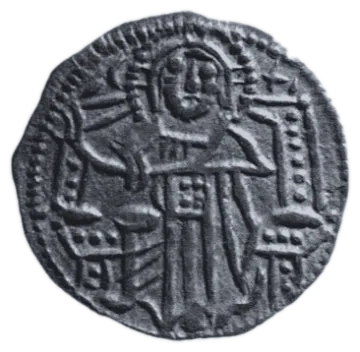
Silver grosh, unlocalised mint, eighth type (with Queen Irina)
- Metal
- Silver
- Diameter
- 18 mm
- Weight
- 1.4 g
- Rarity
- R9 — between 5 and 15 known
Obverse
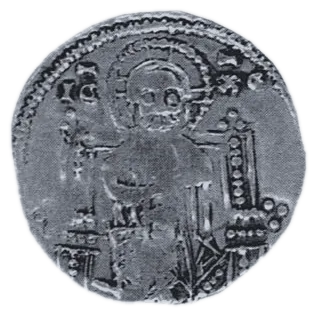
Jesus Christ, seated on a throne with a high rectangular backrest, with long hair, beard, and mustache. Around His head is a nimbus containing a cross. Christ is dressed in a chiton and sindon. In His left hand He holds a Gospel, and with His right hand He blesses in front of His chest. In the field on both sides of the head are the initials ІС - ХС.
Reverse
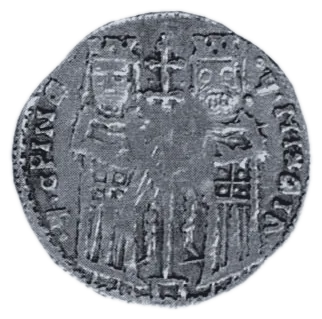
Empress Irina, on the left, and Emperor Michael, standing, full-length, with trident stemmata with pendilia resembling a fortress wall, hold between them a double (patriarchal) cross with a long staff, resting on a base. Emperor Michael has a beard and mustache. Both figures are dressed in sakkoi, loroi, and mantles. Their free hands are placed in front of their chests. Circular inscription in two parts: Ч. ЄΡΙΝА - . Ч. МИХАІЛ.
Reconstructions
Line drawings reconstructing the coin's design from the surviving specimens.


Also struck by Michael III Shishman Asen
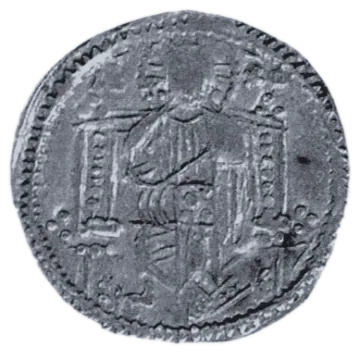 Silver grosh, unlocalised mint in Serbia (?), first type (with Queen Anna)
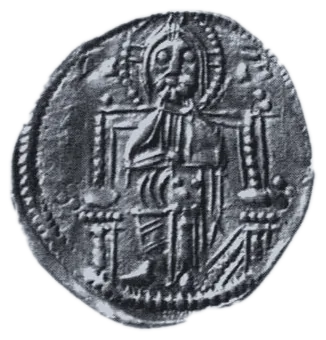 Silver grosh, unlocalised mint in Serbia (?), second type (with St Stephen)
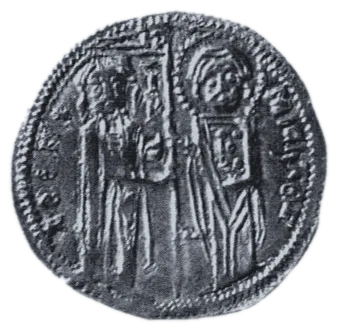 Silver grosh, unlocalised mint in Serbia (?), third type (with family name Asen)
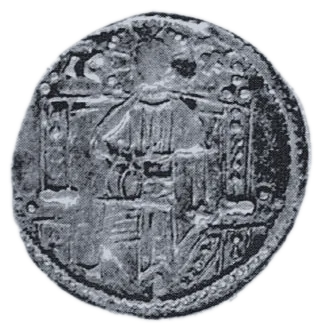 Silver grosh, unlocalised mint, fourth type (with Queen Irina)
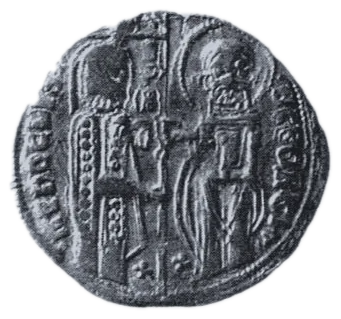 Silver grosh, unlocalised mint in Serbia (?), fifth type (with St George)
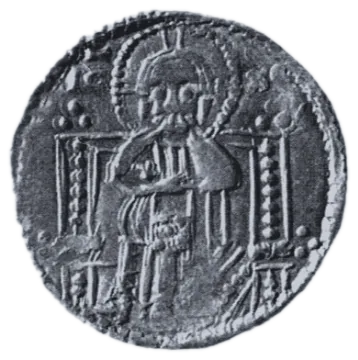 Silver grosh, unlocalised mint in Serbia (?), sixth type (with St George)
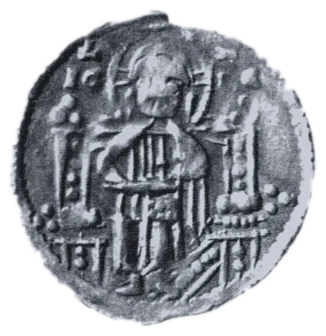 Silver grosh, unlocalised mint in Serbia (?), seventh type (with family name Asen)
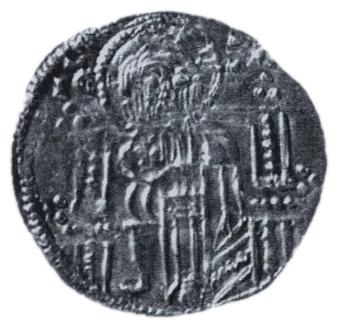 Silver grosh, unlocalised mint, ninth type (with Queen Irina)
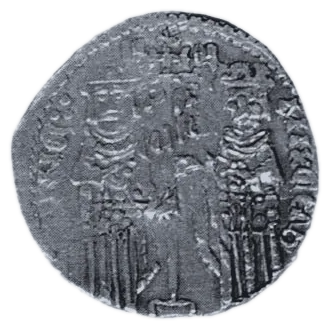 Silver grosh, unlocalised mint, tenth type (with Queen Irina)
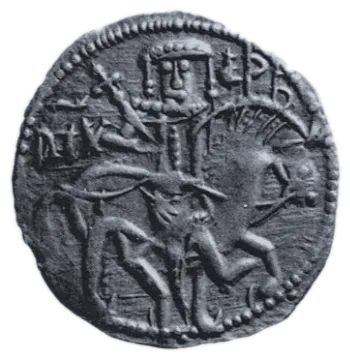 Silver grosh, Tarnovo mint — 19 mm · 1.8 g
 Silver grosh, Tarnovo mint — 21 mm · 1.9 g
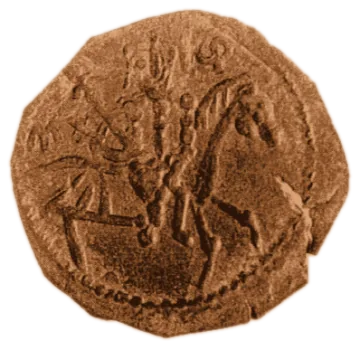 Copper coin, Tarnovo mint, first type (flat and scyphate variant)
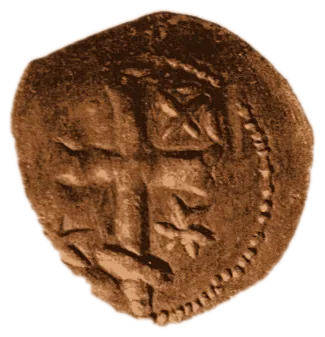 Flat copper coins, Tarnovo mint, second type
Coin photographs and reconstruction drawings from A. Radushev & G. Zhekov, Catalogue of Bulgarian Medieval Coins IX–XV c. (Agató, 1999).