
The royal charters
The grants, privileges and confirmations of the Bulgarian tsars that survive, introduced by Ventseslav Nachev, whose edition is reproduced here by permission.
Alexius Slav
Read the essay →Ivan Asen II
Read the essay →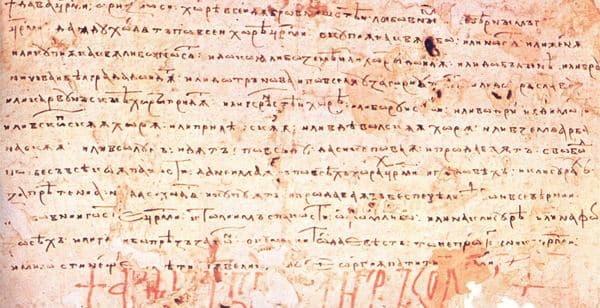
Dubrovnik Charter of Ivan Asen II
1230
A grant of free trade throughout the empire to the merchants of Dubrovnik — the oldest surviving Bulgarian commercial charter.
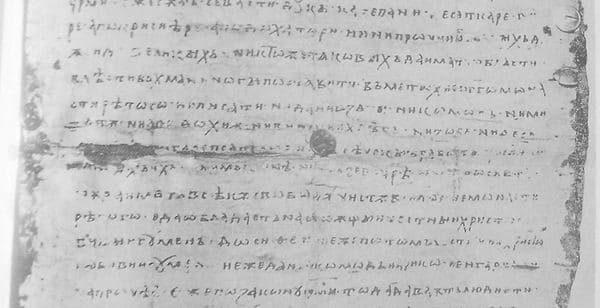
Vatopedi Charter of Ivan Asen II
April 1230
A charter granting the Athonite monastery of Vatopedi rights over its estates in Bulgarian territory.
Constantine Tih Asen
Read the essay →Ivan Alexander
Read the essay →Mesembria Charters of Ivan Alexander
mid-14th century
Three Greek charters Ivan Alexander granted at Mesembria (Nesebar) — two endowing local monasteries with immunity, one restoring monasteries to the town's metropolitan — evidence of firm Bulgarian rule on the Black Sea frontier.
Zograf Charter of Ivan Alexander
March 1342
A confirmation of the Bulgarian monastery of Zograf's possessions on Mount Athos and in Bulgaria.
Venetian Charter of Ivan Alexander
1346–1347
A sworn privilege granting Venetian merchants safe trade throughout the empire at a fixed 3% duty — the one surviving charter of the corpus addressed not to a monastery but to a foreign trading power.
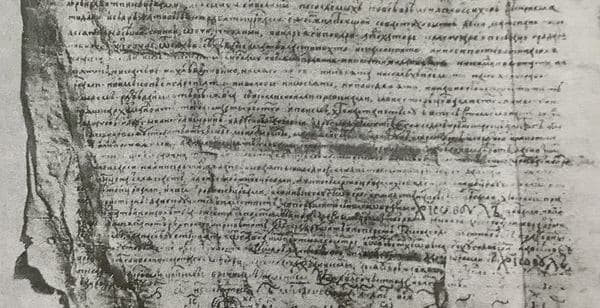
Mraka Charter of Ivan Alexander
1 December 1347
A donation to the monastery of St Nicholas in Mraka, listing its villages, boundaries and exemptions in detail.
Ivan Stefan
Read the essay →Ivan Shishman
Read the essay →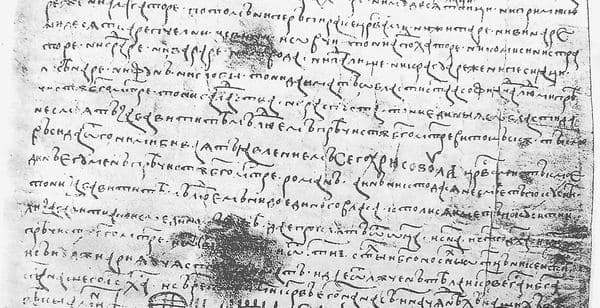
Vitosha (Dragalevtsi) Charter of Ivan Shishman
before 1380
A grant to the monastery of the Mother of God at Dragalevtsi on Vitosha.
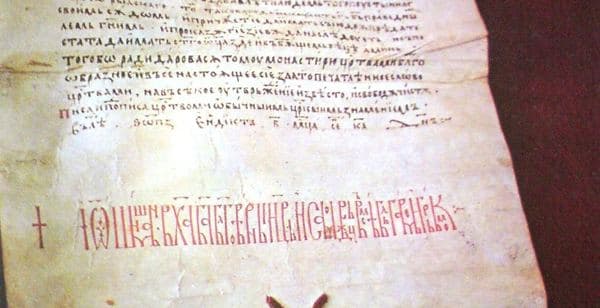
Rila Charter of Ivan Shishman
21 September 1378
Ivan Shishman's 1378 confirmation of Rila Monastery's estates and immunities — the only Bulgarian royal charter kept in Bulgaria itself.
Other charters
Nachev's introduction
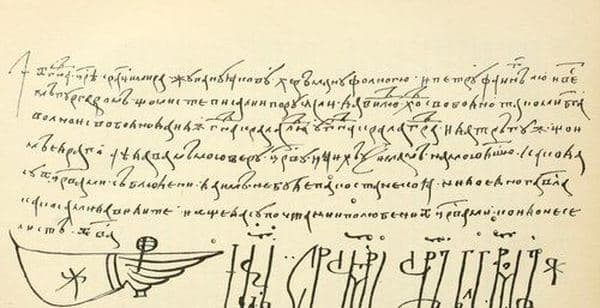
The charters issued by the Bulgarian tsars in favour of monasteries are extremely valuable sources for the medieval history of Bulgaria. They are a kind of encyclopaedia for the organisation of state power, for the tax system, for the judicial system, for the obligations of dependent people towards feudal lords and monasteries. In this sense, it could be said that the charters, as state-legal acts, have not been sufficiently deciphered as a source for understanding the complex social, economic, and political processes, relating also to the everyday life of the common man, and which could enrich our conception of all that we are accustomed to defining by the term Bulgarian Middle Ages.
Here an attempt has been made, so to speak, to "untie" the charters and to expand our knowledge of the life of the medieval Bulgarian, who, at least to some extent, still seems to remain an enigma.
Starting from the understanding that the charters are the most valuable domestic monuments for revealing not only the feudal relations in the Bulgarian lands but also the spirit of the medieval era, dominated by the dogma of Eastern Orthodoxy and the conception of the divine origin of power, we decided to offer a comprehensive edition of these remarkable monuments of the Bulgarian past, and in order for them to "speak," to provide them with a thorough commentary based also on the latest research in the field of medieval studies. The number of Bulgarian royal charters, as can be judged from direct and indirect evidence, was quite large, since every ruler felt obliged, driven by statesmanlike and moral motives, to endow, by virtue of a deeply rooted tradition, churches and monasteries. Due to the turbulent and often tragic fate of the Bulgarian lands, the following charters have reached us: the Vatopedi chrysobull of Ivan Asen II (1230), the Dubrovnik chrysobull of Ivan Asen II, the Virgin chrysobull of Konstantin-Asen Tih (between 1257-1277), the Zograf chrysobull of Ivan Alexander (1342), the chrysobull of Ivan Stefan from 1343, the Mrachka chrysobull of Ivan Alexander (1347), the Venetian chrysobull and the three Meselvria chrysobulls of the same ruler, the Rila chrysobull of Ivan Shishman (1378), and the Vitosha chrysobull of the same tsar (before 1382). To these charters can, and justifiably, be added the sigillion of despot Alexius Slav, given to the Melnik monastery "St. Bogoroditsa Spileotisa" (1220), since at that time despot Slav had the status of an independent ruler.
Ventseslav NACHEV
Ventseslav Nachev, Bulgarian Royal Charters (Hristo Botev, Sofia, 1996). Reproduced by permission; English translation ours.