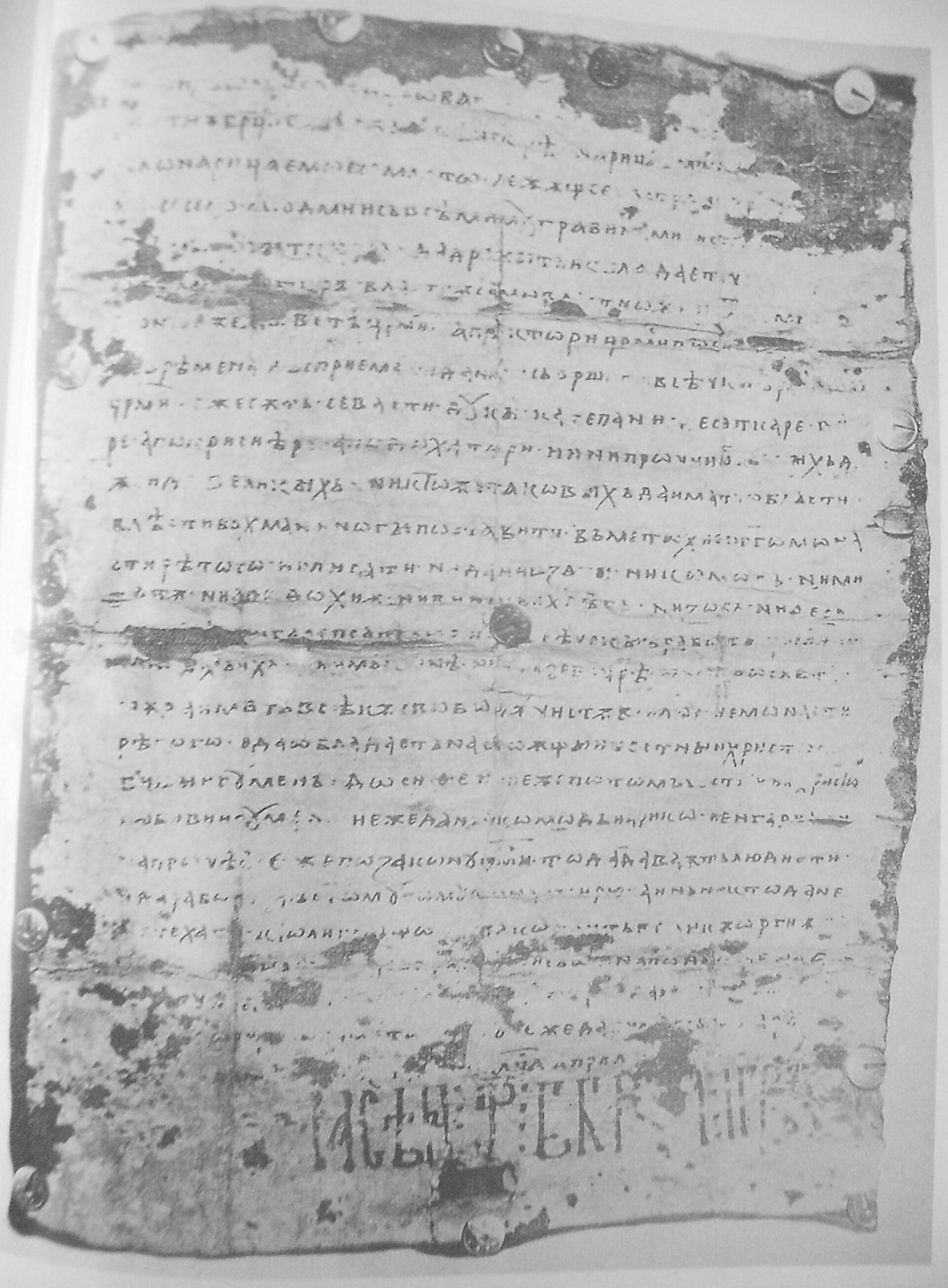
- chrysobul (golden-sealed word)
- A golden-sealed charter — the “zlatopechatno slovo,” the most solemn form of imperial act, its authority hung on a gold seal.
- sevast
- An honorary rank rather than a salaried post: its holder belonged to the class of provincial nobles and dynasts and had the right to judge, to fine and to collect taxes. Spread from Byzantium, and by the 13th–14th century a broad title of the nobility.
- praktor
- A tax-collector and fiscal official, often with judicial power, who could also farm the tax; praktors came into the villages with an armed escort.
- duke (dux)
- The governor of a province (a “hora”), appointed directly by the ruler and resident in its chief town; popularly called a kefalia.
- katepan
- The governor of a katepanikion — a district of several towns and villages — ranking below the duke; the Bulgarian equivalent was the zhupan.
- tithe-collector (desetkar)
- A fiscal official who took the tithe — a tenth — of produce: of pigs, sheep, bees (honey), wine, grain or hay, each by its own category.
- houndsman (psar / kuchkar)
- Dependents obliged to breed and train the lord's hunting dogs, and to collect dogs from the population.
- apokrisiarios
- An envoy or messenger — the ruler's own or a foreign one — entitled to lodging, food, escort and transport as he passed through the land.
- apodohator
- The collector of the apodohia, a due taken in kind, and a keeper of stores.
- scribe (pisets)
- A registrar who surveyed and assessed property for taxation; a charter's ban on “writing” bars him from cadastring the monastery's estate.
- angaria
- Forced labour and service: carting food, goods and building materials, roadwork, bridge- and fortress-building, even guarding prisons — raising the lord's hounds and falcons counted too. A Persian loanword still alive in Bulgarian.
- komod
- A supplementary charge taken by the tax-collectors, most likely a fee levied when grain was measured (from the Byzantine komodion).
- billeting (mitata)
- The duty to lodge, feed and transport the ruler's retinue, his envoys and troops as they moved through the land; the Bulgarian term was priselitsa or postoy, and it was among the most resented burdens.
- aerico
- A fine, or fiscal levy, taken into the treasury.
- metochion (metoh)
- A dependent estate: a complex of lands, mills, gardens and houses belonging to a smaller church or monastery, which a grant could transfer to a great house.
- stas
- The holding — the land and property of a single peasant household.
- pravdini
- The common lands and rights attached to a village — its pastures, woods and meadows — used by all its people.
- parik
- A personally-free peasant bound to the land, who could not sell his holding to anyone outside his lord's power.