Manuscripts

Dubrovnik Charter of Ivan Asen II

1230

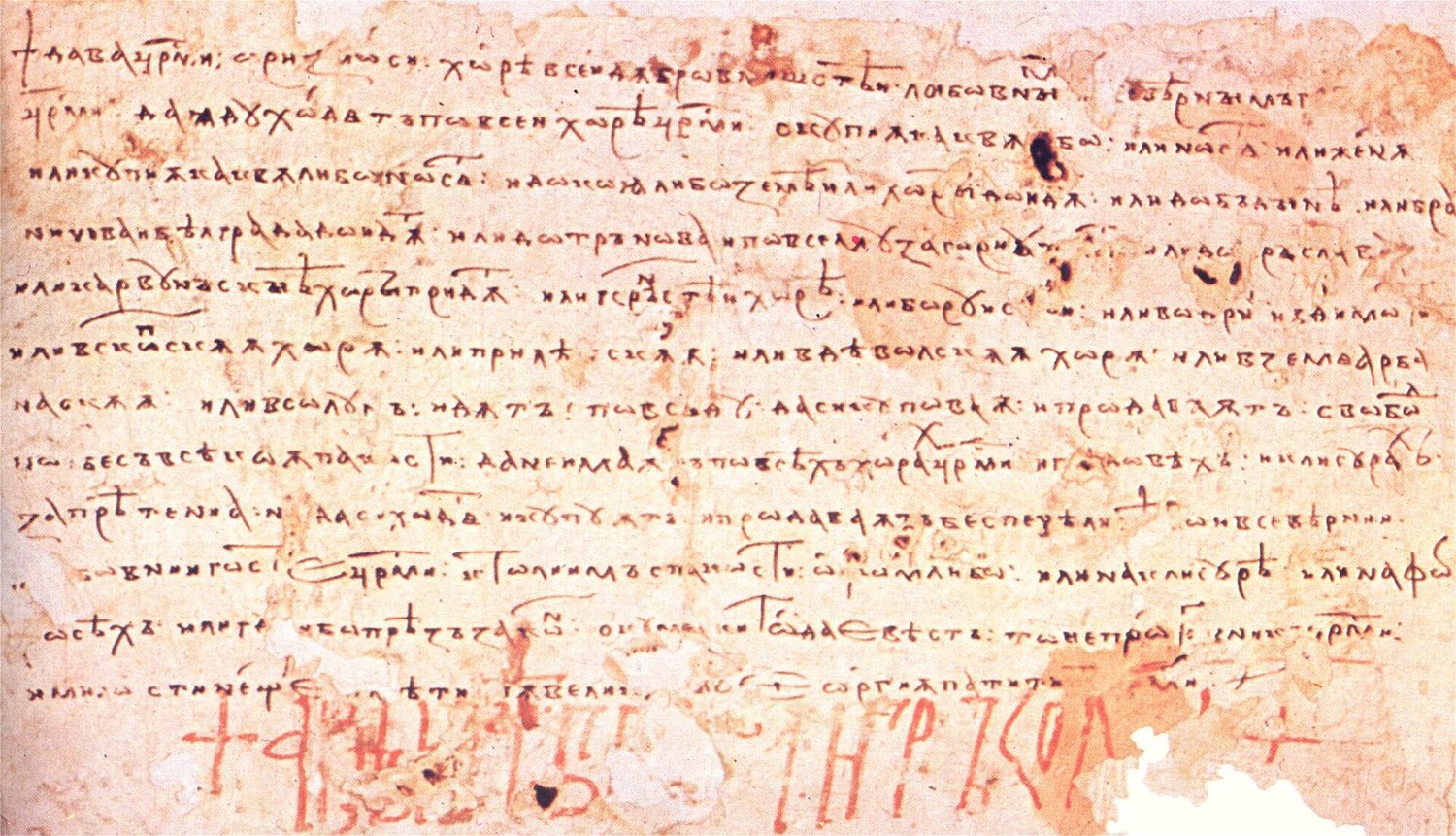
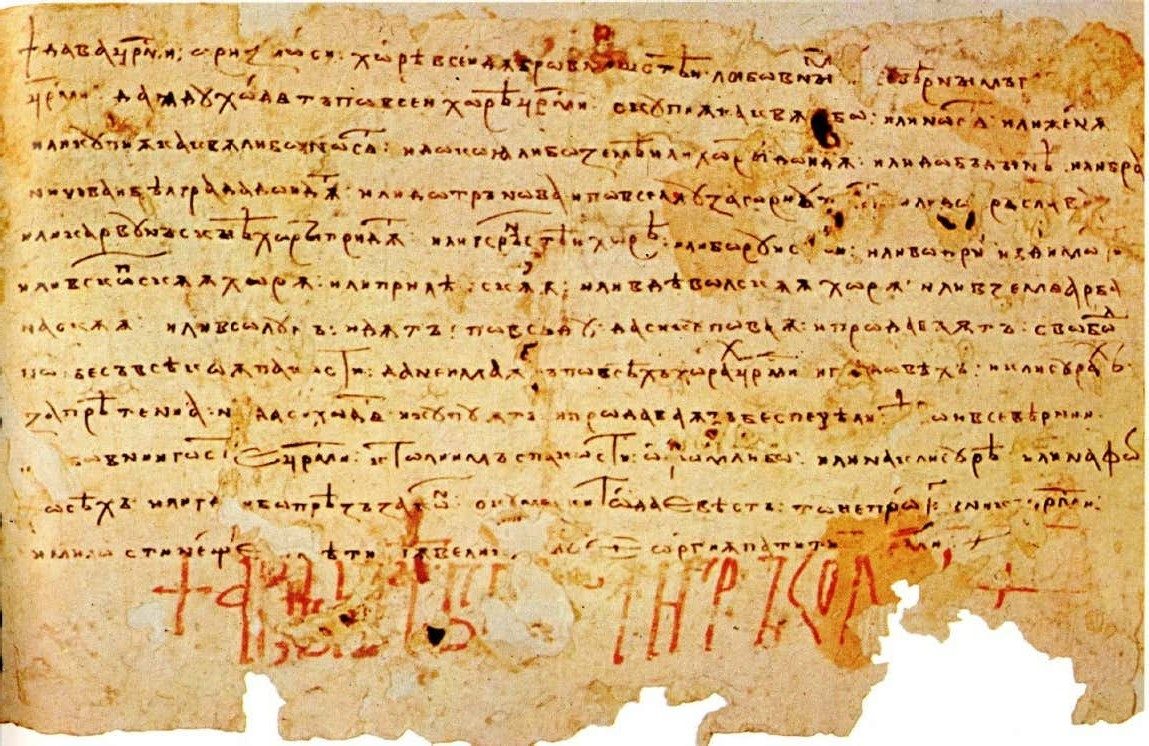
A grant of free trade throughout the empire to the merchants of Dubrovnik — the oldest surviving Bulgarian commercial charter.

The object

Dubrovnik Charter of Ivan Asen II — The charter
The charter
Dubrovnik Charter of Ivan Asen II — The charter
The charter

Text and translation

The second man in the empire

Original — Middle Bulgarian

вѣсногѡ севастократора господїа Петра … по вьсеи хѡрѣ блъгарстѣи

Translation

of the faithful sebastokrator lord Petar … throughout the whole Bulgarian land

Note: The charter names the tsar's brother-in-law as sebastokrator throughout, his name standing beside the ruler's, with his own lands and people — which is why he is read as the second man in the state and probably regent for the young Michael II Asen. The phrase хѡра is used here both for a whole realm and for a district within it.

Why it matters

The charter names the roads. In granting Ragusan merchants freedom to trade "throughout my empire", Ivan Asen II lists the lands they may pass through — and that list is one of the few direct statements of how far Bulgarian authority actually reached after Klokotnitsa.

It is also the earliest evidence of Bulgaria as a party to Adriatic commerce rather than a hinterland of it.

Further information

It is the document in which the term хора is clearest, used both for a whole state — the republic of St Blaise, or Bulgaria — and for a district within the empire. The Albanian land appears alongside the хори but is named by its people rather than by its chief town.

Issued to the Ragusan merchants just after Klokotnitsa (1230), when Odrin, Thessalonica and Albania had come under Bulgarian rule; in Byzantine diplomatic terms it is a lesser act, an orismos (prostagma) rather than a full chrysobull. Its list of provinces is in effect a map of the empire at its widest extent. The signature — “tsar of the Bulgarians and the Greeks” — is the second surviving use of that title, matching the Vatopedi charter. The parchment stayed in the Dubrovnik archive until it vanished in 1817; it resurfaced and was given to the Russian Academy of Sciences in St Petersburg in 1836, where it remains.

The whole document

Read the full charter

Free trade across the realm

My empire grants this decree to the land of Dubrovnik, to the beloved and all-faithful guests of my empire, that they may travel throughout the whole land of my empire with any goods whatsoever — to bring in, take out, or carry any goods, and come to any land or district: whether they come to Vidin, or Braničevo and Belgrade, or go to Tarnovo and all Zagorie, or reach Preslav and the Karvuna district, or the Krăn district, or the Boruy district, or Odrin and Dimotika, or the Skopje district, or Prilep, or the Devol district, or the Albanian land, or go to Thessalonica — everywhere let them buy and sell freely, without any loss, and be under no ban throughout all the districts of my empire, in the towns and at the mountain passes, but travel and buy and sell without care, as the all-faithful and beloved guests of my empire.

Sanction and signature

And whoever harms them in anything, at the passes, at the markets, or wherever it may be, against the law of trade — let it be known that he is an adversary of my empire and will have no mercy, but will suffer the great wrath of my empire. “Asen, tsar of the Bulgarians and the Greeks.”

В. Начев, „Български царски грамоти“ (1996) · by permission

Places named

Show the places named (16)
Vidin
Today: Vidin
Braničevo
the district on the Danube, west of Vidin
Belgrade
Today: Belgrade
Tarnovo
Today: Veliko Tarnovo, the capital
Zagorie
northern Bulgaria — the old Moesia
Preslav
Today: Preslav, the old capital
the Karvuna district
southern Dobrudzha, around Balchik
the Krăn district
around Kazanlak
the Boruy district
Today: around Stara Zagora (medieval Beroe/Boruy)
Odrin
Today: Edirne (Adrianople)
Dimotika
Today: Didymoteicho
the Skopje district
Today: around Skopje
the Prilep district
Today: around Prilep
the Devol district
south-west of Ohrid, on the Devol river
the Albanian land
the Albanian lands as far as Durrës
Thessalonica
Today: Thessaloniki

Offices and terms

Show the offices and terms (2)
orismos (prostagma)
A ruler's ordinance or decree — the “povelya,” below a chrysobul in solemnity; the Dubrovnik charter is of this kind.
kumerk
A customs duty or market toll.

Description

Date
1230
Language
Middle Bulgarian
Material
Parchment
Held at
State Archives of Dubrovnik
Place
Dubrovnik

Connections

Ivan Asen II