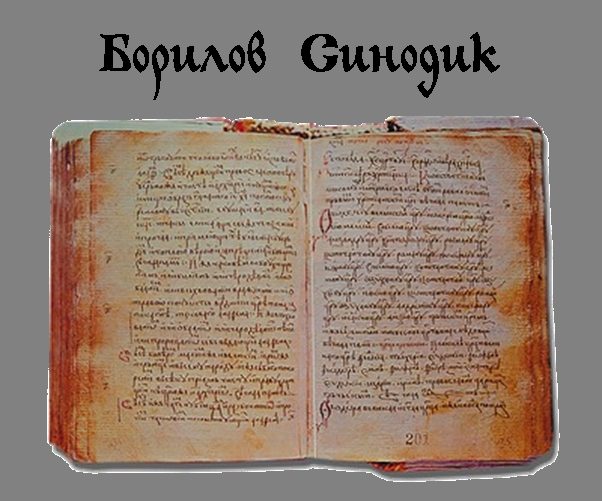
The opening rubric: the Sunday of Orthodoxy
§§ 1–9The Synodikon opens not as a book to be read but as a service to be performed. The rubric sets it on the first Sunday of Great Lent — the Sunday of Orthodoxy — when the whole text was chanted aloud in the patriarchal church of Tarnovo before the assembled court and clergy. Everything that follows is shaped by that: the anathemas are sentences pronounced, the commemorations are names called out, and the acclamations are sung to a living tsar standing in the church.
The inherited anathemas, translated from the Greek
§§ 10–108By far the longest run of the document, and the least Bulgarian: a translation of the Byzantine Synodikon of Orthodoxy, taken over more or less whole. It condemns the iconoclasts first, then works back through the old christological heresies — Arius, Nestorius, Eutyches, Severus — and forward into the Constantinopolitan disputes of the eleventh and twelfth centuries, John Italos and his pupils among them. Each condemnation ends in the same word, repeated three times.
The council of Tarnovo against the Bogomils, 1211
§§ 109–110 · Drinov copy, f. 203aHere the document stops being a translation and becomes a Bulgarian one. Tsar Boril convened a council in Tarnovo in February 1211, and its record was written into the Synodikon at the point where the borrowed anathemas leave off: the tsar presiding, the clergy assembled, the Bogomils summoned, questioned and condemned. It is the reason the whole compilation carries Boril's name, and it is the single fullest Bulgarian account of the heresy from inside Bulgaria. The passage reaches back to the movement's beginning under Tsar Peter, and turns the founder's name against him in a pun that has followed him ever since.
Original
тѣхъ благочьстивѣйши црь Бориль, възниче ıако нѣкое трьнїе злое
трьклетаа и богомрьзскаа богомилскаа ересь, еюже началникь
ıависе тогда скврьнѣишїи попь Богомиль съ своими оученикы,
ıакоже иногда Анны и Амврїи, иже Мѡѵсеѡвы противещесе,
иже ıакоже нѣцїи вльцїи тежцїи нещедно расхыщаахѫ Хво стадѡ,
за негоже крьвь свою пречистоую излїа.
Сїихь оубо ıако оувѣдѣ благочьстивѣишїи црь Бориль, божьствныимь
желанїемь раждегсе, посла събрати ихъ по въсеи области своеи
ıако нѣкы плѣвели въ снопи, и повелѣ сънитисе събороу.
Translation
In the days of that most pious tsar Boril there sprang up, like some evil
and thrice-accursed thorn, the God-hated Bogomil heresy, whose founder
was revealed to be the most defiled priest Bogomil with his disciples —
as once Jannes and Jambres set themselves against Moses —
who like grievous wolves plundered without mercy the flock of Christ,
for which he shed his most pure blood.
When the most pious tsar Boril learned of these things, he was kindled
with divine zeal, and sent to gather them out of all his realm
as tares are gathered into sheaves, and commanded a council to convene.
The restoration of the patriarchate, 1235
§ 113 · Palauzov copy, f. 30aThe second Bulgarian insertion, and the one with the most riding on it. After Klokotnitsa the Bulgarian church needed its rank recognised, and the Synodikon copies out the correspondence that secured it — the letter of the Greek emperor to the eastern patriarchs asking that Tarnovo be granted a dignity equal to their own. The passage is why the church of the Ascension in Tarnovo could call itself the mother church of the Bulgarian tsardom, and it records Ivan Asen II being addressed by Constantinople as an equal and a kinsman.
Original
еже нарещи и даровати равнаго вамь степене патрїарьшьскаго
Трънова града цркви, Възнесенїа Христова,
матере црквамь блъгарскаго царства.
Зане и христолюбивыи царь блъгарскыи Іѡаннь Асѣнь,
брать царства ми и сватъ, ѿ нашего же царства
и вашего ѿчьства стго, то желаеть велми даровати сѧ царствоу егѡвоу.
Translation
that you name and grant a rank equal to your own — the patriarchal dignity —
to the church of the city of Tarnovo, the church of the Ascension of Christ,
mother of the churches of the Bulgarian tsardom.
For the Christ-loving tsar of the Bulgarians, Ivan Asen,
brother of my empire and my kinsman by marriage, greatly desires
that this be granted to his realm by our empire and by your holy fatherhood.
The commemoration of the tsars
§§ 113–116 · Palauzov copy, f. 31bThe section the Synodikon is actually consulted for. The rulers of Bulgaria are called out in order, each with his title and the formula of remembrance: Boris-Michael who received the baptism, Symeon, Peter, Samuel, then the long gap of Byzantine rule, then Peter and Asen who ended it, Kaloyan, Ivan Asen II, and on down through the Asenids to the Shishmanids. The list was extended by later hands as later tsars died, which is why it is also a rough chronology of the dynasty.
Original
…и рѫкописанїемь Германа патрїарха, и въсѣхь епкпь въсточныихь
рѫкописанїе свое положивше, въ сиггили печатлѣвше, въдашѫ
благочьстивомоу црю, и патрїархоу новосщенномоу тогда Іѡакимоу,
въ вѣчное поминанїе и неѡемлемо. Сего ради оубо въ семь православи
въписахѡмь сїа, на оувѣдѣнїе послоушаѫщїихь, и въ памѧть
блъгарскомоу родоу. Семоу Іѡанноу Асѣню великомоу и благочьстивомоу
црю въсѣмь блъгарѡмь, вѣчнаа моу памѧть.
114. Калиманоу благовѣрномоу црю, и Михаилоу братоу его,
Дамари и Еленѣ дѣтемь благочьстивыимь великаго царѣ Асѣнѣ,
вѣчнаа имь памѧть.
115. Алеѯандроу севастократороу братоу великаго царѣ Асѣнѣ,
и Стрѣзю севастократороу, и Славоу деспотю, вѣчнаа имь.
116. Кѡнстантіноу благочьстивомоу и православномоу црю наше…
Translation
…and by the signature of the patriarch German, and all the eastern bishops
having set down their own signatures and sealed them in a sigillion, they gave it
to the pious tsar and to Joachim, then newly consecrated patriarch,
for eternal remembrance, not to be taken away. For this reason we have written
these things into this book of Orthodoxy, for the knowledge of those who hear,
and in memory of the Bulgarian people. To this Ivan Asen, great and pious
tsar of all the Bulgarians — eternal memory to him.
114. To Kaliman, the faithful tsar, and to Michael his brother,
and to Damar and Elena, the pious children of the great tsar Asen —
eternal memory to them.
115. To Alexander the sebastokrator, brother of the great tsar Asen,
and to Strez the sebastokrator, and to Slav the despot — eternal memory to them.
116. To Konstantin, the pious and Orthodox tsar, our…
The commemoration of the tsaritsas
§§ 124–128 · Palauzov copy, ff. 35a–35bThe same formula in the feminine, and the most valuable few lines in the entire document. Medieval Bulgarian narrative sources barely name the women of the ruling house; charters name them only when they happen to be co-issuing. This list names them outright, with their rank and their kinship — which wife, whose mother, whose daughter. Kera Petritsa is known to be Ivan Alexander's mother because this list says so.
Original
124. Кера Тамари, дъщери великаго царѣ Іѡанна Алеѯандра, великои гжи,
ѡбрѫчници же сѫщи великаго амирѫ Амоурата, ѡданѣ же бывши за нь
рода ради блъгарскаго. Она же тамо шедши и вѣрѫ православнѫѫ съхраньши,
и родь свои свобождьши, и добрѣ и благочьстивѣ поживши,
и съ мирѡмь скончавшисѧ, вѣчнаа памѧть.
125. Гжи Десиславѣ и гжи Василиси, дъщерѣмь великаго царѣ
Іѡанна Алеѯандра, вѣчнаа памѧть.
126. Кїра Марїи, благочьстивѣи царици великаго царѣ Іѡанна Шишмана,
вѣчнаа памѧть.
127. Гжи Десиславѣ, матери благочьстивыѧ царицѧ Марїѧ великаго царѣ
Іѡанна Шишмана, нареченнѣи въ аггелскомь ѡбразѣ Девора, вѣчнаа памѧть.
128. Керации, дъщери великаго царѣ Іѡанна Шишмана, вѣчнаа памѧть.
И сноу его Асѣню, и дроугомоу егѡ сноу Асѣню,
и прочиимь оумершиимь чадомь егѡ, вѣчнаа.
Translation
124. To Kera Tamara, daughter of the great tsar Ivan Alexander, the great lady,
who was betrothed to the great emir Murad and was given over to him
for the sake of the Bulgarian people. And she, having gone there and kept the Orthodox faith,
and set her kin free, and lived well and piously,
and died in peace — eternal memory.
125. To the lady Desislava and the lady Vasilisa, daughters of the great tsar
Ivan Alexander — eternal memory.
126. To Kira Maria, the faithful tsaritsa of the great tsar Ivan Shishman —
eternal memory.
127. To the lady Desislava, mother of the faithful tsaritsa Maria of the great tsar
Ivan Shishman, named Deborah in the angelic habit — eternal memory.
128. To Keratsa, daughter of the great tsar Ivan Shishman — eternal memory.
And to his son Asen, and to his other son Asen,
and to the rest of his children who have died — eternal memory.
The metropolitans of the Bulgarian sees
§§ 150–156 · Palauzov copy, ff. 37a–39aNot a single succession but seven of them, one per see — Preslav, Cherven, Lovech, Sredets, Ovech, Dristra, Serres — each a bare column of names in order. Dry as it looks, this is the closest thing we have to an administrative map of the Bulgarian church: it shows which cities held metropolitan rank and roughly how deep each succession ran. A line after the Dristra list states the point of the whole exercise, that these men stood under the patriarchate of Tarnovo in the days of tsar Asen — a claim of jurisdiction, entered into the liturgy so it would be read aloud every year.
Original
150. Митрополіте прѣславстіи: Стефань, Димитріе, Львь, Григоріе,
Герасимь, Аарѡнь, Мелетіе, Макаріе, Сава, Дорѡдеи, Висаріѡнь, Макаріе.
151. Митрополіте чрьвенѣнстіи: Неофить, Калиникь, Захарїа.
152. Митрополіте ловечьстіи: Логгінь, Мелетіе, Кѵпріань, Сѵмеѡнь, и дроугыи Сѵмеѡнь.
153. Митрополіте срѣдечьстіи: Діонисіе, Дамїань, Леѡнтіе, Дометіань, Пардѣніе.
154. Митрополіте ѡвечьстіи: Θеостирикть, Лазарь.
155. Митрополіте дрьстерстіи: Кѵриль, Аверкіе, Деѡдоуль, Іѡсифь, Діонисіе, Калїникь.
А ѫже хощемь помѣнѫти нинѣ митрополіты, сїи бѣшѫ
при благочьстивѣмь цри Асѣни подь ѡбластїѫ трьновскыѫ
патрїархїѫ, иже и тогда почишѫ.
156. Антѡніе, Данїиль, митрополите сѣрьстіи, вѣчнаа имь памѧть.
Translation
150. Metropolitans of Preslav: Stefan, Dimitrie, Lev, Grigorie,
Gerasim, Aaron, Meletie, Makarie, Sava, Dorotheus, Bessarion, Makarie.
151. Metropolitans of Cherven: Neophyte, Kallinikos, Zachariah.
152. Metropolitans of Lovech: Longinus, Meletie, Kyprian, Symeon, and another Symeon.
153. Metropolitans of Sredets: Dionysius, Damian, Leontius, Dometian, Parthenius.
154. Metropolitans of Ovech: Theostyriktos, Lazar.
155. Metropolitans of Dristra: Kyril, Averkie, Theodoulos, Joseph, Dionysius, Kallinikos.
And those metropolitans whom we wish now to commemorate, these were
in the days of the pious tsar Asen under the jurisdiction of the Tarnovo
patriarchate, and in that time they died.
156. Antonios, Daniel, metropolitans of Serres — eternal memory to them.
The commemoration of the despots and the boyars
§§ 129–138 · Palauzov copy, ff. 33a, 36aBelow the throne: court officers, provincial commanders and boyars, most of them named nowhere else. The titles are as revealing as the names — epikernios, protosebastos, protokeliot, primikyrios, voivode — a working index of what the Tarnovo court actually had in it. Several entries give a man his monastic name alongside his lay one, the sign of a career that ended in a cell. The first two entries are in a different hand and mention a voivode of Wallachia who lived in the sixteenth century: the book was still being written in long after the state that began it had gone.
Original
129. Дѡмцѣ, тѫща великаго Іѡана Нѣгоѫ воивода влахииского, вѣчнаа еи памѧть.
130. Зѡѫ Лодетицѧ, вѣчнаа еи памѧть.
131. Мѡнахоу Сілвестроу, иже бы епикерни великааго царѣ Іѡанна Алеѯандра, вѣчнаа памѧть.
132. Мѡнахоу Деѡсіоу, иже бы протосеваст великааго царѣ Іѡанна Алеѯандра, вѣчнаа.
133. Протокелїотиноу Проданкоу, вѣчнаа.
134. Протокелїѡтиноу Приѣздѣ, и воеводѣ Балдю,
иже оубїени бышѫ за вѣры гна своего, вѣчнаа памѧть.
135. Цамблакоу великомоу примикюрю, вѣчнаа.
136. Великомоу воевѡдѣ Кѡнстантіноу, иже Деѡдоуль наречень бы
въ мнишьскомь ѡбразѣ, вѣчнаа памѧть.
137. …дѣтю великомоу Дѡбрѡмироу, наре[че]нномоу въ мнишьскомь ѡбразѣ Дорѡ…,
вѣчнаа моу памѧть.
138. Арсенїоу архїепкпоу Кѡнстантінѣ града и въселенскомоу патрїархоу,
и новопроповѣдникоу, вѣчнаа.
Translation
129. To Domtsa, mother-in-law of the great Ioan Neagoe, voivode of Wallachia — eternal memory to her.
130. To Zoa Lodetitsa — eternal memory to her.
131. To the monk Silvester, who was cup-bearer to the great tsar Ivan Alexander — eternal memory.
132. To the monk Theosius, who was protosebastos of the great tsar Ivan Alexander — eternal memory.
133. To the protokeliot Prodanko — eternal memory.
134. To the protokeliot Prijezda, and to the voivode Baldyu,
who were slain for the faith of their lord — eternal memory.
135. To Tsamblak, the great primikyrios — eternal memory.
136. To the great voivode Konstantin, who was named Theodoulos
in the monastic habit — eternal memory.
137. …to the great […] Dobromir, named in the monastic habit Doro…,
eternal memory to him.
138. To Arsenios, archbishop of the city of Constantine and ecumenical patriarch,
and new preacher — eternal memory.
The late additions: the Turkish wars and the neighbours
§§ 167–174 · Palauzov copy, f. 40aThe Synodikon went on being written in, and the last Bulgarian layer is the bleakest. Under Ivan Alexander two further councils had been entered — one condemning Barlaam and Akindynos, which puts Bulgaria on the hesychast side of the great Byzantine quarrel of the 1340s, and the council of 1360 in Tarnovo against the Judaizers. What comes after them is not doctrine but casualties: men commemorated for having fought the Turks and died doing it, followed by a bare column of names with no titles at all. Then the neighbours appear — Serbian kings, a despot killed at the Maritsa, Moldavian lords — the commemoration widening as Bulgaria itself contracts.
Original
167. Семироу, Іѡнчю, Добромироу, Иванышоу, и въси елици съ ними
мѫжьствовавше на безбожныѫ тоуркы, и крьвь своѫ пролїашѫ
по православнѣи вѣрѣ христїанстѣи, вѣчнаа.
168. Арцѣ, Трошаноу, Ратеноу, Карачю братоу моу, Потрьцѣ, Ханкоу,
Станоу, Михаилоу, Богданоу, Шишманоу, Батоулоу, Радославоу,
Воисилоу, Кѡнстантіноу, Годеславоу, Чрьноглавоу.
169. Стефаноу новосщенномоу великомоу Оурѡшоу кралю, вѣчнаа памѧть.
170. Влькашиноу кралю, вѣчнаа памѧть.
171. Деспотю Оуглешоу, вѣчнаа памѧть.
172. Стефаноу мѫлдѡскомоу гпдароу, вѣчнаа памѧть.
173. Іѡ Пѣтроу молдовскомоу гпдароу, вѣчнаа памѧть.
174. И гпожѫ его Елѣнаа и чеда и, вѣчнаа паметь.
Translation
167. To Semir, Ionchyu, Dobromir, Ivanysh, and all those who with them
fought manfully against the godless Turks, and shed their blood
for the Orthodox Christian faith — eternal memory.
168. To Artsa, Troshan, Raten, Karachyu his brother, Potrutsa, Hanko,
Stan, Michael, Bogdan, Shishman, Batul, Radoslav,
Voisil, Konstantin, Godeslav, Chernoglav.
169. To Stefan, the newly consecrated great king Uroš — eternal memory.
170. To king Vukašin — eternal memory.
171. To the despot Uglješa — eternal memory.
172. To Stefan, lord of Moldavia — eternal memory.
173. To Io Petru, lord of Moldavia — eternal memory.
174. And to his lady Elena and their children — eternal memory.
How the manuscript ends
§ 176 · Palauzov copy, f. 32b — the last pageA synodikon of the Byzantine type normally closes by turning from the dead to the living, acclaiming the reigning tsar and patriarch standing in the church. This one does not — or rather, we cannot know whether it did. The Palauzov copy breaks off in the middle of an anathema against those who trample icons, practise sorcery, revile the clergy and defile churches, the leaf damaged so badly that Popruzhenko could only mark the gaps with dots. The last word to survive intact is the sentence itself, written larger than anything around it: ANATHEMA. It is an accident of preservation rather than a design, but it is how the document reaches us — a book of remembrance whose final legible word is a curse.
Original
…икѡнѫ прѣчистыѫ Бцѫ поправшїихь, и влъхвованїа
различнаа показавшихь, и архїереѫ и сщенникы и инѡкы хоул
ми различными ѡблѫживьшїихь, и сщенныѫ црк[ви]
ѡпоганившї[ихь] … вѡтворѫщїи крьтъ …
имже знаменани быхѡм … днь избавленїа, и ина мн[ога] …
безчинїа показавшихь …
АНАѲЕМА
Translation
…those who have trampled the icons of the most pure Mother of God, and displayed
sorceries of many kinds, and slandered bishops and priests and monks
with revilings of every sort, and defiled the holy churches
… who make the cross …
with which we were sealed … the day of deliverance, and many other …
disorders they have shown …
ANATHEMA
The Synodikon is not one text but a stack of them, laid down over roughly two centuries and running to some 180 numbered sections. What follows is a walk through the whole of it in order: what each run of the document does, with the original text where we have transcribed it. Transcriptions are made from M. G. Popruzhenko, Sinodik carja Borila (Bulgarski starini VIII, Sofia: Bulgarian Academy of Sciences, 1928), which prints both the Palauzov and the Drinov copies; the folio and page are given with each passage. Abbreviations written with titla in the manuscript are expanded silently. Translations are our own.