
1.Development and Influence on Church Painting in the Bulgarian Lands during the 11th–14th Centuries
In the Second Bulgarian Empire (13th–14th centuries), there are no clear political and economic differences that would influence the development of church painting. Around the middle of the second half of the 14th century, Hesychasm, an official movement within Eastern Orthodox Christianity, introduced changes in the thematic approach of church painting. The 13th–14th century period in the Second Bulgarian Empire is regarded as a subperiod in the development of painting, with technique, expressive means, and stylistic features remaining unchanged throughout this time.
2.Church Painting in the Lands of the Second Bulgarian Empire during the 11th and 12th Centuries
In the 11th and 12th centuries, in the lands that at that time were under Byzantine rule, numerous churches were constructed, decorated with frescoes commissioned by high-ranking Byzantine officials—ktitors (patrons)—who were often relatives of the emperors. Among the most significant monuments of church painting from this period are the ossuary of the Bachkovo Monastery, built in 1083 by the Georgian ktitor Gregory Pakuriani, and the Church of St. Panteleimon near the village of Nerezi in the Skopje region, dated to 1164. These monuments are among the few whose frescoes have survived to the present day, although most of them are heavily damaged and defaced. Although the number of frescoes from the 11th and 12th centuries was much greater, today they are preserved mainly in the southern and southwestern Bulgarian lands, while in the northeastern and northwestern regions there are no preserved churches or frescoes from this period due to political instability and barbarian raids, which made the continued use of Christian temples impossible.
In Tarnovgrad, which was a fortified city, monuments of church painting from the 11th and 12th centuries have also survived. Among them are the frescoes in the Church of St. Demetrius and in the churches on the Trapezitsa hill. In Sofia, frescoes are preserved in the Church of St. George, and in Ohrid—in the Church of St. Sophia. In Kostur, Macedonia, basilicas with surviving frescoes dated between 1170 and 1180 have been discovered. The Old Boyana Church also possesses frescoes from the 11th century, which are among the earliest preserved examples of church painting in the region.
The ossuary of the Bachkovo Monastery represents a particularly valuable monument. It is two-storied, with well-preserved frescoes both in the main part and in the narthex. Although the frescoes in the ossuary are heavily damaged in places due to the collapse of the central part of the roof and the presumed tower above the narthex, they demonstrate exceptional craftsmanship. The modeling of the human bodies features elongated proportions, but the images of the saints are rigid and lifeless. The works are the creation of Georgian artists, which is also confirmed by the Greek-language inscriptions that contain numerous errors. In the narthex of the ossuary, the scene of the "Last Judgment" is depicted, and in the apse of the tomb—the "Deesis" with medallion images of saints beneath it. On the western wall of the naos is depicted the "Vision of the Prophet Ezekiel," and along the long walls of the main part of the tomb are arranged partial scenes, organized according to the established order. These details testify to a complex and rich iconographic program characteristic of church painting from this period.
3.The Wall Paintings in the Churches of the Second Bulgarian Empire
The technique used for the frescoes in the 11th and 12th centuries is fresco painting, which involves painting on a wet wall. The paint is dissolved in water and penetrates deeply into the lime plaster, making fresco wall paintings very durable. This technique requires quick and difficult execution, as the painting must be completed before the plaster dries. This method was widely used in church painting of the Second Bulgarian Empire and contributed to the longevity of the examples preserved to this day.
4.Technique and Canons in Church Painting of the Second Bulgarian Empire
During the period of the Second Bulgarian Empire, church painting was primarily executed using the fresco technique, which had both its advantages and limitations. This technology involved applying pigments onto wet plaster, which ensured the durability of the murals, as the paints penetrated deeply into the base and were not easily worn away. However, the expressive means in fresco were quite limited – mainly line and partial hatching were used, and shading was attempted through cross-hatching to convey volume. Light and shadow effects and half-tones were not applied, resulting in a linear and flat depiction of figures. Corrections of mistakes during the application of colors were not possible and were not made; therefore, the initial sketching of the contours was of key importance and was usually carried out by a more experienced master, while the application of the paints was entrusted to a younger and less experienced painter.
5.Church Painting in Bulgaria during the 13th–14th Centuries
The lunettes above the entrance to the naos in the church of the "Holy Forty Martyrs" contain images of St. Anna and St. Elizabeth, who are depicted as nursing mothers—a motif that emphasizes motherhood and holiness. These details reveal both rich symbolism and innovative approaches in the depiction of holy figures during this period.
Besides in Tarnovo, surviving frescoes from the 13th–14th centuries can be seen in the church of the Zemen Monastery, in the chapel on the fifth floor of a tower in the Rila Monastery, in the church near the village of Berende, and in the church near the village of Kalotino in the Sofia region, as well as in the church of "Sts. Peter and Paul" in Veliko Tarnovo. Some of the churches on the Trapezitsa hill in Tarnovo and the rock churches along the Rusenski Lom River also possess frescoes from this period. These monuments demonstrate the diversity and distribution of church painting in various parts of the Second Bulgarian Empire.
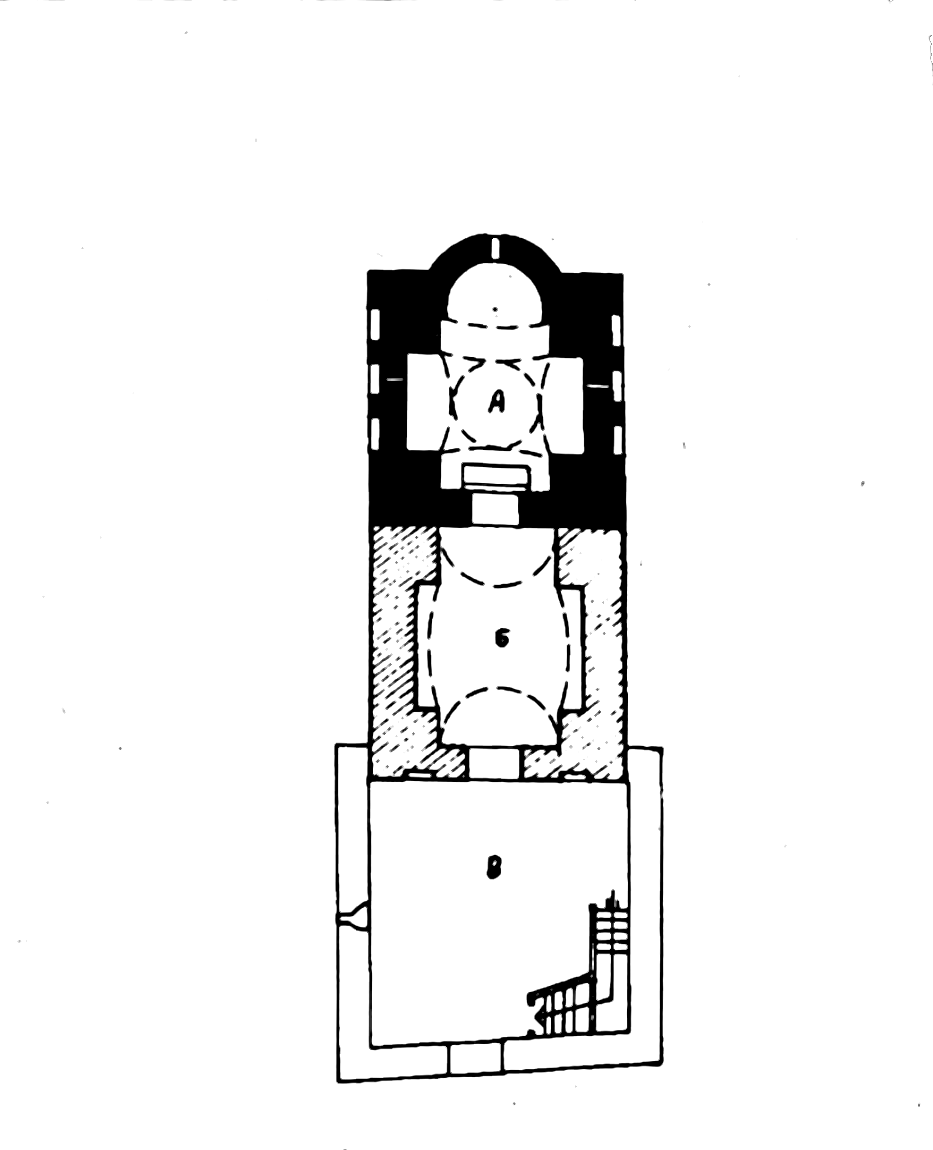
In the mid-14th century, a funerary structure was added to the western side of the church of the "Holy Forty Martyrs," in which partially preserved fresco scenes remain. Their schematic arrangement resembles that of the frescoes on Trapezitsa hill—in the lower part there is a depiction imitating a marble plinth, and above it a band of images of saints. This method of compositional arrangement is characteristic of Bulgarian church painting from this period and reflects both traditions and new artistic trends in the depiction of holy figures and scenes.
6.The Wall Paintings in the Churches of the Second Bulgarian Empire
On the long walls of the naos, scenes depicting Christ from the Nativity to the Resurrection are portrayed. The southern wall of the naos presents scenes from the childhood and youth of Christ, while the northern wall depicts scenes of Christ's Passion. The arrangement of the scenes on the southern and northern walls breaks with the traditional canon, which is an original and creative expression by the master, demonstrating an innovative approach in the church painting of the Second Bulgarian Empire.
7.Church Wall Painting and Iconography in the Temples of the Second Bulgarian Empire
Significant wall paintings can also be found in the church of the Zemen Monastery, where well-preserved scenes of the "Deesis" are located in the apse, depicting Christ Pantocrator in the dome, surrounded by twelve archangels, and beneath them – twelve prophets. In the naos of this church, the arrangement of scenes characteristic of the period is also observed, with a low socle at the bottom and rich iconography that contributes to the understanding of the spiritual and artistic life during the Second Bulgarian Empire.
The military saints, depicted in church painting, are shown with spears, swords, chainmail, and armor, while canonized saints such as Constantine and Helena also occupy an important place in the iconographic cycle. In connection with the feasts related to Christ, ten military saints are painted, who are venerated during the Christian holidays, emphasizing the role of military valor and holiness in medieval Bulgarian spirituality.
8.Zemen and Other Wall Paintings from the Second Bulgarian Empire
The wall paintings near the village of Berende, Sofia region, represent a local transcription of the official painting style, enriched with new features that are important for the future of medieval Bulgarian mural art. These works contribute to the understanding of the development of ecclesiastical painting during the Second Bulgarian Empire and demonstrate the diversity and richness of artistic traditions in different regions of Bulgaria.
9.The Wall Paintings and Mosaics in the Churches of the Second Bulgarian Empire
The small single-nave churches, probably cemetery churches, located on the left bank of the Nishava River, are constructed from rubble stones and appear unremarkable from the outside, but inside they are well preserved and richly decorated with wall paintings. These churches have a single semicircular apse, and the frescoes are found both inside and on the exterior of the western wall. One of the images painted on the western wall bears the inscription "Ioan Asen, in Christ God, the faithful tsar and autocrat of all Bulgarians," which is likely part of the genealogical tree of the Asen dynasty. The frescoes are dated approximately to the first half of the 14th century, though with uncertain precision, and are associated with the time of Tsar Ivan Asen II (1218–1241).
The interior decoration of these churches includes scenes such as the "Annunciation," the "Ascension," the "Sleeping Christ Emmanuel (The Vigilant Eye)," and the "Dormition of the Theotokos." Particularly impressive is the "Dormition of the Theotokos" scene, which occupies the entire western wall of the naos. Due to the small wall surfaces, some religious narratives are incompletely represented, for example, the "Passion of the Lord." In some scenes, such as the "Way to Golgotha" and the "Laying in the Tomb," mandatory canonical figures are missing. Nevertheless, some scenes are depicted strictly according to canon, while others include realistic elements and compositional independence.
On the Trapezitsa hill in Veliko Tarnovo, churches numbered 6, 10, 11, and 14 have been discovered with partially preserved frescoes created in the style and technique of the 13th–14th centuries. The tradition of painting Christian temples is also observed here: the lowest parts of the walls are covered with a low socle, the apse features drapery with various ornaments, and along the long walls there is an imitation of marble cladding made of rectangular and square slabs. These slabs are decorated with inscribed circles or rhombuses of a different color. Above the socle, full-length saints are depicted, of which only the lower parts have survived. Most of the saints are military figures, portrayed with battle armor and weapons, while among them there are figures in tunics and other clothing, likely monks and boyars. The weapons and armor, such as spears, swords, shields, and chainmail, are identical to those of the Bulgarian army from the 13th–14th centuries. The frescoes of Trapezitsa have been studied by V. Dimov, N. Mavrodinov, and other specialists.
Archaeological excavations in the churches have uncovered numerous multicolored smalt cubes, some of which are gilded. These cubes were probably used for mosaic panels on the walls and domes of the churches. The mosaics diversify the interior decoration and likely depict images of boyars or ktitors—donors and patrons of the churches. This type of decoration contributes to the richness and variety of church painting and architectural ornamentation in the Second Bulgarian Empire.
10.The Mural Tradition and Hermit Complexes in the Tarnovo Painting School
On the Trapezitsa hill in the city of Veliko Tarnovo, partially preserved murals have been discovered, representing an important decorative system characterized by technique, expressive means, and stylistic features from the 13th and 14th centuries. These murals are part of the Tarnovo painting school, which originates from and spreads out of Tarnovgrad. The icon painters (зографи), trained in Tarnovgrad and the surrounding monasteries, are bearers of this artistic tradition, distinguished by certain stylistic peculiarities and technical methods.
During the 13th and 14th centuries in Bulgaria, there was an expansion of hermitage, leading to the creation of numerous hermit complexes that include churches, chapels, and cells carved into the rocks. These complexes are located around the Rusenski Lom River in the area of the village of Ivanovo, along the Iskar River near the village of Karlukovo, on the Madara Plateau, and in other places in Northeastern Bulgaria. The monastic establishments were financed by Tarnovo tsars and boyars, which is reflected in the donor portraits and names depicted in the rock churches near the village of Ivanovo.
The murals near the village of Ivanovo are poorly preserved due to climatic conditions and human interference, yet they remain monuments of national and international significance. Researchers such as K. Shkorpil, N. Mavrodinov, and A. Vasiliev have worked on their study. Dating the Ivanovo murals is difficult and varies between the late 12th and 14th centuries, as they were not created simultaneously and there is a lack of precise dating material. Donor portraits are not a reliable criterion for dating, since they were often added later to mark the provision of funds or monastic rank.
The rock churches near the village of Ivanovo are grouped into complexes with names such as Gospodev Dol, Pismata, the Baptistery, the Buried Church, the Collapsed Church, and the Church with the Chapel. The Church complex is the best preserved and represents a rock church with a narthex, dated to the 13th century. The murals in this complex are executed in tempera technique, painted on dry plaster, and include scenes arranged in small rectangular fields, set in rows of three in the naos and two in the narthex.
The decorations in the Church complex include draperies along the lower parts of the walls, characteristic of medieval Bulgarian churches from the 13th century and similar to those in the churches on Trapezitsa hill in Veliko Tarnovo. Above the draperies is a band with full-length saints, and above the saints is a register with Gospel scenes. The preserved scenes in the naos include the Annunciation, the Baptism, the Entry into Jerusalem, Pilate Washing His Hands, Judas Returning the Silver Coins, and the Hanging of Judas.
11.The Mural Tradition and Artistic Features in the Churches of the Second Bulgarian Empire
In the northern part of the narthex in some churches from the period of the Second Bulgarian Empire, a donor portrait of Tsar Ivan Alexander has been preserved, depicting him presenting to the Virgin Mary a model of a church in the form of a rock upon which two buildings are depicted. These images are part of the tradition of portraying church donors in murals, symbolizing their gratitude and spiritual connection to the temple. Numerous donor portraits from the time of Ivan Alexander (1331–1371) have been preserved, attesting to the development of church construction and decoration during this period, when they reached a significantly higher artistic level.
12.The Tarnovo Painting School and the Tempera Technique in Church Painting of the Second Bulgarian Empire
Church painting in the 13th and 14th centuries within the framework of the Second Bulgarian Empire is characterized by the use of the tempera technique on dry walls. Tempera consists of paints dissolved in an egg-white emulsion, which allows for calm and deliberate work. This technique enables a variety of colors, the use of different expressive means such as line, strokes, half-tones, and chiaroscuro, as well as the correction of mistakes during painting. Nevertheless, tempera murals are less durable, as the upper painted layer is easily damaged by wiping and is highly susceptible to moisture, leading to poorer preservation of the works.
The tempera technique also allows for the application of perspective, expressed through the depiction of figures in space, creating a sense of movement and life. This is an important expressive device that contributes to a more realistic and dynamic portrayal of biblical scenes. Although from a socio-economic standpoint dividing the painting of the 13th and 14th centuries is not justified, stylistic distinctions between the two periods can serve for periodization and are mainly noticeable to specialists.
All murals from this period were created by Bulgarian masters belonging to the Tarnovo painting school. This school developed and underwent external influences over time, while preserving the same tempera technique and expressive means. Characteristic features of the Tarnovo school include the individualization of the images of saints, Christ, and the Virgin Mary; the insertion of realistic elements in evangelist scenes; the painting of everyday life scenes; and the depiction of donor (ktitor) portraits. Among the well-known donor portraits are those of the sebastokrator Kaloyan and Desislava, despot Dejan and his wife Doya, as well as Tsar Ivan Alexander in the narthex of the ossuary of the Bachkovo Monastery. Portraits of historical figures such as Tsar Konstantin and Tsarina Irina can be seen in the Boyana Church.
In the works of the Tarnovo school, some archaic borrowings are also observed, but they are combined with a creative arrangement of scenes of Christian holidays and a harmonious blending of color with the architectural and natural features of the site. The application of half-tones and chiaroscuro contributes to the psychological expressiveness of the images of the saints, emphasizing an interest in showing human beauty. The masters of the 13th and 14th centuries worked according to the canon but simultaneously went beyond it, especially in the iconography of the saints and Christ, portraying them as ordinary, mortal people. This creates a certain contradiction with the traditional idea of the divinity of the saints and Christ, but at the same time imparts greater humanity and accessibility to the sacred images.
13.Church Painting in Bulgaria during the 13th–14th Centuries
In the 13th century, church painting in the Bulgarian lands is characterized by a predominantly Bulgarian presence among the painters, with the influence from Constantinople being weak. This is due to the fact that the Byzantine Empire was fragmented after the Fourth Crusade, which made it practically impossible to bring painters from Constantinople to Bulgaria during this period. Despite deviations from the ecclesiastical canon, which are more significant precisely in the 13th century, the most valuable frescoes were created in the Bulgarian lands. Examples of this are the frescoes in the Boyana Church, dated to 1259, as well as those in the Church of the Forty Holy Martyrs in the city of Veliko Tarnovo.
In the 14th century, the influence from Constantinople on Bulgarian church painting increases, but the painters remain of Bulgarian origin. During this period, changes related to the socio-economic consequences of the Ottoman aggression are observed. In the Church of Saints Peter and Paul in the city of Veliko Tarnovo, frescoes from the 14th century have been preserved that illustrate these trends. Nevertheless, authors such as Kr. Miyatev and others have attributed the church painting of the 13th and 14th centuries to Greek artists, which does not correspond to historical reality.
The painting school known as the Tarnovo School has its geographical center in Tarnovgrad and encompasses numerous monuments with common technique, identical means of expression, and stylistic similarities throughout the 13th and 14th centuries. In the western and southwestern Bulgarian lands, distinctions in painting are observed that are not due to influence from Constantinople, but rather to a local tradition arising from the remoteness from the capital center. The artists of the Tarnovo School precede the European Renaissance with realism and humanism, manifested in the striving for truthful representation of reality and human features in church frescoes. This portrayal of human features contradicts the Christian ideology of the time and represents a pre-Renaissance phenomenon in monumental medieval Bulgarian painting.
The second half of the 14th century is marked by the Ottoman expansion, which leads to five centuries of Turkish rule. This rule causes significant economic and cultural changes in the Bulgarian lands, which also influence the development of church painting. Without the Ottoman expansion and the subsequent rule, Bulgarian medieval painting in the 15th and 16th centuries would have played a leading role in Southeastern Europe.
14.Medieval Bulgarian Church Wall Painting in the 13th–14th Century
The surviving monuments of medieval Bulgarian church wall painting represent only a portion of the works that once existed. The widespread destruction of churches during the Ottoman invasion and thereafter led to the loss of numerous masterpieces of medieval Bulgarian art. The absence of specific written sources on monumental Bulgarian painting from the late 12th to the late 14th century complicates its study, as the historical sources of a general nature from the 13th and 14th centuries provide only limited information.
Painting activity in the Bulgarian state and in the capital Tarnovgrad was particularly intense during the 13th century under the rule of Ivan Asen II (1218–1241) and in the 14th century under Ivan Alexander (1331–1371). The monumental painting in Christian churches from this period bears witness to the high artistic development and religious culture of the Second Bulgarian Empire.
There is a pressing need for systematic archaeological research around monuments of church painting in order to discover more finds and to more securely date the works. The application of new methods for studying the paint layer and the ground—the base on which the painting was applied—is recommended. These new methods aim to provide more information about the technology of the artistic craft, which was widely practiced throughout the country.
Among the most frequently cited sources for the study of medieval Bulgarian church painting are the works of Nikola, Ya. (Veliko Tarnovo 1982, p. 145), "History of Bulgarian Fine Arts," volume 1 (Sofia 1976, pp. 154, 155, 156, 209, 223), as well as the research of Grabar, A. concerning the frescoes of the church-ossuary in the Bachkovo Monastery (IBAI II, 1924, pp. 54 and following), Vasiliev, A. (The Bachkovo Ossuary, Sofia 1965), Bakalova, E. (The Bachkovo Ossuary, Sofia 1981), Dimov, V. on the excavations of Trapezitsa in Tarnovo (IBAD V, 1915, pp. 112 and following), Mavrodinova, L. (Tradition and New Elements in Bulgarian Monumental Painting in the 13th Century, Sofia 1976, p. 8; the frescoes in the Church of the "Holy Forty Martyrs" in Veliko Tarnovo, Sofia 1974), Stoykov, G. (The Boyana Church, Sofia 1954), and Miyatev, Kr. (The Boyana Frescoes, Dresden 1961).
Particular attention is deserved by the frescoes in the Boyana Church, which were removed using a special technique during the church’s restoration. This method allows for the preservation and more detailed study of the paint layer, contributing to a better understanding of the techniques and artistic approaches used in medieval Bulgarian church painting.
15.The Mural Tradition and Restoration in the Churches of the Second Bulgarian Empire
In the Second Bulgarian Empire, monumental painting held an important place in church architecture and art. Among the most significant monuments with church murals are the churches in the Zemen Monastery and in Berende, where the murals, although in extremely poor condition, testify to the rich tradition of Bulgarian monumental painting from the late 12th to the late 14th century. This painting technique and the materials used are characteristic of the period and reflect the development of artistic skills and religious symbolism in the Bulgarian lands.
In the region of Tarnovo, the capital of the Second Bulgarian Empire, the existence of the so-called Tarnovo painting school is a subject of discussion among researchers. Nevertheless, mosaics have been discovered in the fortress of Trapezitsa, which complement the understanding of the variety of artistic techniques used in the city’s church buildings. In northeastern Bulgaria, along the valley of the Rusenski Lom River, numerous antiquities have been described, among which the murals in the churches of Ivanovo, in the Ruse region, are particularly significant. These monuments are part of the rich cultural heritage of the region and illustrate the development of church painting during the period.
Restoration activities undertaken on the churches and their murals have often been carried out without conducting archaeological excavations around the foundations and in the nearby surroundings. This has led to the filling in and raising of the terrain, which is part of the restoration process, but at the same time has eliminated the possibility of more precise dating of the church and the paintings. The lack of archaeological research complicates the work of scholars in determining the chronology and context of these monuments, which is essential for understanding the development of church painting during the Second Bulgarian Empire.